 listicle
Best Exterior Caulk for Temperature Fluctuations
Table of Contents
- Why Temperature Fluctuations Damage Exterior Caulk
- Polyurethane vs Silicone Caulk for Siding
- Top Exterior Caulk Products for Extreme Temperature Ranges
- Exterior Caulk Application Temperature Range and Best Practices
- Surface Preparation for Long-Term Caulk Performance
- How to Repair Cracked Exterior Caulk
- Maintenance Cycles and Longevity Expectations
- Frequently Asked Questions
Last Updated: September 3, 2026
Why Temperature Fluctuations Damage Exterior Caulk
Temperature swings create constant stress on exterior sealants. When outdoor temperatures fluctuate dramatically between day and night or across seasons, caulk experiences thermal expansion and contraction cycles that eventually lead to failure. Rapid temperature shifts force caulk to expand and contract faster than its material properties allow, causing the bead to crack, shrink, or separate from the substrate. Once the seal breaks, water infiltrates behind the siding, leading to rot, mold, and structural damage.
Exterior caulk must accommodate this movement without failing. Different sealant materials handle thermal stress differently. Polyurethane sealants offer superior elasticity compared to silicone or acrylic options, stretching and recovering without permanent deformation (astm.org). Choosing the right product for your specific situation, considering surface preparation, application technique, and curing conditions, determines whether your sealant lasts three years or fifteen.
Polyurethane vs Silicone Caulk for Siding
Polyurethane sealants dominate the market for exterior applications in challenging climates because they excel at handling joint movement. These one- or two-part products cure to form a flexible, rubber-like seal that can elongate significantly without tearing, maintaining elasticity across a wide temperature range.
Silicone caulk remains rigid after curing. It offers excellent water resistance and UV stability but cannot accommodate the same degree of joint movement as polyurethane.
The trade-off is workability. Polyurethane sealants are trickier to apply, requiring careful moisture management during cure and proper surface preparation. Silicone is more forgiving, easier to apply, faster curing, and more forgiving of imperfect conditions. However, ease of application doesn't translate to longevity in demanding environments.
Water-based polyurethane options offer lower VOC emissions and easier cleanup but don't perform as well in extreme temperature ranges. Solvent-based polyurethane remains the more reliable choice despite higher environmental impact.
Hybrid polymer sealants combine polyurethane and silicone chemistry to deliver better movement accommodation than pure silicone while remaining easier to apply than traditional polyurethane. For homeowners and contractors seeking balance between performance and workability, hybrids are worth considering, though they typically cost more.
Top Exterior Caulk Products for Extreme Temperature Ranges
Polyurethane Sealants
Polyurethane products designed for exterior use deliver the elastomeric properties needed to handle thermal expansion and contraction. Look for polyurethane sealants specifically formulated for exterior use with Class 25 or higher performance ratings, indicating the sealant can accommodate up to 25% joint movement in both directions. Curing time typically ranges from 24 to 72 hours depending on temperature and humidity.
Substrate adhesion is critical with polyurethane. The sealant bonds directly to wood, metal, vinyl, and masonry, making proper surface preparation non-negotiable. Any dust, loose paint, or moisture will compromise the bond and lead to premature failure.
A properly applied polyurethane seal can last 10-15 years in demanding climates.
Hybrid Polymer Options
Hybrid polymer sealants combine the movement accommodation of polyurethane with the ease of application associated with silicone. These products typically accommodate 20% joint movement, adequate for most residential siding applications experiencing moderate to significant temperature fluctuations. The paintability is generally good, curing to a state that accepts paint within 24-48 hours.
Hybrid polymers adhere well to wood, vinyl, aluminum, and composite materials. The gunnability is smoother than polyurethane, requiring less pressure to dispense and reducing applicator fatigue on larger projects.
Moisture vapor transmission rates for hybrid polymers fall between silicone and polyurethane, allowing some moisture to pass through while providing water resistance. In climates with significant humidity swings, this characteristic reduces the likelihood of moisture trapping behind the seal.
Silicone and Water-Based Alternatives
Silicone sealants remain popular for exterior use because they offer excellent UV resistance and water repellency. For applications where temperature fluctuations are moderate or where the sealant is protected from direct thermal stress, silicone performs adequately.
The primary limitation of silicone for siding applications is joint movement accommodation. Most silicone products are rated for 10-15% movement, insufficient when thermal expansion and contraction are significant. In climates with large temperature ranges, silicone will crack and fail before polyurethane or hybrid alternatives.
Water-based acrylic sealants offer the easiest cleanup and lowest VOC emissions but are the least durable option for exterior use. They're suitable for interior applications or temporary sealing but shouldn't be relied upon for long-term exterior weatherproofing in demanding climates.
Exterior Caulk Application Temperature Range and Best Practices
Most polyurethane and hybrid polymer products should be applied when ambient temperatures are between 50°F and 85°F (astm.org). Applying sealant outside this range compromises curing and can result in inadequate cross-linking.
Cold temperatures slow the curing process dramatically. If you apply polyurethane sealant when it's 40°F outside, expect curing to take twice as long as indicated. High temperatures accelerate curing but create application difficulties. Plan application work for early morning or late afternoon to avoid peak heat.
Humidity plays a critical role with polyurethane sealants. One-part polyurethane products require moisture to cure, pulling it from the air to initiate cross-linking (peer-reviewed research). If humidity is below 30%, curing slows significantly. If humidity exceeds 90%, the sealant may cure too quickly and trap moisture inside. Aim for 40-60% relative humidity for optimal results.
Paintability timing varies by product. Most polyurethane sealants can be painted 24-48 hours after application, but some require up to 7 days. Check the technical data sheet for your specific product.
Call 720-989-4123 for a free estimate →
Surface Preparation for Long-Term Caulk Performance
Surface preparation is where most exterior caulking projects fail. The best sealant cannot bond to a dirty, wet, or damaged substrate. Before applying any exterior caulk, remove all loose paint, dirt, mold, and debris from the joint using a wire brush or scraper, then wipe with a damp cloth and allow to dry completely.
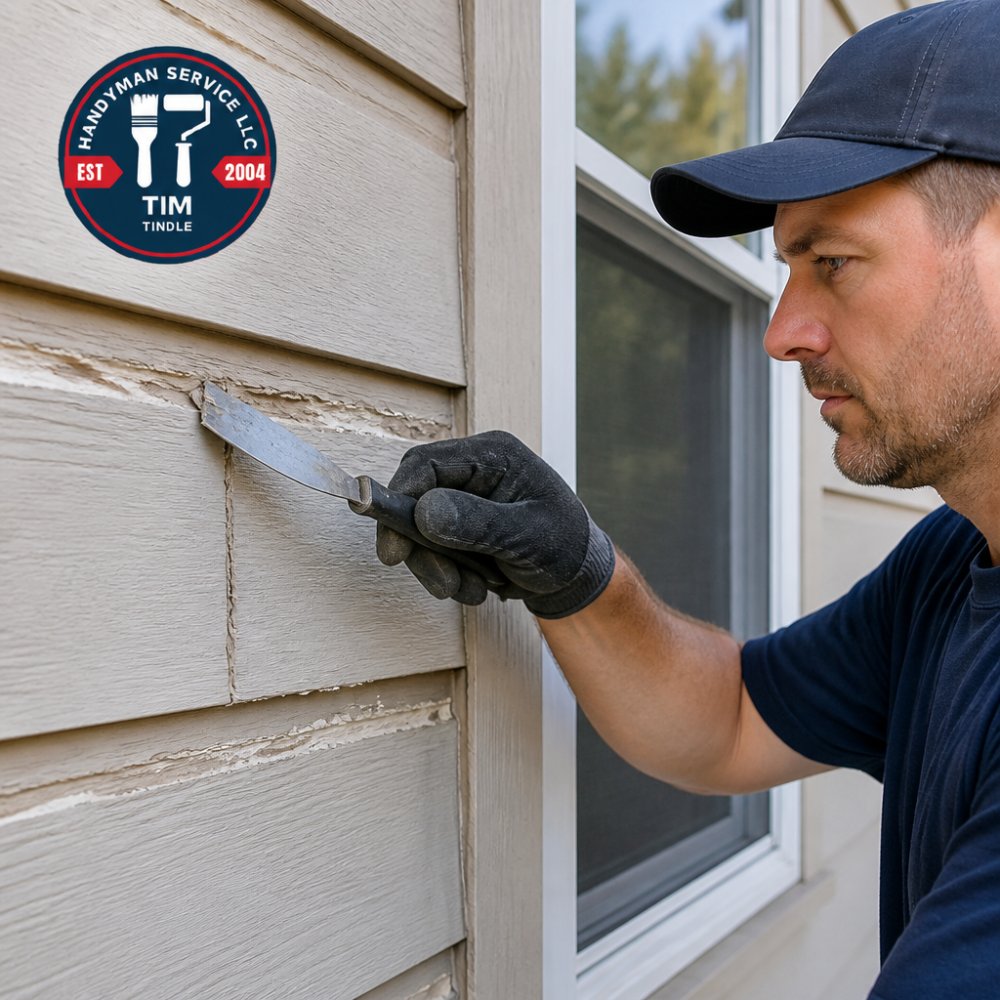
For joints with old failed caulk, remove it completely. Don't apply new sealant over old material. Use a caulk removal tool or flexible putty knife to scrape out the old material completely.
Prime bare wood before caulking. Unprimed wood absorbs sealant unevenly, creating weak spots where adhesion fails. Allow primer to dry completely before applying caulk.
Use a backer rod for joints deeper than 1/4 inch. A backer rod is a foam or rubber cord that fills the bottom of the joint, preventing sealant from being forced too deeply and maintaining proper bead profile. A properly sized bead should be roughly equal in width and depth, approximately 3/8 inch for most residential siding applications.
Moisture is the enemy of good adhesion. Allow surfaces to dry completely before application. In humid conditions, wait at least 24-48 hours after rain before caulking.
How to Repair Cracked Exterior Caulk
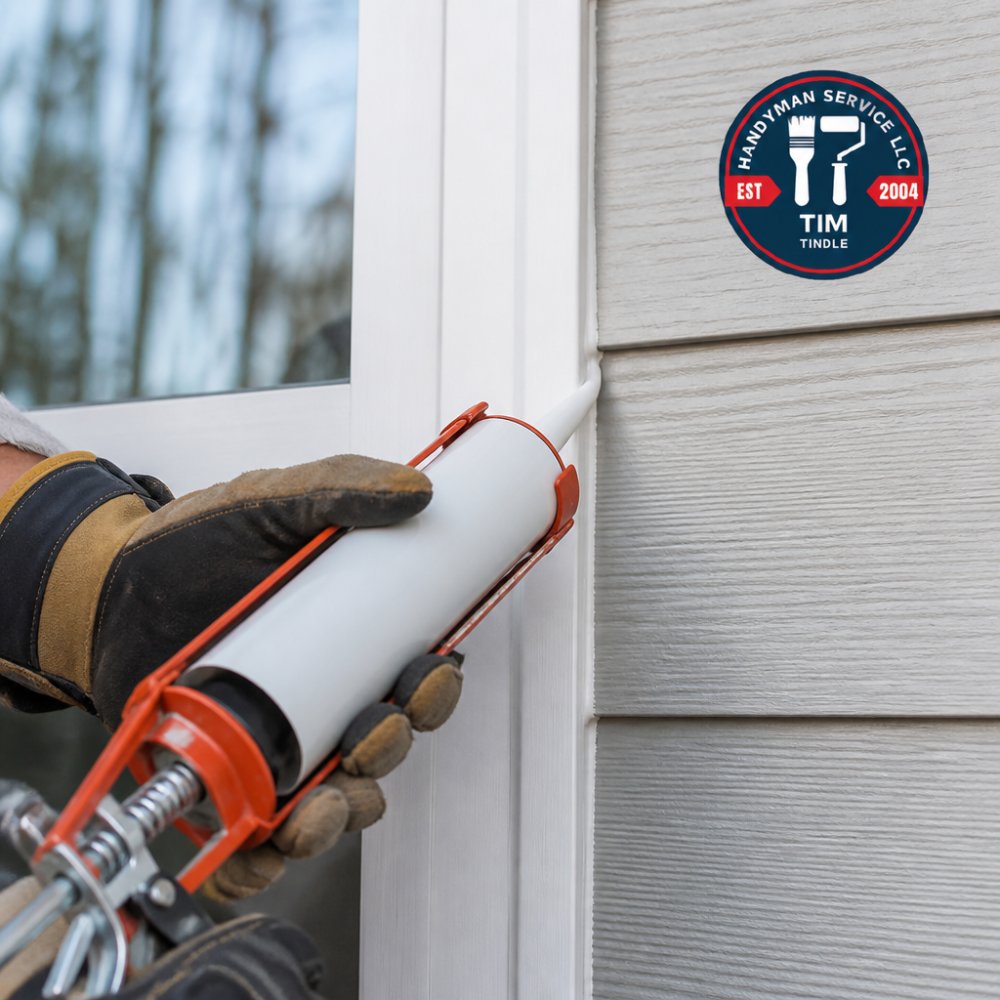
Cracked exterior caulk indicates the sealant has reached the end of its service life or was applied incorrectly. Remove all old caulk from the joint using a caulk removal tool, flexible putty knife, or rotary tool with a caulk removal bit. Once the old caulk is gone, clean the joint thoroughly and allow it to dry.
Inspect the substrate for damage. If the crack is accompanied by wood rot, structural movement, or substrate damage, address those issues first. For wood rot, remove the damaged material and apply wood filler or replace the affected section.
Check for the cause of the failure. If the original caulk was silicone and cracked due to excessive joint movement, switch to polyurethane for the repair. If the bead was too thin or thick, adjust the bead profile for the new application.
Apply new sealant following best practices: proper temperature and humidity, correct bead profile, and thorough surface preparation. A properly executed repair should last 10-15 years.
Maintenance Cycles and Longevity Expectations
Exterior caulk doesn't last forever. Even the best polyurethane sealants degrade over time due to UV exposure, thermal cycling, and weathering. Plan to inspect your exterior caulk annually and budget for resealing every 8-12 years for polyurethane products, or every 5-7 years for silicone alternatives.
Regular inspection catches problems early. Look for cracks, separation from the substrate, or areas where the sealant has shrunk away from the joint. Small cracks can be sealed with paintable caulk without removing the entire bead, extending the seal's life. Separation from the substrate indicates adhesion failure and requires complete removal and reapplication.
UV exposure degrades all sealants over time. Sealants on south-facing walls experience more UV stress and typically fail sooner. Consider applying a UV-protective coating over the caulk to extend its lifespan.
Weather cycles accelerate degradation. Sealants in climates with large temperature fluctuations, high humidity, or significant seasonal changes fail faster than those in stable climates. In demanding environments, plan for more frequent inspection and maintenance.
Proper initial installation dramatically extends service life. A well-prepared substrate, correct bead profile, and application within proper temperature and humidity ranges can add years to the lifespan of exterior caulk.
| Sealant Type | Expected Lifespan | Best For | Temperature Range |
|---|---|---|---|
| Polyurethane | 10-15 years | Extreme temperature swings, significant joint movement | -40°F to 140°F |
| Hybrid Polymer | 8-12 years | Moderate to significant movement, easier application | -20°F to 130°F |
| Silicone | 5-7 years | Moderate climates, low movement applications | -40°F to 150°F |
| Acrylic Water-Based | 2-4 years | Interior use, temporary sealing | 40°F to 85°F |
Choosing the right exterior caulk for temperature fluctuations comes down to matching the sealant's movement capability to your climate's demands. Polyurethane delivers superior performance in extreme conditions but requires careful application. At Handyman Service Aurora, we recommend assessing your specific situation, joint depth, substrate material, and local temperature ranges before selecting a product. If you're uncertain whether your current sealant will handle your climate, or if you need professional installation to ensure longevity, contact our team for a free estimate. We handle exterior caulking projects throughout the Denver Metro area and can recommend the right material for your property's unique needs. Call 720-989-4123 to get started.
Frequently Asked Questions
Q: What temperature range is safe for applying exterior caulk?
A: Most exterior caulks perform best when applied between 50°F and 85°F. Polyurethane sealants typically tolerate this range well, while silicone caulks may require slightly warmer conditions. Always check the manufacturer's specifications, as some products allow application down to 40°F or up to 90°F. Cold temperatures slow curing and reduce adhesion; heat accelerates evaporation and can create weak bonds. Avoid application during rain or when surfaces are damp.
Q: Is polyurethane or silicone caulk better for siding gaps in extreme climates?
A: Polyurethane sealants generally outperform silicone in extreme temperature swings because they handle joint movement and thermal expansion better. Polyurethane maintains elasticity through freeze-thaw cycles and resists UV degradation longer. Silicone offers superior water resistance and faster curing but can shrink and crack under repeated temperature extremes. Hybrid polymers combine benefits of both, offering strong adhesion, flexibility, and durability. For siding gaps, polyurethane is the stronger choice in climates with large temperature fluctuations.
Q: How often should exterior caulk be replaced or resealed?
A: Quality exterior caulk typically lasts 5 to 10 years depending on climate severity and material type. In regions with extreme temperature fluctuations, inspect annually for cracks, gaps, or separation. Polyurethane sealants often last 7 to 10 years, while silicone may need replacement every 5 to 7 years. High-altitude areas and locations with large diurnal temperature ranges experience faster degradation. Plan maintenance cycles every 3 to 5 years in harsh climates; reapply caulk before failure occurs to prevent water intrusion and structural damage.
Q: What causes exterior caulk to crack in cold weather?
A: Caulk cracks when it cannot accommodate the contraction and expansion caused by temperature swings. During freezing, materials contract; during warming, they expand. If caulk lacks sufficient elongation or flexibility, it fractures under stress. Poor surface preparation, inadequate bead depth, and using the wrong sealant type also contribute to failure. Low-quality caulks and those applied at incorrect temperatures are more prone to cracking. Polyurethane and hybrid sealants with high elongation ratings resist cold-weather cracking better than rigid alternatives.
Q: Do I need a backer rod before caulking exterior gaps?
A: Yes, a backer rod is essential for proper caulk performance. It controls bead depth, ensuring the caulk creates a strong bond across joint walls without sagging or becoming too thin. Backer rods prevent caulk from bonding to the joint bottom, allowing full flexibility during expansion and contraction. Use a rod diameter slightly larger than the gap width so it wedges firmly in place. For exterior siding gaps, a backer rod improves longevity and reduces the risk of caulk failure during temperature fluctuations.
This article was written using GrandRanker