 listicle
How to Book a Handyman for Home Repairs in 2026
Table of Contents
- Why Booking a Handyman Beats DIY for Most Home Repairs
- What Services Can You Book From a Handyman?
- Handyman Hourly Rates: What Impacts the Final Bill
- How to Vet and Book a Professional Handyman
- Questions to Ask a Handyman Before Hiring
- The Home Maintenance Checklist 2026: Tasks to Batch
- Common Mistakes to Avoid When Booking a Handyman
- Book Your Home Repair Service Today
- Frequently Asked Questions
Last Updated: September 7, 2026
The question isn't whether you can fix the leaky faucet yourself; it's whether you should. For most homeowners, the answer is no, and knowing when to book handyman for home repairs is the difference between a quick fix and a costly weekend project gone wrong. This guide breaks down how to book a handyman, what to expect to pay, and the questions to ask before anyone steps foot in your home.
Hiring a professional saves you time, protects your property, and often costs less than you think when you factor in your own time and tools.
Why Booking a Handyman Beats DIY for Most Home Repairs
DIY projects often start with good intentions and end with a trip to the hardware store for a part you didn't know existed. The hidden cost is your time: researching tutorials, making multiple trips for supplies, and troubleshooting mistakes a professional would have avoided. For tasks like drywall repair, fixture installation, or electrical troubleshooting, the learning curve is steep and the margin for error is small.
A professional brings the right tools, the experience to diagnose issues quickly, and the insurance to cover accidents. When you book handyman services, you are paying for job completion, not just an hourly rate. This is particularly true for work affecting your home's safety, such as plumbing or electrical work, where a mistake can lead to significant property damage.
What Services Can You Book From a Handyman?
A common misconception is that handymen only handle minor odd jobs. In reality, a qualified professional offers a broad spectrum of services, making booking a single provider efficient; you can address multiple issues in one visit rather than coordinating several contractors.
Typical services include carpentry like custom shelving and trim work, painting and touch-ups, and general repairs such as fixing squeaky doors or replacing damaged baseboards. Many also handle furniture assembly, installation of ceiling fans or TV mounts, and drywall repair.
The table below outlines the categories of work a full-service handyman can typically manage:
| Service Category | Common Tasks | Typical Outcome |
|---|---|---|
| General Repairs | Drywall patches, door adjustments, caulking | Restored function and appearance |
| Installation Services | Furniture assembly, TV mounting, blinds | Secure, level, and safe setup |
| Carpentry Services | Custom shelving, trim work, deck repairs | Custom-fit woodwork and structure |
| Painting Services | Interior rooms, exterior trim, touch-ups | Clean, even finish and protection |
| Plumbing & Electrical | Fixture swaps, toilet repairs, outlet changes | Code-compliant, leak-free operation |
Handyman Hourly Rates: What Impacts the Final Bill
The final bill is a product of several line items, and understanding them is the difference between an accurate budget and a surprise charge.
The Four Line Items That Drive Your Bill
1. Hourly Rate vs. Minimum Call-Out Fee Most providers charge a minimum of one to two hours per visit, even if the repair takes 20 minutes. Always ask for the minimum before scheduling.
2. Trip Charge or Service Fee Some companies separate a flat dispatch fee from the hourly labor rate. It is often waived if you bundle multiple tasks into a single visit, which is why batching repairs is the single most effective cost lever you control.
3. Materials Markup Handymen do not sell parts at cost. A standard markup is often applied to parts, fixtures, and supplies. You can reduce this by supplying your own materials, though some providers will not warranty work on customer-supplied parts.
4. Complexity and Skill Tier Rates are not uniform across all tasks. Simple work like furniture assembly or TV mounting typically sits at the lower end of the range. Work requiring specialized licenses or tools, such as electrical outlet replacement, plumbing fixture swaps, or custom carpentry, commands higher rates.
Flat-Rate vs. Time-and-Materials Pricing
Two pricing models dominate the industry:
- Flat-Rate Pricing: Common for defined tasks like ceiling fan installation, toilet repair, or door hanging. The quote is fixed before work begins, and you pay that amount regardless of how long the job takes.
- Time-and-Materials (T&M): Used for open-ended projects like drywall repair, trim carpentry, or multi-item punch lists. You pay the hourly rate plus materials, and the final bill depends on how long the job actually takes. A written estimate with a not-to-exceed cap protects you from runaway hours.
Regional Rate Benchmarks (2026)
While national averages are useful, local markets vary significantly. In the Denver Metro area, where our service operates, prevailing rates apply for licensed, insured work. Rural areas often see lower rates, while coastal metros may have higher rates.
How to Get an Accurate Estimate Before You Book
A reliable provider will give you a written estimate after a brief phone consultation or photo review, itemizing labor hours, material costs, and the trip fee. If a provider refuses to commit to numbers before arriving, treat that as a yellow flag. Request a range, not a single number, and ask what conditions would push the final bill to the top of that range.
The True Cost of DIY vs. Professional Repair
When comparing rates, factor in your own time. A DIY drywall patch might cost $30 in materials, but if it takes six hours across two weekends and you still need to redo it, the professional rate of $200 looks different. DIY often costs a significant portion of a professional job in materials alone, before accounting for tools and your hourly value.
How to Vet and Book a Professional Handyman
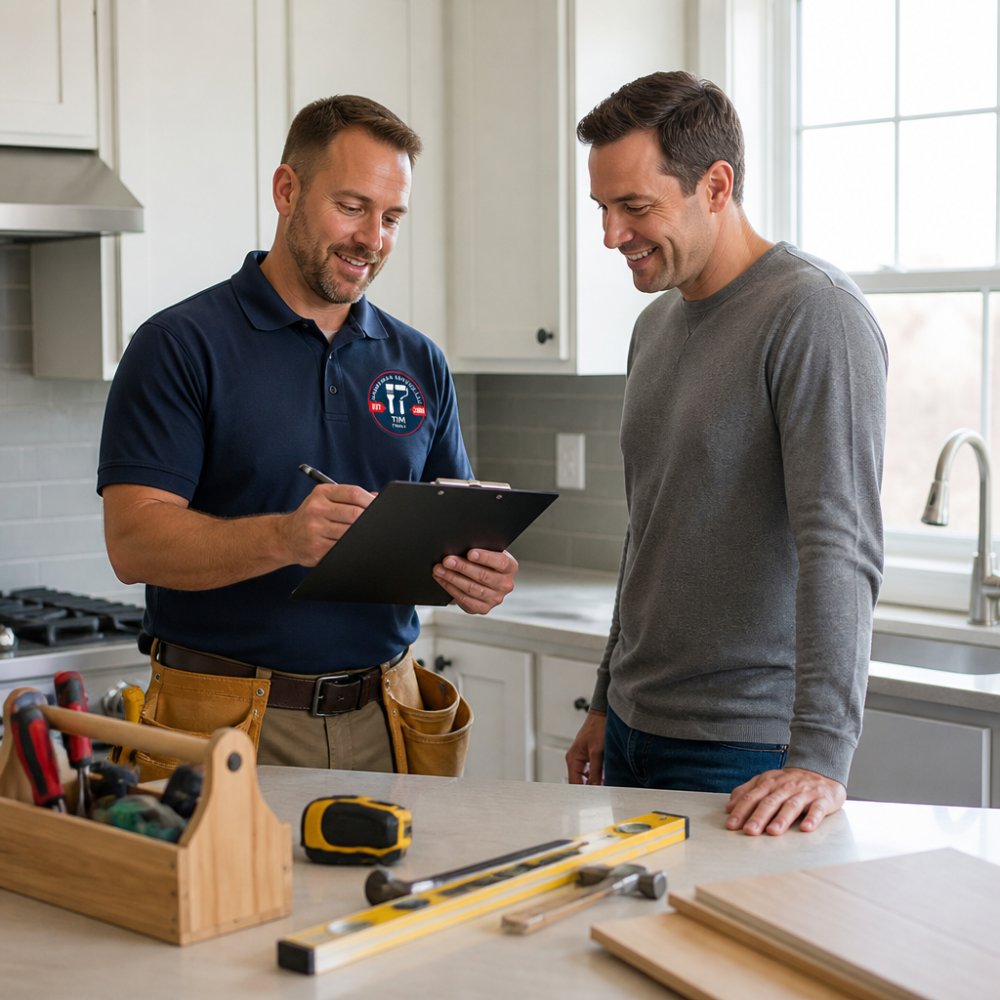
Finding someone to book handyman for home repairs is easy; finding someone you can trust is harder. The vetting process is your best defense against poor workmanship and liability issues. Never hire based on a low price alone.
The Vetting Standard: What "Background Checked" Actually Means
Most marketplace platforms claim their pros are "vetted" or "background checked." What that means varies dramatically. A basic screening might only verify a name against a national criminal database (the FTC). A rigorous screening, the kind you should demand, includes three layers:
Call 720-989-4123 for a free estimate →
- Criminal Background Check: A county and federal-level search covering the last 7-10 years. Ask if the check is run by a third-party agency (like Checkr or Sterling) or done in-house, and request the date of the most recent check.
- Identity Verification: Confirmation that the person at your door matches the licensed individual on the contract. Ask for a photo ID match at the door.
- Employment and Reference Verification: Confirmation that the provider has completed similar work for other homeowners. A provider who cannot produce two references from the last 12 months has not been properly vetted.
Insurance and Liability Coverage: What Happens If Something Goes Wrong
Three distinct policies protect you, and you need to know which one your provider carries:
- General Liability Insurance: Covers damage to your property caused by the handyman's work. The minimum coverage you should accept is $1 million per occurrence. Ask for a certificate of insurance (COI) and verify the policy is active by calling the carrier, a COI can be forged or expired.
- Workers' Compensation: Covers medical expenses if a worker is injured on your property. In most states, this is legally required for any business with employees (dol.gov). If a handyman is injured in your home and does not carry workers' comp, you can be held liable for their medical bills.
- Bonding: A surety bond protects you if the contractor fails to complete the job or abandons the project. It is not the same as insurance, but it provides a financial recovery path. Bonded providers are less common in the handyman space, but their presence is a strong signal of legitimacy.
The 15-Minute Verification Protocol
Before any provider starts work, run this checklist. It takes 15 minutes and protects you from the most common liability traps:
- Ask for the license number and verify it with your state's contractor licensing board. In many states, handymen are exempt from licensing if jobs stay under a dollar threshold (often $500-$1,000) (ncsl.org). If the job exceeds that threshold, a licensed contractor is legally required.
- Request a current COI and call the insurance carrier to confirm active coverage. Do not accept a screenshot or a photocopy.
- Ask for two references from the last six months and actually call them. Ask about punctuality, cleanup, and whether any follow-up work was needed.
- Confirm the worker's identity at the door against the name on the contract and the license.
Booking Through a Marketplace vs. Direct
There are two primary booking channels, each with trade-offs:
- Marketplace Platforms (e.g., Thumbtack, Angi, HomeAdvisor): These run background checks, hold reviews, and often offer a limited satisfaction guarantee. The trade-off is that you pay a booking fee or the provider builds a 15-20% platform commission into their rate. The platform's guarantee is also capped, typically at the amount you paid, not the full cost of repairing damage.
- Direct Booking with a Local Company: You deal directly with the business owner, which often means lower rates (no platform commission) and clearer accountability. The trade-off is that you must perform the vetting yourself.
Red Flags That Should End the Conversation Immediately
- The provider cannot produce a COI or refuses to name their insurance carrier.
- The provider asks for payment in cash only, with no written contract.
- The provider has no physical business address and no verifiable phone number.
- The provider pressures you to sign a contract before you have read the liability clauses.
- The provider's online reviews are all five-star with no negative or mixed feedback, this pattern often indicates fake reviews.
What to Do If a Repair Goes Wrong
Even with proper vetting, issues can arise. If a repair fails or causes damage, your recourse depends on what you verified before the job:
- Document everything: Photograph the damage, save the written estimate, and note the date and time of the service visit.
- File a claim with the provider's liability insurance: If the damage is covered, the carrier will investigate and pay for repairs.
- Contact your state's contractor licensing board: If the provider is licensed, the board can mediate disputes and may revoke the license for repeated violations.
- Check your homeowner's insurance: Most policies cover damage caused by contractor negligence, though you will pay your deductible. Your insurer may then subrogate against the contractor's policy.
A professional who is properly insured and licensed has no reason to avoid these conversations. The ones who do are the ones you should never hire.
Questions to Ask a Handyman Before Hiring
The questions you ask a handyman before hiring will determine the quality of your experience. Asking the right questions helps you avoid miscommunication and ensures the provider is a good fit for your needs.
- Are you licensed and insured? Can I see proof of coverage?
- Do you provide a written service estimate before starting work?
- Can you handle multiple tasks (e.g., painting, carpentry, drywall) in one visit?
- What is your policy on timeline and job completion if the project takes longer than expected?
- Do you offer a workmanship warranty on your repairs?
- How do you handle unexpected issues or "extra issues" that arise during the job?
The Home Maintenance Checklist 2026: Tasks to Batch
One of the most efficient ways to save money is to batch your repairs into a single service visit. Most companies have a minimum service call fee, so addressing several small issues at once provides better value than calling for each one individually.
Consider grouping tasks like fixing a leaky faucet (plumbing maintenance), patching a hole in the wall (drywall repair), and installing a new towel bar (fixture installation) into one appointment. For the 2026 checklist, focus on preventative maintenance tasks that protect your home's value, such as checking caulking, testing smoke detectors, and inspecting for water damage.
Common Mistakes to Avoid When Booking a Handyman
The most common mistake homeowners make is hiring based on price alone, often choosing an uninsured "side hustle" to save a few dollars. If the work is subpar or causes damage, you have no recourse and no workmanship warranty to fall back on.
Another frequent error is failing to get a detailed scope of work in writing. Verbal agreements lead to misunderstandings about the final cost and the extent of the job. Always insist on a written service estimate that outlines the tasks, materials, and timeline. Finally, do not wait until an emergency to find a provider.
Book Your Home Repair Service Today
Finding a reliable professional to book handyman for home repairs doesn't have to be a gamble. The key is to prioritize licensing, insurance, and clear communication over the lowest bid. By following the vetting process and asking the right questions, you protect your home and your investment.
At Handyman Service Aurora, we provide licensed and insured services for homeowners across the Denver Metro area, including Aurora, Foxfield, Parker, and Centennial. We offer free estimates and handle everything from expert carpentry to painting and general repairs, so you can address all your home maintenance needs in one visit. Call 720-989-4123 for your free estimate.
Frequently Asked Questions
What is a fair price to pay a handyman?
Pricing depends on the scope of work, materials needed, and your location. Most handymen charge an hourly rate or a flat rate for specific projects. To get a fair price, request a detailed estimate that breaks down labor and materials. Always ask about a service guarantee or workmanship warranty. For an accurate number for your specific project, contact a local provider for a free estimate.
What is the best way to find a good handyman?
Start by asking neighbors and local community groups for names they have used successfully. Then, focus on licensed and insured professionals who have verifiable reviews. A real, established business will have clear contact information, a service area, and a process for providing estimates. Avoid hiring someone who cannot provide proof of insurance or who only accepts cash without a written agreement.
What are some red flags when hiring a handyman?
Major red flags include a lack of licensing or proof of insurance, demanding full payment upfront, and refusing to provide a written estimate. Be cautious if the person has no verifiable business address or online presence, or if they cannot offer a service guarantee. A professional will be transparent about their pricing model and safety protocols. Trust your instincts if a provider is vague about their qualifications.
Should I hire a handyman or a licensed contractor for home repairs?
Hire a handyman for smaller, multi-trade tasks like furniture assembly, drywall repair, painting and touch-ups, or fixture installation. These jobs do not typically require a permit. You should hire a specialized licensed contractor for major structural changes, extensive electrical troubleshooting, or large remodeling projects that require permits and inspections. A reputable handyman will tell you when a project exceeds their scope and recommend a specialist.
How do I prepare my home for a handyman visit?
Clear the work area of personal items, furniture, and breakables to give the technician safe access. Write down a list of all the issues you want addressed, including specific details like which light switch is faulty or which door sticks. Make sure pets are secured in a separate room. Confirm the service request and the agreed-upon arrival window the day before the appointment.