 ultimate-guide
Can One Handyman Do Multiple Repairs? Efficiency Guide
Table of Contents
- Why One Handyman Can Handle Multiple Repairs
- The Triage Method: Prioritizing Your Home Repair List
- Best Home Maintenance Checklist 2026
- Handyman Hourly Rates vs Flat Fee: Which Saves You More?
- Average Duration for Common Handyman Tasks
- When to Hire a Specialist Instead of a Handyman
- Legal, Licensing, and Liability Considerations for Multiple Repairs
- Frequently Asked Questions
Last Updated: September 12, 2026
Why One Handyman Can Handle Multiple Repairs
Yes, one handyman can typically handle multiple repairs in a single visit, and for most homeowners, bundling tasks is the smarter way to book. A professional handyman works through a repair list efficiently because setup, travel time, and tool staging happen once instead of three or four times. At Handyman Service Aurora, we see this constantly: a homeowner books four small jobs separately and pays for four service calls, when one organized visit would have covered all of them.
The logic is simple. A service call carries fixed overhead no matter how small the task. When you combine a loose cabinet door, a sticking window, and a running toilet into one appointment, you amortize that overhead across every item on the list.
U.S. General Services Administration guidance on contractor verification notes that verifying licensing and insurance before work begins protects both parties, which matters even more when one visit covers several tasks.
The Triage Method: Prioritizing Your Home Repair List
Most homeowners list repairs by annoyance, not by risk. The Triage Method flips that: sort every item into three buckets before you call anyone.
- Urgent (fix first): active leaks, exposed wiring, broken locks, anything causing ongoing damage
- Important (batch together): loose railings, cracked caulk, sticking doors, minor drywall damage
- Cosmetic (schedule last): paint touch-ups, hardware swaps, trim adjustments
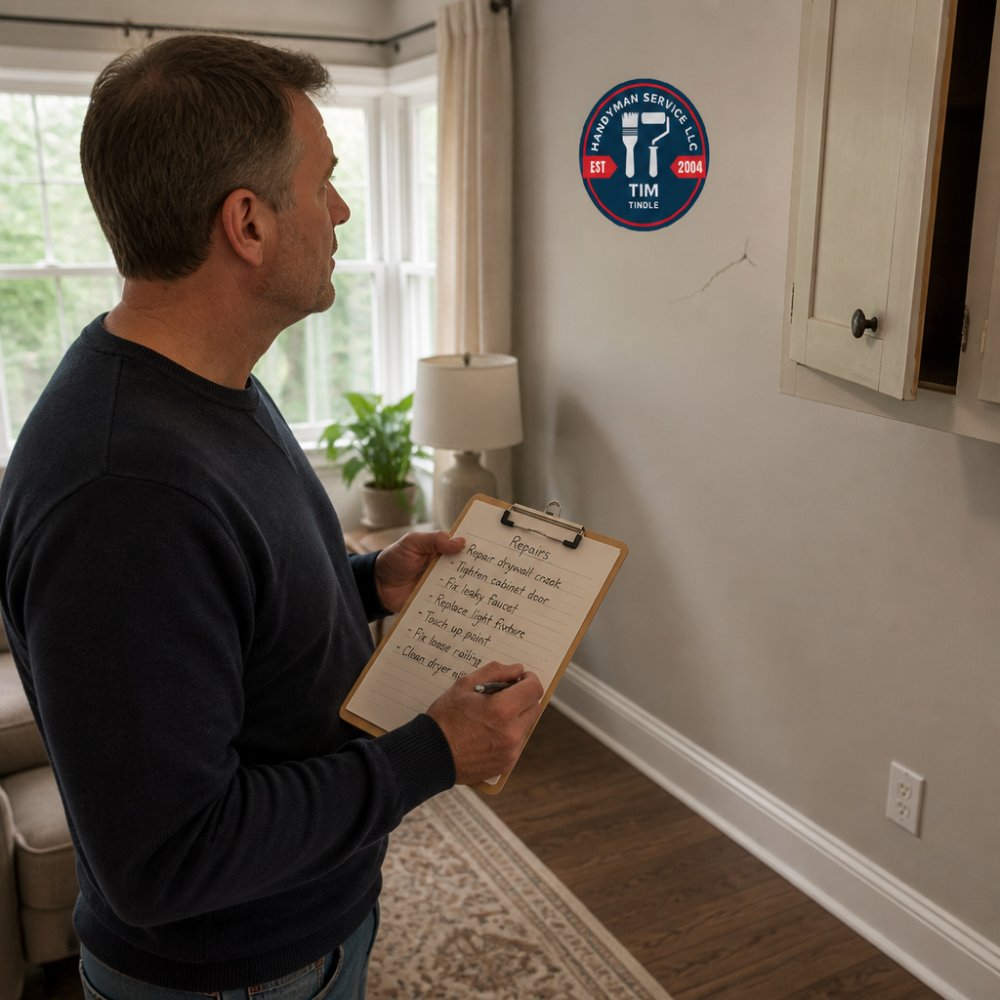
A common mistake is treating a slow drip under the sink as cosmetic. It rarely stays cosmetic. Group urgent items at the top of your list so the handyman tackles them while fresh, then work down.
Best Home Maintenance Checklist 2026
A workable home maintenance checklist for 2026 splits tasks by season rather than by room, because most home systems fail on a weather cycle. But the checklist only pays off if you use it as a pre-screening tool before you book, not as a wish list you hand over on arrival.
- Spring: gutters, roof flashing, exterior caulk, window screens
- Summer: deck boards, fence posts, exterior paint touch-ups
- Fall: weatherstripping, furnace filter, chimney cap, door seals
- Winter: pipe insulation, interior trim, cabinet hardware, drywall patching
The Digital Pre-Screen Most Homeowners Skip
The single biggest cause of a return visit is a handyman arriving without the right part or tool. Competitors rarely mention this, but it is the easiest problem to eliminate. Before you book, build a shared photo album (a free cloud folder works) with one photo per repair, plus a one-line note on what you have already tried.
- Photograph the model plate on the faucet, toilet fill valve, or light fixture, not just the symptom
- Snap the breaker panel label if any electrical item is on the list
- Include a wide shot and a close-up for anything behind furniture or in a tight space
- Note the wall type (drywall, plaster, tile over backer board) where patching is needed
A common pattern is that the handyman can then confirm parts in advance, load the correct drill bits and anchors, and finish the visit in one trip. Skipping this step is what turns a two-hour appointment into a two-visit project.
Turn the Checklist into a Booking List
Once the season's items are photographed, sort them into a single scope of work document with three columns: task, location, and any part you already own. This is the list you email before the visit. It also makes the scope of work unambiguous, which matters when you are negotiating a flat fee versus an hourly rate.
Many homeowners find that batching a season's checklist into one handyman services appointment keeps small issues from compounding into home improvement projects. The pre-screen is what makes the batch actually finish in one trip.
Handyman Hourly Rates vs Flat Fee: Which Saves You More?
The honest answer: for a single small task, hourly billing often wins. For a repair list with four or more items, a flat fee usually saves money because you are not paying for the handyman's learning curve on each new task.
Hourly rate billing charges for time on site, including the minutes spent figuring out an unfamiliar fixture. Flat fee pricing quotes the whole job up front, which shifts the risk of a slow task onto the provider.
| Billing Model | Best For | Watch Out For |
|---|---|---|
| Hourly rate | One or two quick tasks | Time creep on unfamiliar fixtures |
| Flat fee | Four or more bundled tasks | Scope disputes if the list changes |
| Trip charge only | Diagnostic visits | Adds up fast across separate calls |
Because labor costs and travel time dominate the total, the model matters less than how many tasks you combine. Ask for a written quote covering the full task list before you commit.
Average Duration for Common Handyman Tasks
Task duration varies with wall condition, fixture age, and access, but most routine jobs fall into predictable windows. Knowing these helps you build a realistic service appointment and avoid overbooking a single visit.
- Fixture installation (faucet, light): 30-60 minutes each
- Minor plumbing (running toilet, slow drain): 30-45 minutes
- Electrical repairs (outlet, switch, fixture): 20-40 minutes
- Drywall patch and paint: 45-90 minutes depending on size
- Cabinet or door adjustment: 15-30 minutes
A service call covering five small items often runs two to three hours total (angi.com). Multi-tasking across a well-organized list is exactly what makes that possible.
Why the Same Task Takes 20 Minutes or 90
The window is wide because setup, not the repair itself, eats the clock. A faucet swap in an open vanity is a 30-minute job. The same swap behind a pedestal sink with seized shutoff valves can run 90 minutes, because the handyman has to shut off water at the main, drain the line, and possibly replace the valves before touching the fixture.
Three variables drive the spread on almost every task:
- Access: furniture in the way, a cabinet full of items, or a fixture mounted high on a vaulted ceiling
- Condition: corroded fittings, stripped screws, or previous DIY work that has to be undone first
- Parts on hand: a matching fill valve or trim piece versus a trip to the supply house
This is why the pre-screen photos from your checklist matter. When the handyman can see the access and condition in advance, the estimate tightens and the visit is less likely to spill into a second appointment.
Sequencing the List to Save an Hour
Order matters as much as the list itself. A practical sequence groups tasks by tool and by location so the handyman is not walking back to the truck or switching bits every ten minutes.
- Group all plumbing items together so the water is shut off once
- Group all electrical items together so the breaker is pulled once
- Save drywall patching for last, since it creates dust and needs drying time before paint
- Put door and cabinet adjustments in the middle, when you can move freely between rooms
A common pattern is that a well-sequenced five-item list finishes in two hours, while the same five items handed over in random order run closer to three. The tasks did not change; the travel and setup between them did.
If a task on your list is likely to need a permit or a licensed trade, flag it before the visit so it can be scheduled separately rather than eating the time you budgeted for the rest of the list.
When to Hire a Specialist Instead of a Handyman
Some jobs sit outside a handyman's legal scope, and knowing the line protects you. Work requiring a permit, major electrical repairs behind walls, gas line work, and structural changes generally call for a licensed general contractor or trade specialist.
Licensing requirements and permit requirements vary by state and municipality, so confirm locally before booking. A professional handyman handles minor plumbing, fixture installation, troubleshooting, and cosmetic work well. When a task crosses into permitted territory, sub-contracting to a licensed trade is the correct path.
Legal, Licensing, and Liability Considerations for Multiple Repairs
Bundling repairs raises one question homeowners rarely ask: who is liable if something goes wrong mid-visit? Homeowner liability and workmanship warranties both hinge on the paperwork, not the handshake.
- Confirm the provider carries general liability insurance and, where required, workers' compensation
- Get the scope of work in writing, listing every task
- Ask how workmanship is warranted and for how long
- Verify building codes compliance for anything touching structure or systems
Occupational Safety and Health Administration guidance on contractor safety outlines why insured contractors matter on residential job sites. For licensing specifics, check your state's contractor board directly, since licensing requirements differ widely.
Frequently Asked Questions
What is a fair price to pay a handyman per hour?
Handyman rates vary by region, task complexity, and whether the provider charges hourly or a flat fee. In the Denver metro area, many handyman services offer free estimates so you can get a clear quote before work begins. When comparing handyman hourly rates vs flat fee, ask what the rate includes, such as travel time, materials, and cleanup. Get a written estimate and confirm whether the price is fixed or subject to change if extra issues come up.
What are some red flags when hiring a handyman?
Watch for providers who cannot show proof of licensing and insurance, demand full cash payment upfront, or give vague answers about pricing and scope. A handyman who refuses to put the agreement in writing or who is evasive about past work is a risk. Legitimate professionals will provide a free estimate, explain what is covered, and give you a written contract. Always verify credentials before allowing anyone to work on your property.
Is it legal for a handyman to replace a toilet?
In many states, a handyman can replace a toilet because it is considered a minor plumbing repair that does not require a licensed plumber. However, local building codes and licensing requirements vary. Some areas require a permit or a licensed plumber for any plumbing work. Before hiring, ask the handyman about their qualifications and check with your local building department to confirm what is allowed for minor plumbing tasks in your area.
How do I prepare my home for a multi-task handyman visit?
Start by creating a detailed repair list grouped by room and priority. Clear access to each work area by moving furniture and personal items. If you have materials like paint or fixtures, have them ready. Share your list with the handyman in advance so they can bring the right tools and estimate time. This preparation reduces delays, helps the handyman work efficiently, and ensures all tasks are addressed in one service visit.
Coordinating a long repair list across multiple trades is where most homeowners lose time and money. Handyman Service Aurora handles multiple repairs in one scheduled visit, backed by licensed and insured service, free estimates, and coverage across Aurora, Foxfield, Parker, Centennial, and the Denver Metro area. Get started with Handyman Service Aurora and turn your list into one efficient appointment. Call 720-989-4123 for a free estimate.