 ultimate-guide
Reliable Handyman for Emergency Repairs: 2026 Guide
Table of Contents
- What Counts as a Home Repair Emergency
- Your Emergency Home Repair Checklist: First 30 Minutes
- Average Handyman Hourly Rates and What Drives the Cost
- How to Verify Handyman Insurance and Licensing
- How to Find a Reliable Emergency Handyman Fast
- When to Call a Reliable Handyman for Emergency Repairs vs. a Specialist
- Frequently Asked Questions
Last Updated: September 28, 2026
What Counts as a Home Repair Emergency
A home repair emergency is any damage or failure that threatens safety, causes active property damage, or makes the home uninhabitable overnight. A burst pipe, a dead furnace in January, or exposed wiring qualify. A sticking cabinet door does not.
True Emergencies vs. Urgent-but-Waitable Repairs
Use this split to decide fast:
Call now (true emergency):
- Active water leak you cannot shut off at the valve
- No heat when outdoor temperatures are below freezing
- Sparking outlets, burning smells, or a breaker that trips repeatedly
- Sewage backup or a toilet overflowing with no working shutoff
- Anything that has made a room or the home unsafe to occupy
Schedule within a day or two (urgent but waitable):
- A slow drip under a sink with a bucket catching it
- One non-working outlet with no burning smell
- A cracked window pane that is taped and holding
- A garage door stuck shut when you have a second exit
- A running toilet that still flushes
The distinction isn't how annoying the problem is, it's whether damage is actively compounding. Water and electricity escalate; almost everything else holds.
Your Emergency Home Repair Checklist: First 30 Minutes
The first 30 minutes of a home emergency decide how much damage you'll pay for later. An emergency home repair checklist is a short, fixed sequence of safety and containment steps you run before calling anyone.
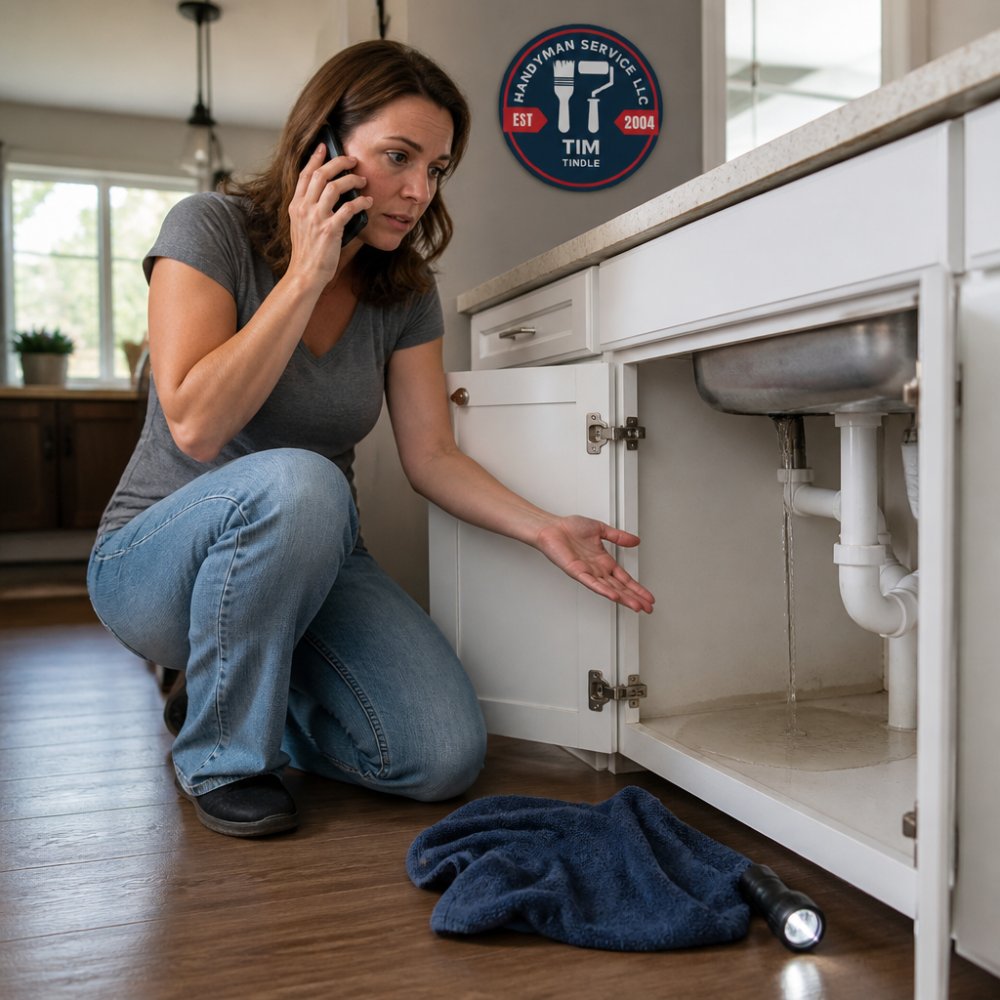
Work through it in this order:
- Make people safe first. Get everyone, including pets, away from the affected area. If you smell gas, leave the building and call your utility from outside.
- Stop the source. Shut the nearest water valve for leaks. Kill the breaker for electrical issues. For a gas smell, don't touch switches on your way out.
- Contain the damage. Towels, buckets, and a tarp under the leak. Move furniture, electronics, and rugs clear of the wet zone.
- Photograph everything before you clean or repair anything.
- Call for help once the situation has stopped getting worse.
Document Everything for Insurance
Most homeowners never think about their insurance policy until weeks after the emergency, when the adjuster asks for proof they no longer have. The documentation you capture in the first hour is the biggest lever on whether a claim is approved or denied. Treat it as required, not an afterthought.
What to capture, and when:
- Before you clean or move anything: wide shots of the whole affected room, then medium shots of the damaged area, then close-ups of the source (the split pipe, the failed supply line, the scorched outlet). Include something for scale, a ruler, a coin, or your hand.
- Video walkthrough: a slow 30- to 60-second pan of the damage, narrating what happened and when. Video timestamps are harder to dispute than stills.
- The source, not just the symptom: a photo of the failed fitting or cracked pipe tells the adjuster why the loss happened, which matters for cause-of-loss determinations.
- Receipts for everything: fans, dehumidifiers, tarps, hotel nights, meals if you were displaced, and any emergency supplies. Keep paper and digital copies.
- A written timeline: date, time, what you noticed first, what you shut off, who you called, and when they arrived. Two paragraphs is enough.
How to file and what to expect:
Do not sign anything from a contractor that assigns your insurance benefits to them before you've spoken with your adjuster. Assignment-of-benefits paperwork transfers your claim rights to the contractor and is a common source of disputes. You can always authorize work directly and pay the contractor yourself.
Photograph the manufacturer's label on any failed appliance or water heater. Adjusters use model and serial numbers to confirm age and recall status, and that photo is much easier to produce than a receipt from eight years ago.
Records to keep after the repair:
- Final itemized invoice from the handyman or contractor
- Permits pulled, if any, and inspection sign-offs
- Photos of the completed repair
- Manufacturer warranties on any replaced parts or appliances
Average Handyman Hourly Rates and What Drives the Cost
Most homeowners searching for emergency help want one thing before they dial: a realistic sense of what the visit will cost. Emergency pricing is built from several stacked components, and the hourly rate is only one. Understanding the structure lets you compare quotes.
What drives your bill up or down:
Call 720-989-4123 for a free estimate →
| Factor | Effect on Cost | Why |
|---|---|---|
| Time of day | Highest after hours | Nights, weekends, holidays |
| Emergency call fee | Flat add-on | Covers dispatch and travel |
| Job complexity | Moderate to high | Licensed trades cost more |
| Materials | Pass-through | Parts billed at cost plus markup |
| Travel distance | Variable | Longer drives, higher minimums |
| Access difficulty | Moderate | Crawlspaces, attics, tight fixtures |
Emergency Call Fees and After-Hours Pricing
Emergency call fees are flat charges added on top of labor for service outside normal business hours. They're standard across the trades, compensation for disrupting a scheduled day and the dispatch overhead of routing a technician to an unscheduled job.
- The after-hours call fee, a flat dollar amount, typically charged the moment a technician is dispatched.
- The hourly labor rate for emergency hours, often higher than the standard daytime rate.
- The minimum billable time, many providers bill a one- or two-hour minimum regardless of how long the job actually takes.
- Whether the call fee is credited toward labor, some providers apply it to the final bill if the job runs long; others keep it separate. Get the answer in writing.
Ask whether the provider charges a trip charge separate from the call fee. Some do, some don't, and it's an easy line item to miss when you're comparing quotes over the phone at midnight.
How to Verify Handyman Insurance and Licensing
How to verify handyman insurance takes about ten minutes and protects you from the biggest financial risk in hiring: an uninsured worker injured on your property. Ask for the certificate of insurance, then confirm it directly with the insurer.
Here's the verification sequence:
- Request a certificate of insurance showing general liability coverage and the policy's effective dates
- Confirm the policy is current by calling the insurer's number on the certificate, not the number the contractor gives you
- Ask whether the policy covers subcontracted workers, if anyone else will be on site
- Check state or local licensing status through your state's contractor licensing board or your city's permit office
- Confirm the business is registered and in good standing, not a side hustle with a truck
- Get the scope, price, and timeline in writing before work starts
How to Find a Reliable Emergency Handyman Fast
Finding a reliable emergency handyman fast comes down to having one vetted name saved before you need it. The worst time to research contractors is while water spreads across your floor.
Build your shortlist now:
- Ask neighbors and local groups who they've used for urgent work, and whether the person actually showed up
- Check that the business is established, with a real address and a track record, not just a phone number
- Confirm licensed and insured status before you need it, not during the call
- Save the number somewhere you'll find it in the dark
Red Flags to Avoid
Walk away from any provider who:
- Demands full payment upfront in cash
- Refuses to put the scope and price in writing
- Can't produce a certificate of insurance
- Pressures you to approve extra work on the spot without explanation
- Won't give a business address or verifiable license number
- Quotes a suspiciously low price, then adds "extras" once work begins
The last one is the most common complaint homeowners bring us. A lowball quote that balloons mid-job usually means the original number was never real.
When to Call a Reliable Handyman for Emergency Repairs vs. a Specialist
Call a reliable handyman for emergency repairs when the job spans general maintenance: leaks, drywall, doors, fixtures, carpentry, and appliance issues. Call a licensed specialist for gas lines, major electrical panels, structural framing, or anything local code restricts to a licensed trade.
Use this rule of thumb:
- Handyman: fixture replacement, drywall repair, door and cabinet repair, carpentry work, painting, furniture assembly, appliance installation, minor plumbing and electrical maintenance
- Specialist: gas line work, panel upgrades, sewer lines, foundation and structural repairs, roofing
Frequently Asked Questions
What is a fair price to pay a handyman per hour?
Hourly rates vary by region, job complexity, and whether it's an emergency call. Standard rates typically range from $60 to $100 per hour, while emergency or after-hours work often costs 1.5 to 2 times the standard rate. Some handymen charge by the project instead of the hour. Always ask for a written estimate before work begins, and confirm whether the quote includes materials, disposal fees, and any trip charges.
How can I verify if a handyman is licensed and insured?
Ask for a copy of their general liability insurance certificate and verify it directly with the insurance company listed. For licensing, check your state or local licensing board's online database. Request the policy number and expiration date, then call the insurer to confirm active coverage before any work starts.
What types of home repairs are considered emergencies?
True emergencies include burst pipes or active water leaks, sewage backups, electrical failures like sparking outlets or burning smells, gas odors, roof damage during storms, and broken exterior doors or windows that leave your home unsecured. These issues risk property damage, health hazards, or safety threats. Less urgent problems like a running toilet or slow drain can wait for a scheduled visit during normal business hours.
How do I prepare my home for an emergency repair visit?
Clear access to the problem area, move furniture or belongings away from the work zone, and shut off water or power if safe to do so. Take photos of the damage before the handyman arrives for insurance documentation. If you have pets, secure them in a separate room. Have your insurance policy number and a list of questions ready. Also confirm the estimated arrival window and whether the handyman will bring necessary parts or if you need to purchase them.