 blog
Signs of a Reliable Home Contractor: 2026 Guide
Table of Contents
- What Makes a Reliable Contractor Different From a Cheap One
- Questions to Ask a Contractor Before Hiring
- The Contractor Estimate Checklist Every Homeowner Needs
- How to Check Contractor References and Past Work
- Contractor Red Flags That Should Stop You Cold
- Licensing, Insurance, and Permits: The Paper Trail of a Reliable Contractor
- Payment Schedules and Contract Terms That Protect You
- Conclusion
- Frequently Asked Questions
Last Updated: October 18, 2026
What Makes a Reliable Contractor Different From a Cheap One
Spotting the signs of a reliable home contractor starts with one truth: the lowest bid is rarely the best deal, and knowing the signs of a reliable home contractor helps you avoid it. A cheap quote often hides vague scope, skipped permits, or a crew that vanishes mid-project. Reliable contractors cost more up front but save you money through fewer callbacks and no surprise charges.
The reliable contractor shows up on time, explains the plan, and puts it in writing. The cheap one rushes the bid and dodges your questions.
Here is the core difference:
- Reliable: itemized estimate, clear timeline, proof of license and insurance
- Cheap: one-line quote, fuzzy dates, no paperwork
Speed of the bid matters too. A contractor who quotes a full remodel in ten minutes without measuring anything is guessing. Good ones walk the space, ask questions, and take notes.
Questions to Ask a Contractor Before Hiring
The best questions to ask a contractor before hiring expose how they work, not just what they charge. Ask directly, then listen for specifics. A clear, concrete answer signals experience; a vague or defensive one is a warning you can act on before money changes hands.
Use this as a working script. For each question, the right-hand column tells you what a reliable answer sounds like and what should make you pause.
| Question | What a reliable answer includes | Warning sign |
|---|---|---|
| "Are you licensed and insured?" | License number, state or local issuing board, and a certificate of insurance naming general liability and workers' comp | "We don't need one for this job" or a number they won't put in writing |
| "Who will actually be on site?" | Names of the crew or the specific subcontractors, and who supervises | "Whoever's available" or refusal to name subs |
| "Can you give me three recent references?" | Three clients from the last 12 months with phone numbers, ideally one matching your project type | Only older references, or names without contact info |
| "How do you handle change orders?" | A written change order signed by both parties before extra work starts | "We'll work it out" or verbal-only approvals |
| "What's your payment schedule?" | Milestone-based payments with a modest deposit and a final holdback | Large upfront cash demand or payment before work begins |
| "Will you pull the permits?" | Yes, with the permit number and inspection schedule provided to you | "You don't need a permit for that" on structural, electrical, or plumbing work |
| "Who is your insurance carrier, and can they send me a certificate directly?" | Carrier name and a certificate emailed from the insurer | A photocopy forwarded by the contractor with no way to verify |
| "What's your warranty, and what does it exclude?" | Written labor and material warranty terms with a callback window | "Lifetime warranty" with no paperwork |
Ask the questions in person or on a walkthrough, not over a quick text. How a contractor handles a follow-up, "Can you send me that license number today?", tells you as much as the first answer. Reliable contractors expect these questions and answer them without irritation.
For a broader view of what to expect from a professional, the U.S. Federal Trade Commission consumer advice on hiring contractors lays out your basic rights before you sign anything.
The Contractor Estimate Checklist Every Homeowner Needs
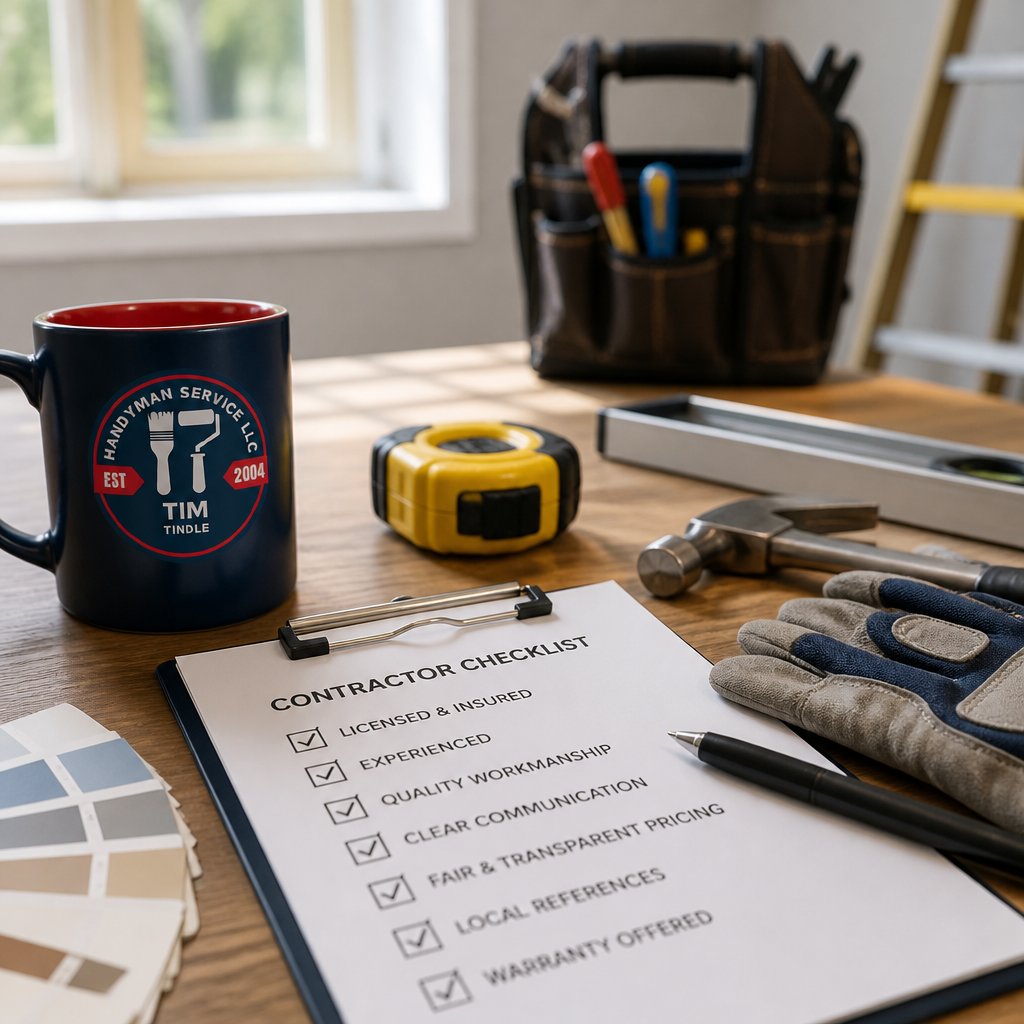
A contractor estimate checklist turns a vague number into a real plan. A written estimate should list materials, labor, timeline, and what happens if the scope changes. If any of those are missing, ask for them before you sign.
Run every bid through this list:
- Line-item breakdown of labor and materials
- Project start and end dates
- What is included, and what is explicitly not
- Permit costs and who files them
- Payment schedule tied to milestones
- Change-order process in writing
- Cleanup and disposal included
- Warranty terms on labor and materials
Compare at least three bids on the same scope. A bid that's far lower usually means something is missing, not that you got lucky. Ask each contractor to explain any gap.
How to Check Contractor References and Past Work
Learning how to check contractor references means calling past clients and asking hard questions. Don't just collect names. Ask how the project went, whether the budget held, and if they'd hire the contractor again.
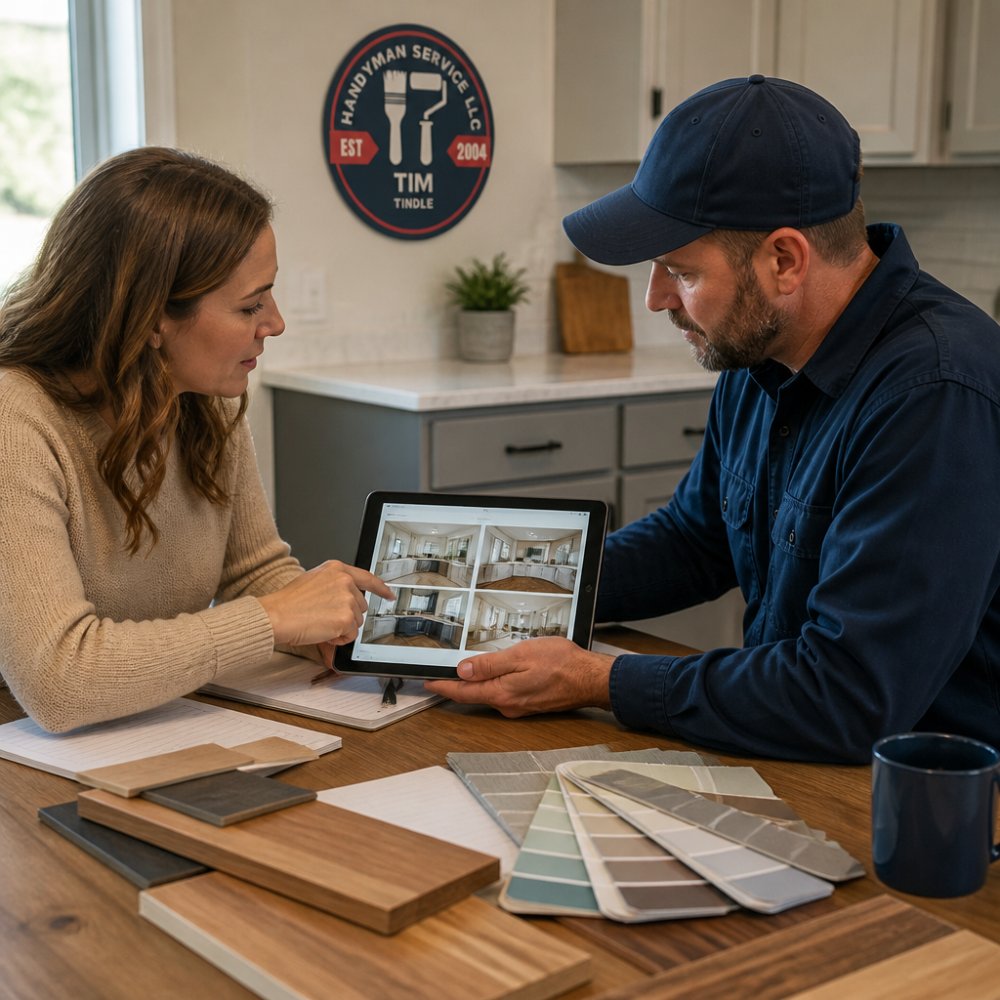
A few habits separate a real check from a box-ticking exercise:
- Call, don't text. A short call reveals tone and honesty.
- Ask about the finish. Did the contractor return to fix small issues?
- Ask about surprises. How were change orders and delays handled?
- Look at recent work. A portfolio of completed projects should match your job type.
Customer reviews help too, but read them with care. A wall of five-star reviews with no detail can be padded. Look for specific, balanced feedback that mentions workmanship and communication.
The Better Business Bureau guidance on checking a business is a useful cross-check for complaints and history. Pair it with a direct call to a past client and you'll know more than any review page tells you.
Contractor Red Flags That Should Stop You Cold
Contractor red flags are the behaviors that predict a bad outcome before work even starts. The biggest one is pressure. A contractor who wants a large upfront payment in cash, today, is not protecting your interests.
Watch for these warning signs:
- Cash-only, big deposit demands. Standard schedules tie payments to progress.
- No written contract. A handshake is not a plan.
- Vague scope. "We'll figure it out as we go" means you'll pay for the figuring.
- No license or insurance proof. Excuses here are a dealbreaker.
- Evasive answers. Dodging simple questions is a pattern, not a one-off.
- High-pressure urgency. "This price is only good today" is a sales tactic.
- No fixed address or established business. You need someone who'll be around for warranty work.
Honesty shows in small things. A reliable contractor will tell you when a job isn't worth doing or when a cheaper fix will work. That kind of transparency is worth more than a slick pitch.
Call 720-989-4123 for a free estimate →
Licensing, Insurance, and Permits: The Paper Trail of a Reliable Contractor
A reliable contractor leaves a paper trail: a current license, proof of insurance, and permits pulled in their name. Verify all three before work begins. This is the part most homeowners skip, and it's the part that protects you.
Here's how to verify each:
- License: Ask for the number, then check it with your state or local licensing board. Confirm it's active and covers your type of work.
- Insurance: Request a certificate of insurance showing general liability and workers' comp. Call the insurer to confirm it's current.
- Permits: For structural, electrical, or plumbing work, permits and inspections protect you. A contractor who avoids permits is cutting corners you'll inherit.
Permits and building-code compliance aren't red tape. They're the record that the work was done to standard. If you ever sell the home, unpermitted work can become your problem. The U.S. Consumer Product Safety Commission home safety resources and your local building department are good starting points for what needs a permit.
Payment Schedules and Contract Terms That Protect You
A fair payment schedule ties money to progress, not to a calendar. Never pay the full job upfront, and never pay in cash without a receipt. Structure payments so the contractor has a reason to finish strong, and so you have documentation if the job stalls.
A workable schedule looks like this:
| Stage | Typical Share | Tied To | Documentation to Collect |
|---|---|---|---|
| Deposit | Small | Materials order and start date | Signed contract and receipt |
| Rough-in complete | Partial | Framing, electrical, plumbing done | Photos and inspection sign-off where required |
| Final walkthrough | Remainder | Your sign-off on the finished work | Punch list signed by both parties |
| Holdback | Small | Warranty period or punch-list close | Final lien waiver |
Exact terms vary by project, so confirm the split in writing before signing. The written contract should also spell out:
- Scope of work and materials, including brands or grades where it matters
- Timeline with start and end dates and a weather or permit-delay clause
- Change-order procedure and who approves it, in writing, before extra work begins
- Warranty on labor and materials, with the callback window stated
- Dispute process if something goes wrong, including mediation before litigation
Lien waivers are the safeguard most homeowners never ask about. A subcontractor or supplier who isn't paid can file a mechanic's lien against your property even if you paid the general contractor in full. Ask for a conditional lien waiver with each progress payment and an unconditional final waiver at closeout.
Document each milestone before you release money. A dated photo set, a short written sign-off, and a receipt for the payment create a record that protects both sides. If a dispute arises, that file is worth more than a verbal promise.
Deposit norms vary by project type and state. A common pattern is a modest deposit to cover materials, with the balance released at milestones. A demand for a large share of the job in cash before work starts is the pattern most associated with walkaways.
A contract that clearly defines these terms protects both sides. If a contractor resists putting them in writing, that's your answer.
Conclusion
Hiring well comes down to proof, not promises. Check the license, confirm the insurance, call the references, and read the contract before anyone picks up a hammer. Those steps take an afternoon and save months of headaches.
Our team is licensed and insured, we provide free estimates, and we serve homeowners across Aurora, Foxfield, Parker, Centennial, and the Denver Metro area. You get clear pricing and a crew that respects your home.
Ready to skip the guesswork? Call 720-989-4123 for a free estimate and see what a reliable contractor looks like from day one.
Frequently Asked Questions
How can you tell if a home contractor is reliable?
A reliable contractor shows consistent signs: a verifiable license and insurance certificate, a written estimate with line-item scope, references from past clients you can actually call, and a payment schedule tied to milestones rather than a large upfront payment. They answer questions directly, show up when they say they will, and put everything in a written contract. Ask for their license number and insurance certificate, then verify both independently before any work begins.
What should a contractor's written estimate include?
A written estimate should list materials and labor separately, state the project scope in plain language, note what is excluded, and include a timeline with start and completion dates. It should show the total price and the payment schedule. Use a contractor estimate checklist to compare bids line by line. If an estimate is a single lump sum with vague scope, ask for a breakdown before signing anything.
What are common contractor red flags?
Watch for a large upfront payment request, usually over 10 to 15 percent, pressure to sign today, no written contract, evasive answers about licensing, and no local references. Other contractor red flags include cash-only demands, a truck with no business name, and a bid far below the others. Any one of these is reason to slow down and verify before hiring.
Should you get multiple estimates before hiring a contractor?
Yes. Get at least three written estimates on the same scope so you can compare labor, materials, and exclusions. Multiple bids reveal whether a price is fair and expose vague scope in any single proposal. Ask each contractor the same set of questions to ask a contractor before hiring, and check how quickly and clearly they respond. A reliable contractor welcomes the comparison.