 blog
Checklist for Hiring a Local Handyman: 7 Steps
Table of Contents
- Why a Written Hiring Checklist Saves You Money
- Step 1: Define the Scope of Work and Detailed Task List
- Step 2: Verify Handyman License and Insurance
- Step 3: Know Where Handyman Work Ends and Licensed Trades Begin
- Step 4: Questions to Ask a Handyman Before Hiring
- Step 5: Check References, Online Reviews, and Reputation
- Step 6: Get a Handyman Estimate and Written Agreement
- Step 7: Handyman Red Flags, Scams, and Pressure Tactics
- Frequently Asked Questions
Last Updated: October 17, 2026
Why a Written Hiring Checklist Saves You Money
Verbal agreements leave gaps, and gaps cost money. A written checklist closes them before the first nail goes in.
It also changes the power balance: a handyman who knows you are organized quotes more carefully. Most guides treat hiring as a vibe check. It is not.
Here are all seven steps, plus the red flags that should end the conversation.
Step 1: Define the Scope of Work and Detailed Task List
Scope of work is the written list of every task, room, and material involved. Without it, you are asking for a price on a feeling. With it, you get comparable quotes.
Build a Punch List Before You Call Anyone
Walk your home with a notebook and write down each item in plain language:
- Drywall repair: two holes in the hallway, one about the size of a fist
- Furniture assembly: one bookshelf, hardware included
- TV mounting: 55-inch screen, drywall, studs located
Add a photo of each item. Note access needs, like a gate code or a dog in the yard. Then group tasks by room so the handyman can plan a route.
A punch list also protects you later: if a task is not on it, it is a change order, not a surprise line item.
Step 2: Verify Handyman License and Insurance
License and insurance checks take about ten minutes and protect you from the largest financial risk in the process. Ask for the certificate of insurance and confirm it is current.
How to Verify Credentials and Coverage Directly
Do not accept a photo of a card as proof. Call the insurer on the certificate and ask two questions: is the policy active, and does it cover general liability for residential work?
- General liability insurance covers damage to your property, like a broken window or a scratched floor.
- Workers' compensation covers the worker if they are injured on your job. Ask whether the handyman carries it or works alone.
- Bonding protects you if a worker takes something from your home. Not every handyman is bonded, so ask directly.
Licensing rules vary by state and task. Many states do not issue a general handyman license, but they do require a licensed trade for plumbing, electrical, and structural work.
Step 3: Know Where Handyman Work Ends and Licensed Trades Begin
Handyman work covers minor repairs and maintenance. Licensed trade work covers anything that touches the systems of the house. Mixing the two up is the most expensive mistake on this list.
Typical handyman tasks include:
- Drywall repair and patching
- Painting, interior and exterior
- Furniture assembly and TV mounting
Work that usually needs a licensed specialist:
- New electrical circuits, panel work, or rewiring
- Gas line work of any kind
- Major plumbing, like moving a drain line
Many jurisdictions require a permit for structural, electrical, and plumbing changes. Ask whether the job needs one and who pulls it. A good handyman will tell you when a job is outside their lane.
Step 4: Questions to Ask a Handyman Before Hiring
Questions to ask a handyman before hiring should cover experience, availability, insurance, pricing, and how they handle surprises. The answers tell you more than any review score.
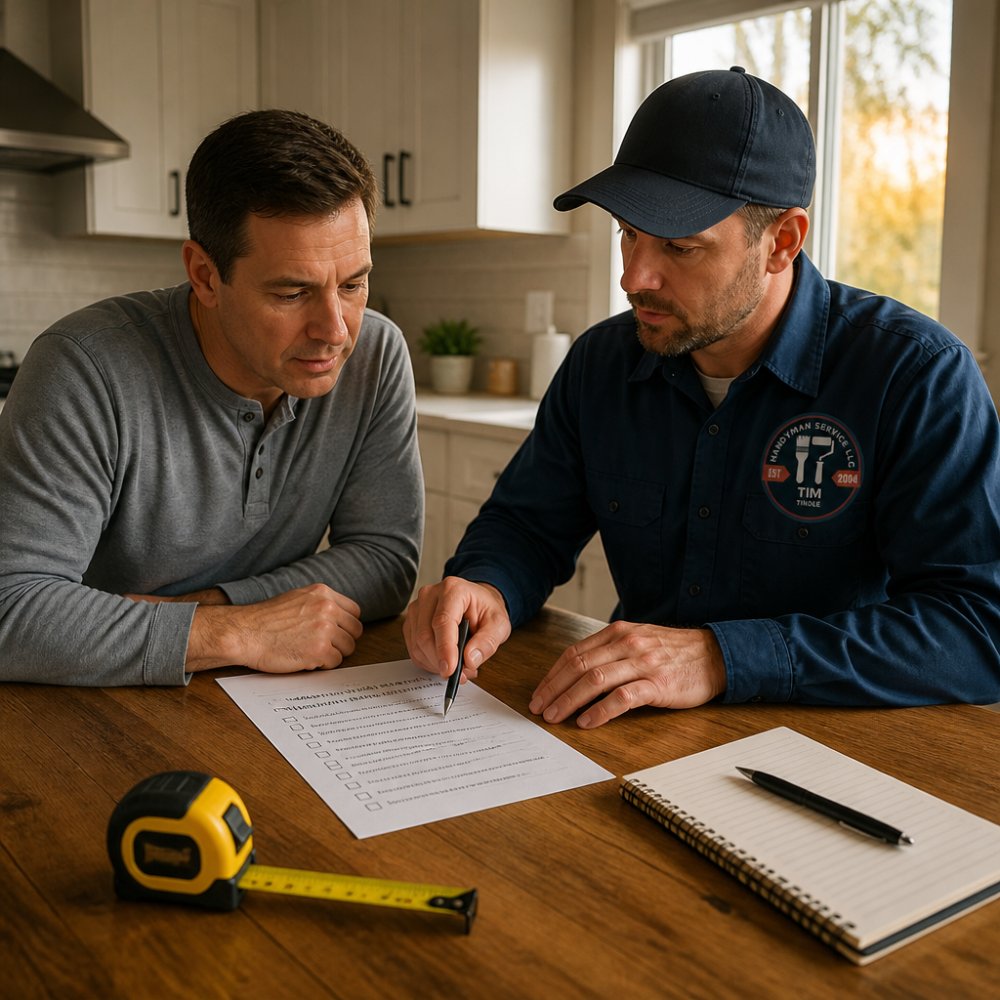
Ask these directly:
- How long have you done this specific type of work?
- Are you licensed and insured, and can you send the certificate today?
- Who will actually be on site, you or a crew?
- What is your availability, and how long will this job take?
- Is your estimate fixed or hourly, and what triggers a change?
- How do you handle hidden damage, like rot behind drywall?
- What is your payment schedule, and do you take a deposit?
- Do you provide a written contract or work order?
- What guarantee do you offer on workmanship?
- Can you provide two local references from similar jobs?
Listen for specifics. Vague answers about insurance or timelines are a signal.
Step 5: Check References, Online Reviews, and Reputation
References and reviews answer one question: does this person finish what they start?
Use a short script:
- What was the job?
- Did the handyman show up on time?
- Was the final bill close to the estimate?
Read the two- and three-star reviews first; they are usually more specific than five-star praise. Look for patterns: lateness, scope creep, poor cleanup, ignored callbacks.
Call 720-989-4123 for a free estimate →
Also check how long the business has operated. An established business has a track record you can verify; side hustles disappear when warranty work is needed.
Step 6: Get a Handyman Estimate and Written Agreement
A handyman estimate and written agreement turn a conversation into a contract. Get at least two estimates for anything beyond a small repair. The problem most homeowners hit is that three quotes arrive in three different formats, so the numbers cannot be compared. Fix that by forcing every bid into the same structure before you read a single price.
Put Every Estimate in the Same Format
Send each handyman the same written punch list and ask for a quote broken into five lines: labor, materials, permit fees (if any), disposal, and total. If a bid arrives as a single lump sum, send it back for the breakdown. A handyman who will not itemize is either guessing or hiding margin.
Compare quotes on these points:
| What to Compare | What Good Looks Like | What to Watch For |
|---|---|---|
| Task list | Matches your punch list item by item | Bundled "misc repairs" with no detail |
| Price structure | Fixed price per task, or clear hourly rate | A single lump sum with no breakdown |
| Materials | Listed separately with who buys them | Unclear who pays for supplies |
| Timeline | Start date and duration in writing | "Sometime next week" |
| Change process | Written approval before extra work | Verbal "we'll sort it out later" |
| Payment terms | Deposit plus payment on completion | Full payment upfront in cash |
Score Candidates on a Weighted Scorecard
A side-by-side scorecard beats gut feel, especially when two bids are close. Score each candidate from 1 to 5 on the criteria below, multiply by the weight, and add the totals.
| Criterion | Weight | Score (1-5) | Weighted Points |
|---|---|---|---|
| License and insurance verified | 25% | ||
| Written, itemized estimate | 20% | ||
| References from similar jobs | 15% | ||
| Written change-order process | 15% | ||
| Timeline and availability | 10% | ||
| Payment terms and deposit size | 10% | ||
| Review patterns (not single score) | 5% |
A candidate who scores a 1 on license and insurance should be eliminated regardless of total, because that single failure can cost more than the entire job. Treat the scorecard as a tiebreaker and documentation tool, not a substitute for reading the contract.
What a Written Contract or Work Order Should Include
The document does not need to be long. It does need these items:
- Both names and the service address
- The full task list with quantities
- Total price and payment schedule
Read it before signing. If a term is missing, ask for it in writing. A handyman who resists putting the change process or warranty in writing is telling you how the job will go when something goes wrong.
Step 7: Handyman Red Flags, Scams, and Pressure Tactics
Red flags are the patterns that predict a bad outcome. Most scams rely on speed, so slow down when you spot them. The list below explains how each tactic works, so you can recognize it in the moment.
The Red Flags That Should End the Conversation
- Cash-only, full payment upfront. Once cash changes hands, you have no leverage and no paper trail. A legitimate business can accept a card or check and will put the deposit in writing.
- No written estimate or contract. "We'll work it out" is not a price. Without a document, the final bill is whatever the handyman decides.
- Pressure to decide today. Real businesses can hold a quote for a day or two. Urgency is the tool that prevents you from calling references or checking insurance.
How the Common Scams Actually Work
Three patterns account for most handyman losses. The deposit-and-disappear scam collects a large deposit, schedules a start date, and never returns.
A common pattern in all three is a request to move the conversation off paper: cash only, no receipt, no contract. The defense is the same every time: written scope, written price, written change process, and payment tied to completed work.
Payment Safeguards and Closeout Documentation
Payment structure is your strongest protection. A workable default: a modest deposit, progress payments tied to completed milestones, and a final payment held until a walkthrough is done. Never pay the full amount before the punch list is complete.
At closeout, collect and file:
- The signed contract and any written change orders
- Receipts for every payment, including the deposit
- Photos of the finished work, including any areas that were opened up during the job
- The workmanship warranty in writing, with the duration and what it covers
That file is your proof if a warranty issue comes up later. A final walkthrough with the handyman, checklist in hand, is the cheapest insurance you will ever buy.
Frequently Asked Questions
What are some red flags when hiring a handyman?
Watch for anyone who demands a large cash deposit up front, refuses to put the scope or price in writing, or pressures you to decide on the spot. Other handyman red flags include no verifiable insurance, no local references, a phone number that only takes calls, and a request to skip a written contract. Walk away if the person cannot name who holds the license or policy, or if the estimate changes every time you ask a question.
Should a handyman be licensed and insured?
Yes. Ask for the handyman license and insurance details, then verify them yourself by calling the insurer and checking the state or local licensing board. General liability insurance protects your property if something gets damaged, and a current policy shows the business is established. Note that some tasks, such as new electrical circuits or gas line work, usually require a licensed trade specialist, so confirm the scope fits handyman work before you book.
What should a handyman's estimate and written agreement include?
A solid handyman estimate and written agreement lists the detailed task list, materials, labor, total cost, payment terms, and timeline. It should name the start and finish dates, who buys supplies, how change orders are handled, and what the workmanship guarantee covers. Ask for the deposit amount and the final payment trigger in writing. Keep the signed contract and every receipt so you have a paper trail if a dispute comes up later.
How do I check a handyman's references and reviews?
Ask for at least three local references from jobs similar to yours and call them, asking about punctuality, cleanup, and whether the final bill matched the estimate. Read online reviews across more than one platform and look for patterns in complaints rather than a single bad rating. Verify that the business has a real address and a track record that stretches back more than a few months, which helps confirm it will still be around for warranty work.
Hiring well takes one afternoon and saves weeks of frustration. If you want a simpler path, Handyman Service Aurora is licensed and insured, serves homeowners across Aurora, Foxfield, Parker, Centennial, and the Denver Metro area, and provides free estimates before any work begins. Call 720-989-4123 for a free estimate and start your project with a written scope, a fixed quote, and a team that shows up.