 how-to
How to Avoid Handyman Pricing Surprises
Table of Contents
- Why Handyman Bills Spiral Beyond the Quote
- The Real Average Cost of Home Repairs and What Drives It
- How to Request a Written Estimate That Protects You
- Key Questions to Ask a Handyman Before Hiring
- Flat Rate vs. Hourly: Which Billing Model Hides Surprises?
- The Change Order: How to Handle Scope Creep and Hidden Fees
- Your Pre-Hire Checklist to Avoid Pricing Surprises
- Conclusion: Secure Your Quote and Your Peace of Mind
- Frequently Asked Questions
Last Updated: September 6, 2026
Why Handyman Bills Spiral Beyond the Quote
The gap between a quoted price and the final invoice is the most common source of homeowner frustration. Pricing surprises rarely come from dishonesty; they usually come from a vague agreement on what the job includes.
A written estimate that defines the scope of work is your first line of defense. This guide explains how to avoid pricing surprises by auditing quotes, managing scope, and building a clear contract.

The fix is not to assume the worst about every contractor. It is to structure the agreement so that both sides know exactly what is included, what costs extra, and how changes get approved.
The Real Average Cost of Home Repairs and What Drives It
The average cost of home repairs varies widely by project type, materials, and regional labor rates. What matters more is understanding the cost drivers so you can evaluate whether a quote is reasonable.
Labor costs and material markup are the two main components of any handyman estimate. A common mistake is comparing only the bottom-line number between quotes without checking whether the scope of work matches.
Project timeline and job complexity also shift pricing. A straightforward repair may take a few hours, while a job that requires drywall patching, painting, and cabinet work involves more coordination. According to general guidance on home repair cost factors, the more detailed your project description, the more accurate your estimate will be.
How to Request a Written Estimate That Protects You
Not all written quotes are equal. The goal is an estimate specific enough to audit and broad enough to cover the entire job. A vague line item like "labor, $400" tells you nothing. A line item that reads "install 12"x12" porcelain tile, including mortar, grout, and backer board, $850" lets you verify the scope and materials.
When you request an estimate, provide photos, measurements, and a clear description of the problem. Many providers, including Handyman Service Aurora, offer free estimates based on this information.
A professional estimate should include:
- A defined scope of work with specific tasks listed
- Material costs itemized by type and quantity
- Labor costs estimated by hour or by project
- A validity period for the quoted price
- Terms for how changes to the scope will be handled
How to Audit an Estimate Like a Pro
The written quote is your reference point. Avoid a dispute by auditing the estimate before you sign. Here is a three-step process most consumer advocates recommend:
Step 1: Check the line items against the physical job. Walk through the quote room by room or task by task. If the quote says "repair drywall," does it specify the square footage? If it says "replace faucet," does it list the model or just "supply parts"? Vague descriptions are where hidden fees hide.
Step 2: Separate labor from materials. Ask for the material list with quantities and unit prices so you can compare against retail at a local home improvement store. A typical materials markup ranges from 10% to 30% above cost, which covers sourcing time, delivery, and warranty handling (thisoldhouse.com). Anything above 40% without a clear explanation is worth questioning.
Step 3: Verify the assumptions. Does the quote assume access to water and power? Does it include cleanup and disposal of debris? Does it cover permits? A quote that does not explicitly state "includes debris removal" leaves room for a surprise dump fee. Ask the contractor to write down any assumption that could affect the price.
The "Not-to-Exceed" Clause
A not-to-exceed clause is a written statement that the total cost will not go above a specific number unless you approve a change order in writing. Not every contractor will agree to this, especially for projects with unknown conditions behind walls or under floors. But for defined tasks like painting, fixture replacement, or minor carpentry, it is reasonable and eliminates the open-ended final invoice.
:::tip Pre-Quote Checklist
Before you send a request for an estimate, gather these items to get the most accurate quote possible:
- Photos of the problem area from multiple angles
- Measurements of the space (width, height, depth)
- Brand and model numbers of any fixtures or materials you want used
- A list of questions about access, cleanup, and timeline
- Your budget range and a contingency amount (typically 10-20%)
:::
Key Questions to Ask a Handyman Before Hiring
Questions to ask a handyman before hiring should focus on pricing transparency, licensing, and how unexpected issues are handled. The answers reveal whether you are working with a professional or someone who will improvise when the job gets complicated.
Start with these questions:
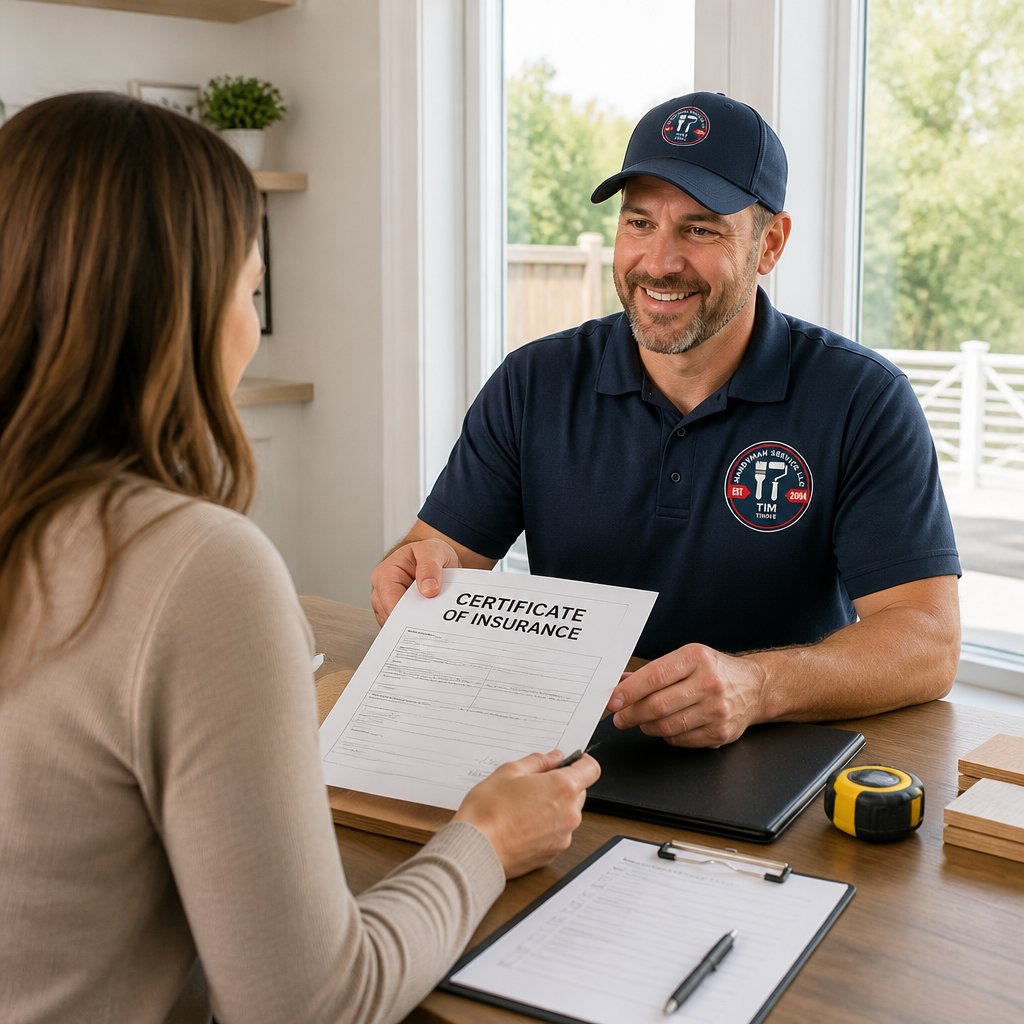
- Are you licensed and insured, and can I verify that?
- Do you charge by the hour or by the project?
- What is included in your quote, and what would cost extra?
- How do you handle unexpected problems discovered during the job?
- Is there a minimum charge or a service call fee?
- Do you provide a written contract before starting work?
A licensed and insured provider offers protection if something goes wrong on your property. As documented in guidance on hiring home repair contractors, verifying credentials before work begins is essential to avoid liability for damages or incomplete work.
The way a contractor answers these questions reveals their billing structure. Vague answers about pricing should raise a red flag.
Flat Rate vs. Hourly: Which Billing Model Hides Surprises?
Flat rate and hourly billing each carry different risks. A flat fee gives you price certainty upfront, provided the scope of work does not change. Hourly billing can be more economical for small jobs but leaves the final cost open-ended. With a flat fee, the contractor absorbs the risk of the job taking longer; with hourly billing, that risk shifts to you.
Call 720-989-4123 for a free estimate →
| Billing Model | How It Works | Best For | Hidden Risk |
|---|---|---|---|
| Flat rate | One price for the defined scope | Defined projects with clear tasks | Scope creep if details change |
| Hourly | Rate multiplied by time worked | Small, unpredictable jobs | No cost ceiling without agreement |
| Time and materials | Labor plus marked-up materials | Larger renovation projects | Material markup can inflate costs |
The Real Math Behind Hourly Billing
Hourly billing hides surprises in the rate and the time logged. A rate of $75 per hour sounds straightforward, but the final invoice depends on how the contractor tracks time. Does the clock start when they arrive or when they begin work? Does travel time or time spent picking up materials count? A contractor who charges for a 45-minute drive plus 30 minutes of shopping adds over an hour of billable time unrelated to the repair.
Before you agree to hourly billing, ask these three questions:
- Does the hourly rate include travel time to and from the job?
- Does the clock start at your driveway or at the work site?
- Is there a minimum charge for the first hour or half-hour?
The answers will tell you whether the effective rate is closer to the quoted number or significantly higher.
How to Negotiate a Cap on Hourly Work
If a contractor insists on hourly billing, ask for an estimate of total hours and a written cap. Say: "I am comfortable with your hourly rate, but I need a not-to-exceed figure for the total job. If you discover something that will push the cost above that figure, stop work and call me before you continue." This protects you from an invoice that reflects inefficient work or unnecessary delays.
A common pattern is to quote a range rather than a single number. That range is not a cap; it is an estimate. The only number that protects you is the upper limit. Ask the contractor to commit to the top of the range as the maximum unless conditions change. A refusal to cap the price on a defined task is a red flag.
Time and Materials: Where the Real Money Leaks
Time and materials billing is common for larger projects, and it is where homeowners get hit with the most surprising line items. The materials portion includes a markup that is rarely disclosed. A contractor who charges you $200 for parts that cost them $150 is making $50 on materials in addition to their labor rate. That is not inherently dishonest, but it should be transparent.
Ask the contractor to state their material markup policy in writing before the job starts. Some charge retail price without a separate markup; others charge cost plus a percentage. Both models are legitimate, but you need to know which one you are agreeing to. If the contractor cannot explain how materials are priced, look elsewhere.
:::warning The "We'll Just Add It" Trap
Never accept a verbal "we'll just add it to the bill" for extra materials or labor. Every addition should go through the change order process. If a contractor discovers that a wall needs extra framing or a pipe needs replacement, the conversation should be: "Here is what I found, here is what it will cost, and here is the written change order. Please sign it before I proceed." If the contractor starts the work before you sign, you are not obligated to pay the full amount in most jurisdictions, but you will have a difficult dispute on your hands. Protect yourself by requiring written approval for any cost increase above the original quote.
:::
The Change Order: How to Handle Scope Creep and Hidden Fees
Scope creep is the leading cause of handyman pricing surprises. It happens when work expands beyond the original agreement, either because the homeowner requests additions or the contractor discovers conditions requiring extra effort. Without a formal process, these changes get added to the final bill without discussion.
The change order process is the professional standard for handling mid-project adjustments. A change order is a written amendment to the original contract that describes the new work, the cost, and the impact on the project timeline. Both parties sign it before the additional work begins.
Emergency vs. routine pricing also matters. A burst pipe or a failed lockout demands immediate attention, and urgent service often carries a premium. For routine repairs, you have time to get multiple quotes and validate pricing.
If a contractor discovers an issue that requires more money, ask for a change order. Never approve additional work verbally without understanding the cost.
Your Pre-Hire Checklist to Avoid Pricing Surprises
Use this pre-hire checklist when evaluating any provider:
- Request a written, itemized estimate from at least two providers
- Verify licensing and insurance coverage before hiring
- ] Get references or check online reviews for reliability
- Confirm the billing model: flat rate, hourly, or time and materials
- Ask how unexpected issues will be handled and priced
- Review the scope of work in writing and confirm nothing is missing
- Set a budget that includes a contingency fund for surprises
- Agree on a payment schedule tied to project milestones
A contingency fund is a practical safeguard. Setting aside an additional portion of your budget for unexpected conditions means a surprise discovery does not derail the project.
A reputable contractor will show you the cost of materials and explain their markup. If a quote seems high, ask for the material breakdown and compare it against retail prices you can verify.
Conclusion: Secure Your Quote and Your Peace of Mind
Handyman pricing surprises are avoidable with a written agreement, clear questions, and a defined scope of work. The tools in this guide put you in control of the conversation rather than reacting to the final bill.
For homeowners in the Denver Metro area, Handyman Service Aurora provides licensed and insured services with free estimates that respect your time and budget. Our team handles carpentry, painting, remodeling, and general repairs with transparent pricing and a commitment to professional standards. Call 720-989-4123 for a free estimate and get the peace of mind that comes from working with a trusted local provider.
Frequently Asked Questions
What is a fair price to pay a handyman?
Fair pricing depends on the job's complexity, local rates, and the handyman's licensing and insurance status. Instead of comparing single hourly rates, ask for a flat fee for the specific scope of work. A licensed and insured professional may charge more per hour than an uninsured side gig, but that cost buys liability protection and warranty-backed work. Always get at least two written estimates for larger projects to validate the quoted price against the market.
What are some red flags when hiring a handyman?
Red flags include refusing to provide a written estimate, demanding full payment upfront in cash, lacking proper licensing or insurance, and quoting a price without asking to see the job site. Vague answers about how they handle unexpected issues are a major warning sign. A professional will explain their change order process before work starts. If a handyman cannot clearly define the scope of work or what happens if they find extra damage, seek another provider.
Should I ask for a written estimate before work begins?
Yes, always. A written estimate is your primary defense against handyman pricing surprises. It should detail the scope of work, specific materials, the billing structure (flat fee or hourly), and the payment schedule. This document prevents disputes by defining what you agreed to pay for before any work starts. It also establishes a baseline for managing any change orders if unexpected issues arise during the project.