 how-to
Living in Your Home During a Remodel: A Practical Guide
Table of Contents
- Is Living in Your Home During a Remodel Actually Doable?
- How to Survive a Home Remodel Without Losing Your Mind
- How Long to Live in a House During Renovation (and When to Leave)
- Setting Up a Temporary Kitchen During a Remodel
- Home Renovation Safety Tips for Families, Kids, and Pets
- Managing Your Contractor, Timeline, and Temporary-Living Budget
- Frequently Asked Questions
Last Updated: October 17, 2026
Is Living in Your Home During a Remodel Actually Doable?
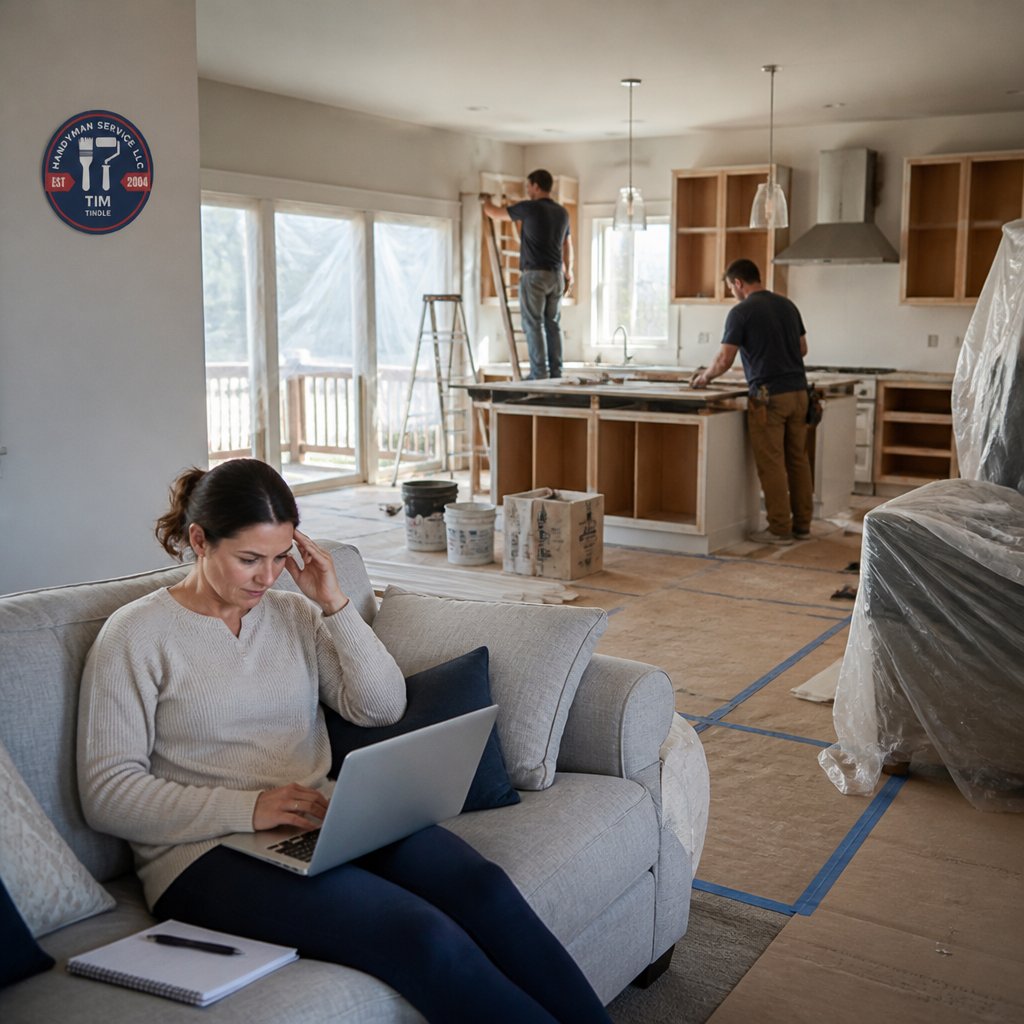
Living in your home during a remodel is doable, but only if you plan for disruption before demolition starts. Most homeowners who stay do fine when the scope is contained and the work zone is sealed off. Whole-house projects are a different story.
Here is the question we hear most at Handyman Service Aurora: "Can we just stay put?" Sometimes yes. Sometimes staying costs more in stress than a short-term rental would cost in rent.
Living in your home during a remodel means keeping a functional core: a place to sleep, a working bathroom, a way to eat, and a path through the house that does not cross the work zone.
The Stay-or-Move Decision: A Quick Framework
Ask three questions, in this order:
- How many bathrooms will be out of service at once? One is workable. Two is not, unless you have a plan.
- Will the kitchen be unusable for more than a week? A microwave-and-mini-fridge setup works short term. It wears thin fast.
- Is the work zone sealed from living space? A plastic barrier and a zippered door make a real difference. An open doorway does not.
If you answer "no" to two or more, plan a phased move-out. More on that below.
How to Survive a Home Remodel Without Losing Your Mind
The homeowners who handle this well share one habit: they decide the small stuff in advance. Where the dog sleeps. Where the mail goes. Which door the crew uses. Decisions made in advance are free. Decisions made at 7 a.m. with a nail gun running are not.
A few rules that hold up in practice:
- Set one entry point for the crew and keep it consistent. A single path limits dust and protects floors.
- Move breakables and valuables out of the work zone before day one, not after the first accident.
- Agree on work hours in writing. Most crews start early. If your kids nap at noon, say so now.
- Keep a "survival box" with chargers, medications, and the coffee maker in a room the crew never enters.
Build a Room-by-Room Livability Plan
Write it down. For each room, decide three things: what it is for during the project, what it is not for, and what has to move out before day one.
| Room | During the Remodel | What to Move Out First | Watch Out For |
|---|---|---|---|
| Bedroom | Sleep only, kept dust-free | Bedding near shared walls, area rugs | Dust settling on pillows; move the bed off the wall shared with the work zone |
| Bathroom | Full use, cleaned daily | Counter clutter, bath mats | Construction grit in drains; run water briefly after crew hours |
| Kitchen | Temporary setup elsewhere | Small appliances, dry goods, dishes you will not use | Food stored open; keep everything in sealed bins |
| Living room | Main hangout, sealed off from work zone | Electronics, books, textiles near the barrier | Plastic sheeting traps heat and dust; ventilate the room |
| Garage | Staging, storage, often the temporary kitchen | Anything you need daily; clear a path to the electrical panel | Crew traffic and fumes; keep the panel and water heater accessible |
| Hallway / stairs | The path through the house | Runners, decor, anything trip-prone | This is the dust highway; sweep it daily |
Three decisions matter more than the rest:
- Pick the room that stays clean. One room should be a dust-free zone where you sleep and recharge. Seal its door, cover the vents, and do not let the crew use it as a pass-through.
- Pick the room that becomes the kitchen. It needs a heat source, cold storage, water, and a work surface. A garage corner or spare room works; a living room corner works if you keep it out of the traffic path.
- Pick the path. Every trip from bed to bathroom to coffee should avoid the work zone. If it cannot, that is your signal to plan a partial move-out for the worst phase.
The garage matters more than people expect. It becomes material staging, tool storage, and often the temporary kitchen. Clear it out first, and keep a clear path to the electrical panel and water heater, the crew will need them, and so will you.
How Long to Live in a House During Renovation (and When to Leave)
There is no single answer, but scope gives you a rough guide. A single bathroom renovation is usually a stay-put project. A kitchen remodel is usually a partial move.
Ask your contractor for a written schedule with phases, not just a finish date. Then ask one more question: "Which phase is the worst for us?" Plan your move-out around that phase, not the whole project.
When staying stops making sense
Move out, at least temporarily, if any of these are true:
- No working bathroom for more than a few days
- No way to store or prepare food safely for an extended period
- Hazardous materials work, such as lead paint or asbestos, in living areas
- A family member with asthma, allergies, or a compromised immune system
- Infants, toddlers, or pets who cannot be kept out of the work zone
There is no shame in leaving. A short-term rental during the worst phase often costs less than the stress of staying.
Setting Up a Temporary Kitchen During a Remodel
A temporary kitchen needs four things: a heat source, cold storage, a water source, and a clear work surface. That is it.
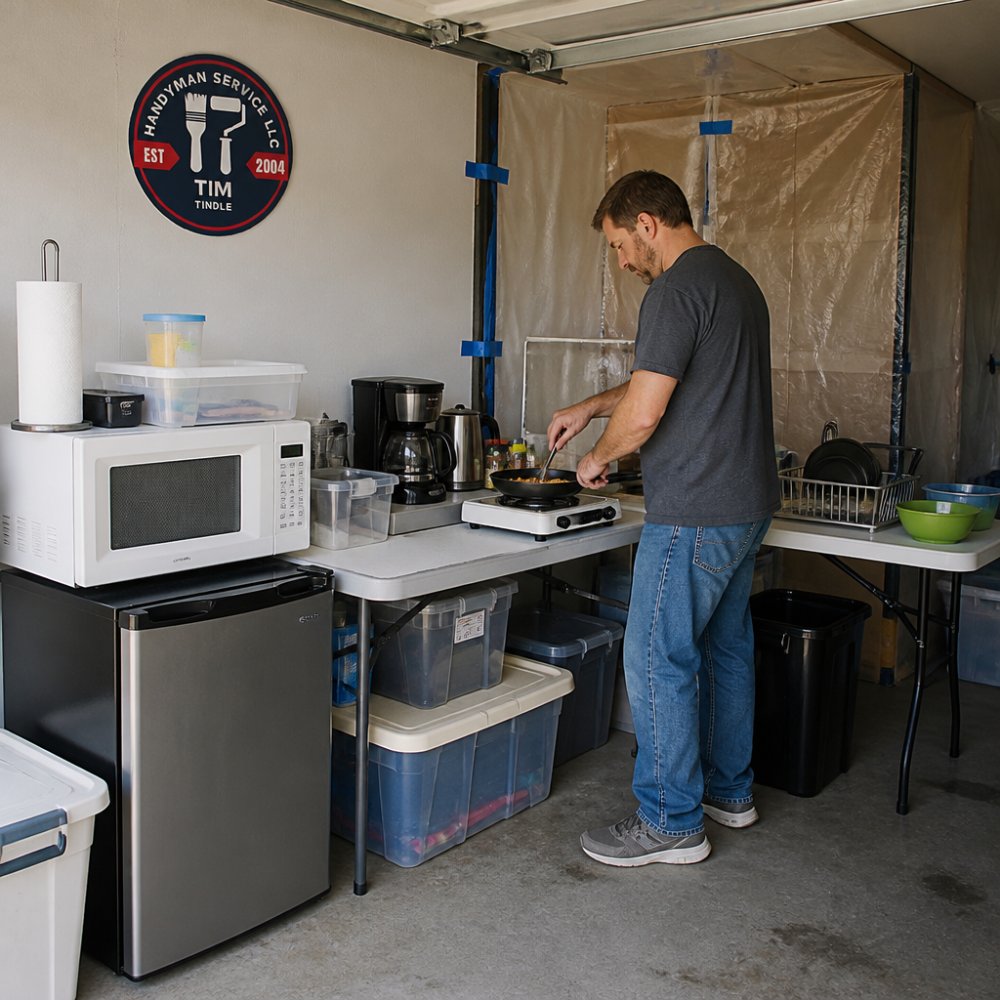
Set it up in the garage, a spare room, or a corner of the living room away from the work zone.
What to include:
- Microwave or countertop induction burner for basic cooking
- Mini fridge for perishables, kept off the floor
- Folding table as prep space, wiped down daily
- Sealed bins for dry goods, plates, and utensils
- A small bin for dishwashing or a utility sink if you have one
Keep food covered and stored away from dust. Wash dishes in the bathroom sink or a utility tub if the kitchen sink is gone.
Call 720-989-4123 for a free estimate →
Bathroom Access and Utility Shutoffs
Protect your bathroom access above all else. If you have two bathrooms, never let both go offline at the same time. Stagger the work.
Ask your contractor which utilities will be shut off and when. Water and power shutoffs are usually short, but you need notice. Keep a few gallons of water on hand for shutoff days, and know where your main water valve is.
Home Renovation Safety Tips for Families, Kids, and Pets
Safety is the part that gets the least attention and matters the most. A construction site is not a living space, and it should never be treated like one.
Basic rules that work:
- Seal the work zone with plastic sheeting and a zippered door. This keeps dust in and kids out.
- Keep tools and materials out of reach at the end of every workday.
- Post the crew's hours so everyone knows when the house is a site and when it is home.
- Sweep and wipe daily. Construction debris travels on shoes and paws.
- Keep pets confined during work hours, ideally in a room far from the noise.
Air Quality, Dust Containment, and Hazardous Materials
Dust is the number one complaint from homeowners who stay during a remodel. Fine dust from drywall and sanding gets into everything: vents, bedding, food, lungs. Containment is not optional.
Ask your contractor how they plan to contain dust. Negative air pressure with a HEPA filter is the standard approach. Sealed doorways and floor protection come next.
Older homes carry a bigger risk. Federal rules require certified contractors and specific work practices for lead-safe renovation in pre-1978 homes (the EPA). For guidance, see the EPA lead-safe renovation rules and the EPA asbestos guidance for homeowners.
Managing Your Contractor, Timeline, and Temporary-Living Budget
The project runs on two things you control: clear agreements and a realistic budget. Get both in writing, and treat the temporary-living budget as a separate line from construction costs, because it is the one most homeowners forget to fund.
Written Agreements and Site Logistics
Put these in the contract or a written add-on:
- Work hours and days, including whether Saturday work is expected
- Which entry, bathroom, and outlets the crew may use
- Dust containment method and who supplies the barriers
- Daily cleanup expectations and who hauls away debris
- A schedule with phases and a stated worst phase
A contractor who resists written terms is telling you something. Our team puts estimates in writing and keeps clients informed as work moves, because surprises cost everyone.
Building a Temporary-Living Budget
Staying home is not free, and leaving is not automatically more expensive. The honest way to decide is to price both paths for the worst phase of your project, not the whole schedule.
Price these line items for that window:
- Meals. Count the days the kitchen is unusable and multiply by your realistic eating-out cost per person per day. A family of four eating out three meals a day adds up fast; a microwave-and-mini-fridge setup cuts it to one meal a day out. Be honest about which one you will actually do.
- Short-term lodging. If you move out for the worst phase, price a furnished rental or extended-stay unit for that window only, not the full project. Add pet fees and parking if they apply.
- Storage. If furniture has to leave the work zone, price a storage unit by month and add the cost of a truck or movers for two moves, in and back out.
- Laundry. If the washer and dryer are offline or blocked, price a laundromat run per week, including the time it takes.
- Food loss. A utility shutoff can spoil what is in the fridge and freezer. Budget to replace a full refrigerator's worth of food once, and plan to empty it before shutoff day.
Compare the total of the stay-put column against the move-out column for the same window. Often the gap is smaller than homeowners expect, and the decision becomes about stress and safety rather than dollars.
Frequently Asked Questions
Can you live in a house while renovating?
Yes, for many projects. Living in your home during a remodel works best when the work is contained to one or two rooms, water and power stay on, and you set up a temporary kitchen or bathroom. Whole-house renovations, major structural work, or projects involving hazardous materials like asbestos usually make staying impractical. Decide early, write the plan into your contractor agreement, and budget for a short hotel stay in case of delays.
Which remodeling projects are hardest to live through?
Kitchen remodels and bathroom renovations top the list because they cut off water, cooking, and daily routines. Whole-house re-piping, roof replacements, and projects that remove load-bearing walls also disrupt every room. If your project touches the only full bathroom or the kitchen for more than a few weeks, plan a temporary kitchen during remodel work and consider a phased move-out for the worst stretch.
How can you keep your home safe during a remodel?
Ask your contractor to seal work zones with plastic sheeting and zip walls, run negative air pressure with HEPA filtration, and keep construction debris in a designated outdoor area. Lock up tools and chemicals, keep children and pets out of the work zone, and confirm the crew follows OSHA jobsite rules. Home renovation safety tips like these reduce dust exposure and prevent accidents during the construction phase.
When should you move out during a renovation?
Move out when the project removes your only bathroom or kitchen for more than two to three weeks, when structural work or full-house systems are being replaced, or when hazardous materials like lead paint or asbestos are being disturbed. Use a phased approach: stay for demolition and finish work, and leave for the messiest middle stretch. Budget for temporary accommodation costs before you sign the contract.