 how-to
How to Request a Certificate of Insurance From Contractors
Table of Contents
- Why Requesting a Certificate of Insurance Matters Before Work Begins
- How to Request a Certificate of Insurance From a Contractor: Step by Step
- Contractor COI Request Email Template You Can Send Today
- What to Check on a Contractor Certificate of Insurance
- Certificate Holder vs Additional Insured Contractor: What's the Difference
- How Often to Request Updated Contractor Insurance Certificates
- When a Contractor Can't or Won't Provide a COI
- Conclusion
- Frequently Asked Questions
Last Updated: October 21, 2026
Why Requesting a Certificate of Insurance Matters Before Work Begins
A certificate of insurance is a one-page snapshot of a contractor's coverage, and asking for one before work starts is the cheapest way to protect your home.
Here's the uncomfortable truth: a contractor's insurance protects them first. If an uninsured worker is hurt in your basement, or a ladder goes through your window, the claim can land on your homeowner policy.
That's why the request matters: it takes two minutes and changes who pays when something goes wrong.
What a COI Actually Proves (and What It Doesn't)
A COI proves that a policy existed on the date the certificate was printed. That's it.
It does not prove the policy is still active, that the premium was paid, or that the work you're hiring them for is covered.
What the document does give you is the name of the insurance carrier and the agent. That's your starting point for real verification, not the finish line.
How to Request a Certificate of Insurance From a Contractor: Step by Step
The fastest way to request a certificate of insurance from contractors is to ask in writing, name your required limits up front, then confirm the details with the agent listed on the form. Here's the full sequence, including the verification step most guides skip.
Step 1: Set Your Required Limits Before You Ask
Decide what you need before you send a single email. Vague requests get vague answers.
Start with these questions:
- What type of work is it? Painting a room carries less risk than a full remodel.
- Who else is on site? Subcontractors need their own coverage.
- What does your contract say? If your agreement lists insurance requirements, the certificate has to match them.
A common approach is to require general liability coverage, workers' compensation, and commercial auto if they'll drive to your property. Write the numbers down. You'll put them in the request.
Step 2: Ask the Contractor, Then Confirm With the Agent
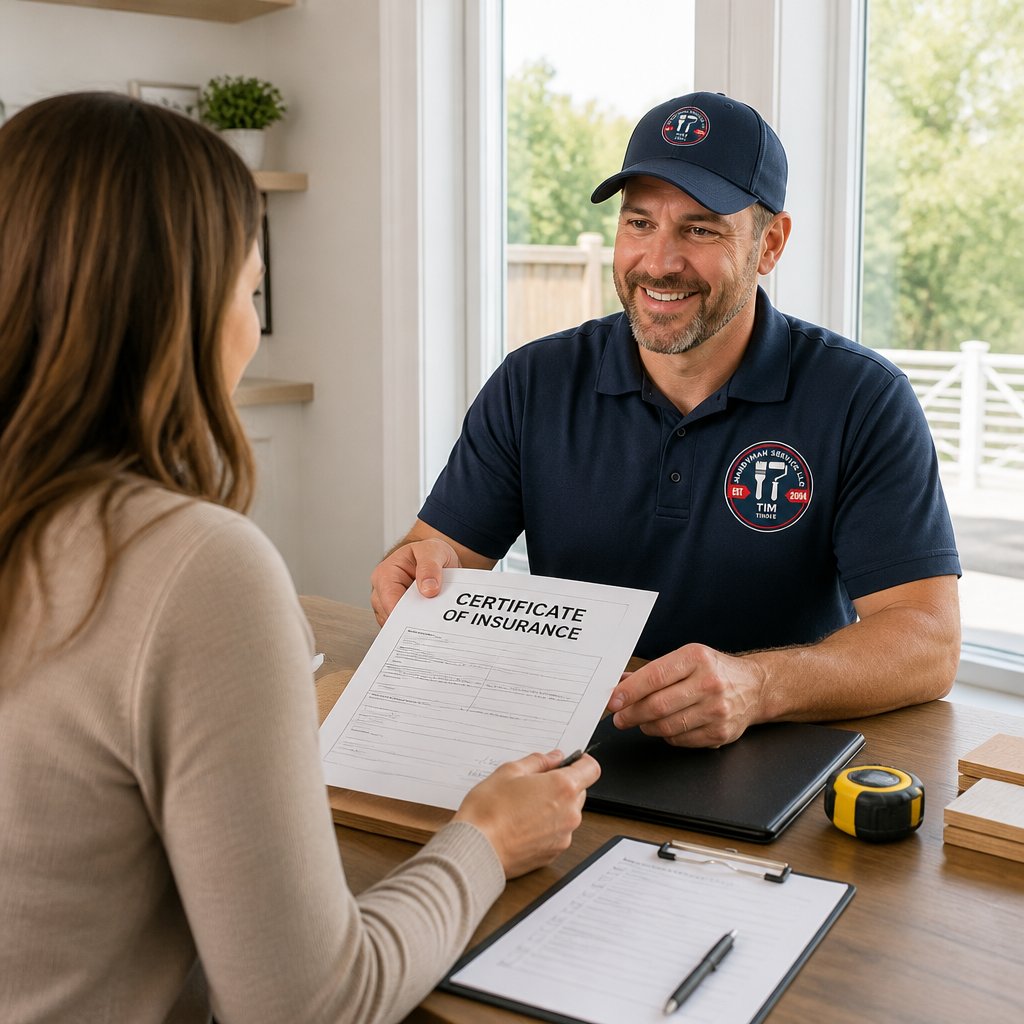
Send your request in writing so there's a record. Ask for a certificate naming you as certificate holder, and ask which agent issues it.
Then call or email that agent, the step most homeowners skip, and the one that matters. Ask:
- Is the policy active today, and what is the effective date?
- Does the policy cover the type of work being done at my address?
- Are the limits on the certificate the same as the limits on the policy?
You can also ask the contractor for a copy of the declarations page, which shows limits and effective dates in more detail than a certificate does.
Step 3: Review, File, and Track the Certificate
Read the certificate line by line against your requirements. Note the expiration date and set a calendar reminder a few weeks before it lapses.
Keep a copy with your contract and project photos so the paper trail lives in one place if a dispute arises.
Step 4: Verify the Certificate With the Insurer or Agent
A certificate is evidence, not a guarantee. Verification is a separate, short workflow:
- Match the named insured. The business name on the certificate must match the name on your contract and the name on the contractor's license, if your state requires one.
- Check the policy number and carrier. Call the carrier's claims or customer service line (not just the agent) and ask whether the policy is in force. Most carriers will confirm active/inactive status over the phone.
- Confirm the agent of record. The agent listed on the certificate should be able to pull up the policy and confirm the limits shown.
- Ask about cancellation notice. If you are named as certificate holder, ask whether the policy includes a notice-of-cancellation provision. Many policies provide 10 days' notice for nonpayment and 30 days for other cancellations, but the certificate itself does not create that right unless the policy or an endorsement says so.
- Keep the verification record. Save the email or note the date, time, and name of the person who confirmed the policy. That record is what turns a piece of paper into documented diligence.
| Step | What You Do | Time Needed | What You Walk Away With |
|---|---|---|---|
| Set limits | Match requirements to project risk and contract terms | 10 minutes | A written list of required coverage |
| Request and confirm | Email the contractor, then call the agent | 1-2 days | Verified active policy |
| Review and track | Compare to requirements, file, set renewal reminder | 15 minutes | A documented, current file |
| Verify with insurer | Call the carrier and confirm active status | 10-15 minutes | Written or noted confirmation |
Contractor COI Request Email Template You Can Send Today
Copy this, fill in the brackets, and send it. It works for a single repair or a full remodel.
Subject: Certificate of Insurance Request for [Project Address]
Hi [Contractor Name],
Before we start work on [project description] at [property address], please send a certificate of insurance to [your email].
The certificate should name [your name or entity] as certificate holder and show:
- General liability coverage
- Workers' compensation coverage
- Commercial auto coverage, if vehicles will be used on site
Please also include the name and contact information for your insurance agent so we can confirm the policy is active.
Work is scheduled to begin on [date].
Before you hit send, run this checklist:
Call 720-989-4123 for a free estimate →
- Property address and project scope are included
- Certificate holder name is spelled exactly as it appears on your deed or contract
- Required coverage types are listed
What to Check on a Contractor Certificate of Insurance
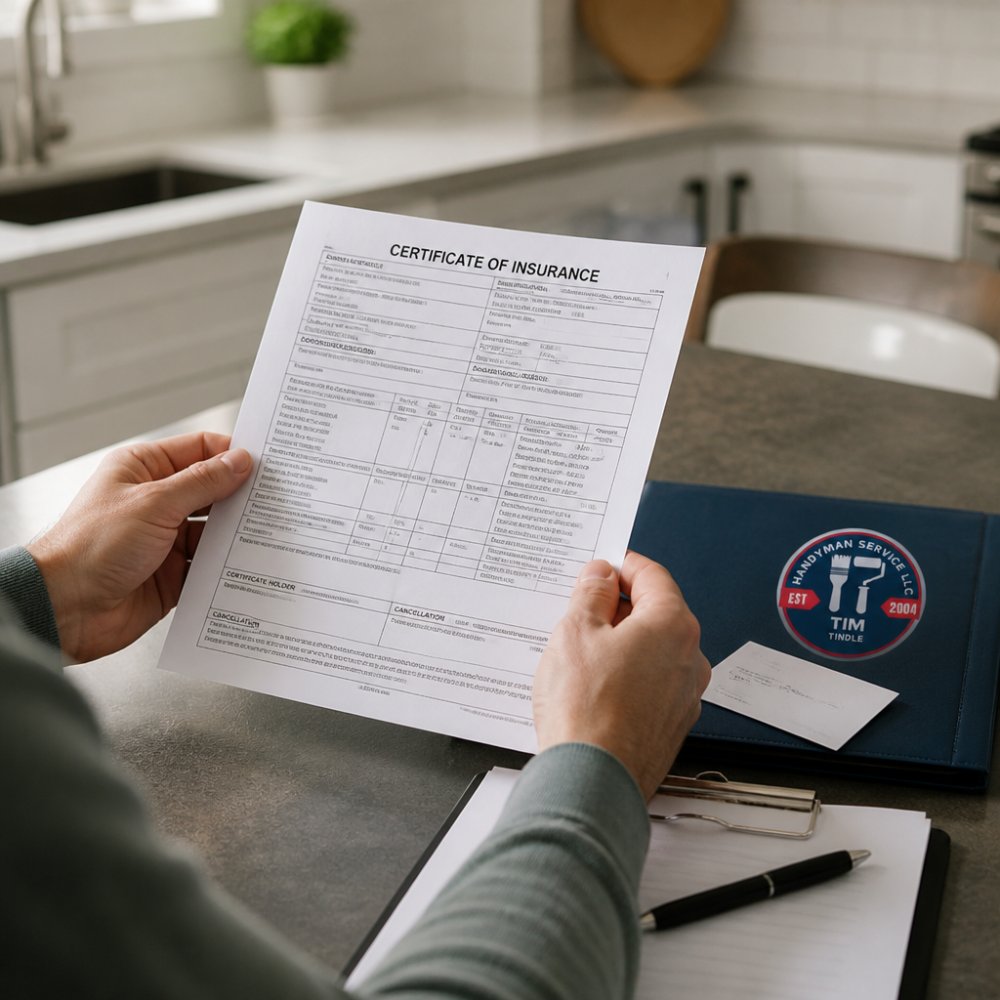
Then check the small print. A certificate with a policy number but no expiration date is incomplete, and one listing a different business name than your contract deserves a phone call.
Coverage Types and Limits That Should Appear
General liability covers bodily injury and property damage to others. Workers' compensation covers employees injured on the job. Commercial auto covers vehicles used for business.
If the contractor uses subcontractors, ask for their certificates too. A general contractor's policy often excludes work done by uninsured subs.
Certificate Holder vs Additional Insured Contractor: What's the Difference
A certificate holder is the party named on the COI who receives notice of coverage.
That distinction matters: being a certificate holder gives you paperwork, while being an additional insured gives you a path to coverage if a claim arises from the contractor's work.
If your project is large or high-risk, ask to be added as an additional insured.
For routine repairs, a certificate naming you as holder is often enough. For remodels, additions, or anything touching structural work, push for the endorsement.
How Often to Request Updated Contractor Insurance Certificates
Request a fresh certificate at the start of every project and whenever a policy renews.
Set a reminder for the expiration date, and if the contractor is on site for months, ask for an updated certificate as the old one nears its end.
Ongoing work deserves ongoing checks. A contractor who resists a simple renewal request is telling you something.
When a Contractor Can't or Won't Provide a COI
A contractor who can't produce a certificate is usually uninsured; one who won't is a bigger problem. Either way, don't start work until you have proof you can verify.
Here's a decision path for the common situations.
If the Contractor Says They're 'Between Policies'
A lapse is common for small operators, but it means there's no active policy to certify. Ask for the new policy's effective date and the agent's contact information. If it starts before your project begins, request a certificate dated on or after the effective date; if it starts after your start date, delay the start or find another contractor.
If the Contractor Offers a Declarations Page Instead
A declarations page is often better evidence than a certificate because it shows limits, effective dates, and endorsements in more detail. Accept it as an interim document, then verify the policy is active with the carrier, that combination is a reasonable substitute for a certificate in many residential projects.
If the Contractor Uses a Staffing or Payroll Service
Some contractors work through a professional employer organization (PEO) or staffing agency that carries the workers' compensation coverage. Ask for the certificate from the PEO and confirm the contractor is listed as a covered entity or client; it should name the PEO as insured and show the contractor's relationship to it.
If the Contractor Refuses Outright
A refusal is a signal. Ask once more in writing, stating the certificate is a condition of the contract. If the answer is still no, walk away, the cost of hiring an uninsured contractor isn't worth the savings, and your homeowner policy may exclude or limit coverage for injuries to uninsured workers on your property.
Escalation Steps
- Put the request in writing. Email creates a record and removes the 'I didn't know' defense.
- Set a deadline. Tie it to the contract signing or the start date.
- Offer alternatives. A declarations page, a carrier confirmation call, or a letter from the agent can all work.
- Document the refusal. If you end the relationship, keep the emails. They protect you if the contractor later claims they were ready to work.
- Check licensing. If your state licenses contractors, the licensing board may have insurance requirements on file. A quick license lookup can confirm whether the contractor is supposed to be insured.
The Insurance Information Institute's guide to home insurance explains how claims against your property can affect your own policy, which is exactly the risk you're avoiding.
Conclusion
The hardest part of hiring a contractor isn't finding someone with a truck and a toolbox. It's confirming they'll still be covered when something goes wrong.
At Handyman Service Aurora, we're licensed and insured, and we'll send our certificate before the first day on site.
Call 720-989-4123 for a free estimate and get a contractor who shows proof of coverage up front.
Frequently Asked Questions
Can a customer ask a contractor for proof of insurance?
Yes. Any homeowner or property owner can ask a contractor for a certificate of insurance before work starts, and a legitimate contractor should expect the request. Ask for a current COI that names the insurance carrier, policy number, effective and expiration dates, and coverage limits. You can also call the agent or broker listed on the certificate to confirm the policy is active. If a contractor hesitates or says the certificate is private, treat that as a warning sign and get quotes from someone else.
Does a certificate of insurance prove the contractor has active coverage?
Not on its own. A COI is evidence that a policy existed when the certificate was issued, but it is not the policy itself and it does not guarantee coverage will pay a claim. Coverage can lapse, be canceled, or be voided for nonpayment after the certificate is printed. That is why you should verify coverage directly with the insurance agent or carrier listed on the form, and why you should request updated certificates at renewal rather than relying on a single document.
Should the property owner be listed as certificate holder or additional insured?
As certificate holder, you receive notice if the policy is canceled or changed, and you have proof the coverage exists. As an additional insured, you gain direct protection under the contractor's liability policy for claims tied to their work. For larger remodeling or long projects, additional insured status with an endorsement is worth requesting. For small repairs, certificate holder status is usually enough. Ask the contractor's agent whether adding you as additional insured is possible and what it costs.
How often should I request updated contractor insurance certificates?
Request a fresh certificate at the start of every new project, and ask for updated copies when the policy renews, typically once a year. For ongoing or repeat work, set a reminder 30 days before the expiration date shown on the certificate and ask the contractor to send the renewal. If the contractor switches carriers or lets a policy lapse, request a new COI immediately. Keep each version on file so you have a paper trail if a dispute or claim comes up later.