 how-to
How to Verify Handyman Insurance in 5 Steps
Table of Contents
- Why You Must Verify Handyman Insurance Before Work Starts
- What Is a Certificate of Insurance and What Should It Show?
- Step-by-Step: How to Verify Handyman Insurance
- Risks of Hiring Uninsured Handymen
- Questions to Ask a Handyman Before Hiring
- Conclusion: Protect Your Home With a 5-Minute Check
- Frequently Asked Questions
Last Updated: September 5, 2026
Why You Must Verify Handyman Insurance Before Work Starts
A single afternoon of home repairs can lead to thousands of dollars in liability if the person doing the work isn't properly insured. Hiring an uninsured handyman means you could be responsible for medical bills if someone gets hurt on your property or for the cost of damage caused by faulty work. This guide from Handyman Service Aurora walks through the exact steps to verify handyman insurance so you avoid that risk entirely.
The process takes about five minutes once you know what to look for. Most homeowners skip it because they assume a friendly demeanor and a fair price mean the worker is legitimate. That assumption is exactly what leads to costly disputes, and it's why the verification steps below matter more than any verbal promise.
Verifying handyman insurance is the process of confirming that a contractor carries active liability coverage and workers compensation before they begin work on your home. It protects you from financial responsibility for accidents and property damage during the project.
What Is a Certificate of Insurance and What Should It Show?
A certificate of insurance, commonly called a COI, is the standard document used to prove that a business holds active insurance coverage. It's not the policy itself, but rather a summary issued by the insurance carrier that shows the types of coverage, policy limits, and effective dates.
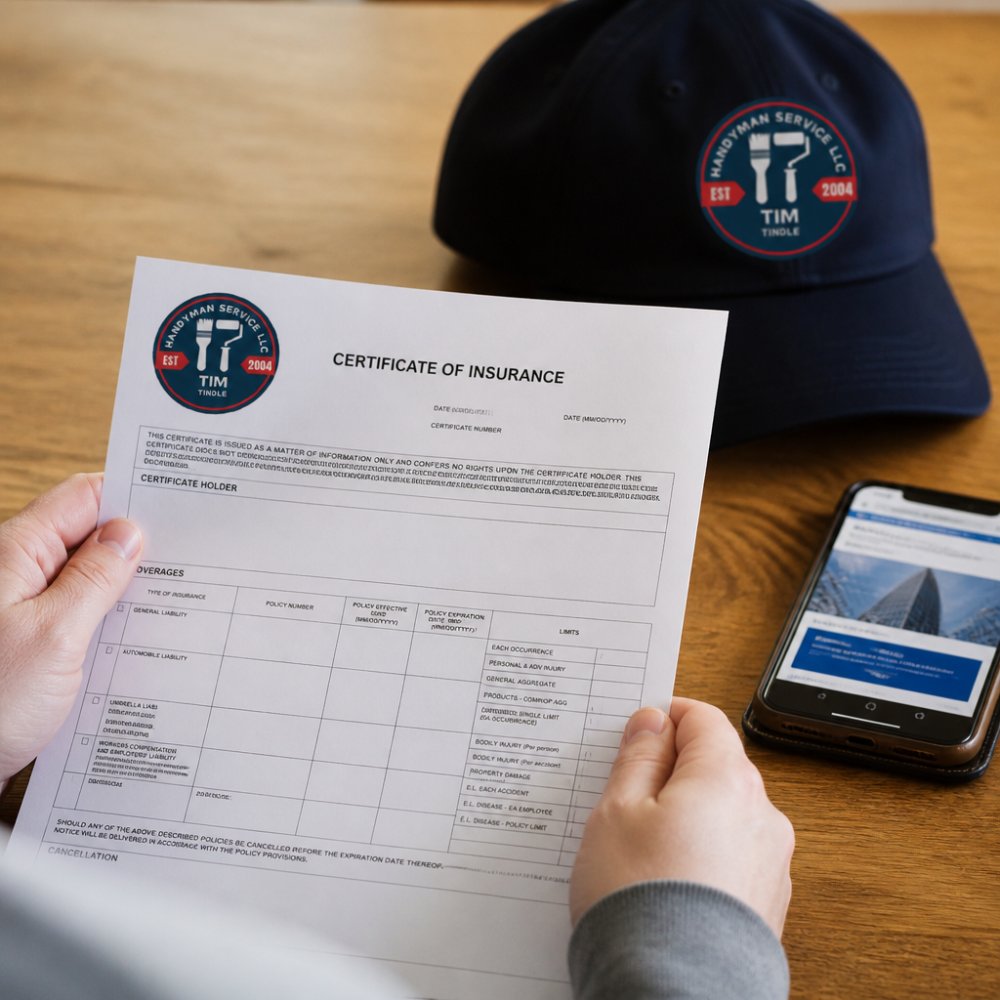
The most common format is the ACORD 25 form, which is the industry standard for certificates of liability insurance in the United States. While it looks like a dense grid of boxes, the critical information appears in predictable locations on the form. Here is a field-by-field walkthrough of what to look for:
Box 1: Producer. This is the insurance agent or agency that issued the policy. If you need to add yourself as an additional insured, this is the entity you or the handyman will contact to request that change.
Box 2: Insured. This line must show the exact legal name of the business you hired. If the name on the certificate differs even slightly from the name on the contract or the business card, stop and ask why. A common scam involves a handyman presenting a certificate for a similarly named but unrelated company.
Box 3: Policy Period. This is the single most important field on the entire form. It shows the effective date and expiration date of the policy. The expiration date must be after the last day your project is scheduled to finish. If the project runs from October 1 through October 15, a policy that expires on October 10 leaves you uncovered for the final five days. Many handymen carry annual policies that renew on a fixed date, so confirm the dates match your project window exactly.
Box 4: Commercial General Liability. This section lists the limits for bodily injury and property damage. Look for a limit of at least $1,000,000 per occurrence and $2,000,000 aggregate. Lower limits may indicate a bare-bones policy that won't cover a serious claim. The "Each Occurrence" line is what matters most, it's the maximum the insurer will pay for a single incident.
Box 5: Automobile Liability. This covers vehicles used for business purposes. If the handyman drives to your home with tools and materials, this coverage matters. A personal auto policy typically excludes business use, so a handyman without commercial auto coverage could leave you exposed if they crash into your garage while arriving for work.
Box 6: Workers Compensation. This line shows whether the policy includes workers comp. The "Yes" or "No" box in the "Claims-Made" column tells you if coverage is in force. If the handyman has no employees and works alone, this line may legitimately be marked "Not Covered." But if they bring helpers, this coverage is non-negotiable.
Box 7: Description of Operations. This text box should describe the type of work the policy covers. It should match the scope of your project. If the description says "carpentry and general repairs" and you're hiring for electrical work, the policy may not cover the specific task at hand.
Box 8: Certificate Holder. This box names the party who requested the certificate. If your name and address appear here, the certificate was issued specifically for you. If this box is blank or shows a different name, the certificate may be a generic document the handyman uses for all clients.
The Insurance Services Office ACORD form library maintains the official specifications for these forms, which can help you understand each field in detail.
Step-by-Step: How to Verify Handyman Insurance
The verification process breaks down into five concrete steps. Following all of them takes less time than scheduling a single appointment, and each one closes a different gap in your protection.
Step 1: Ask for a Current Certificate of Insurance
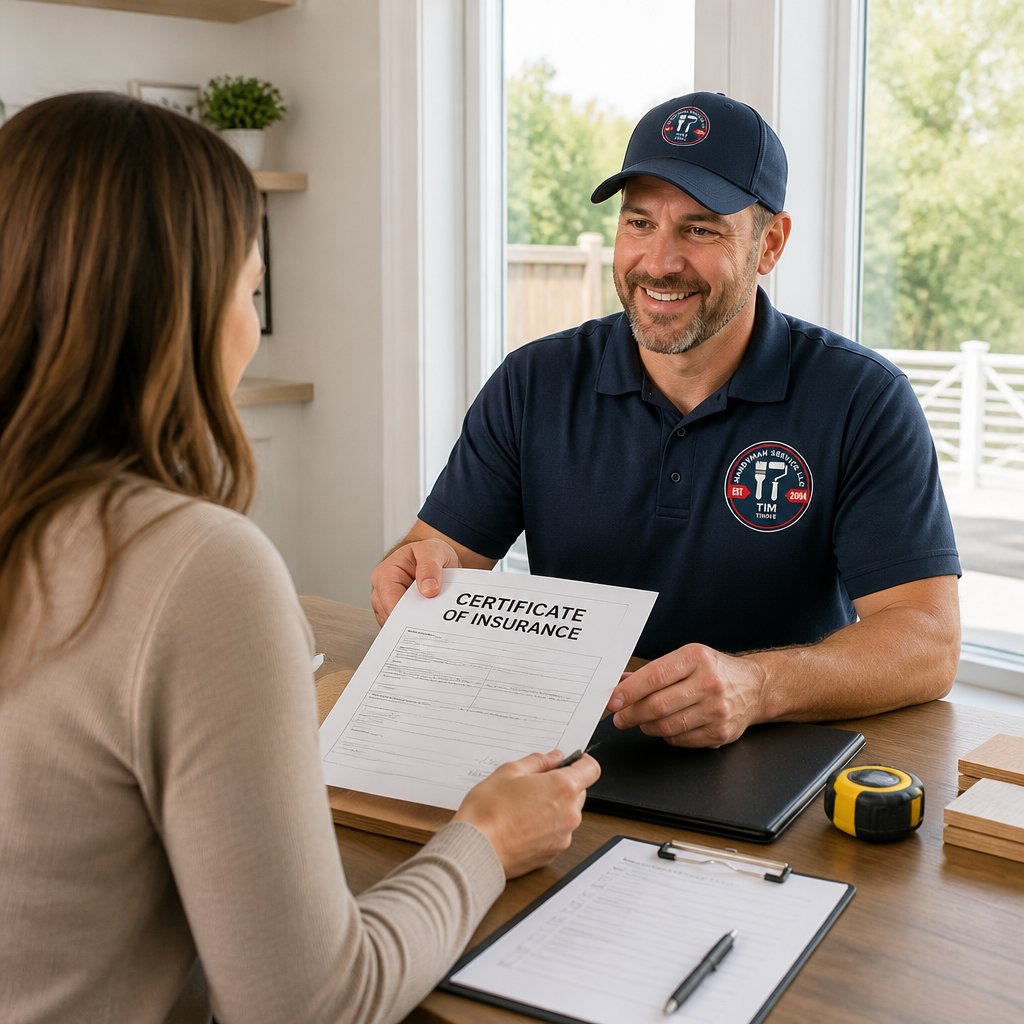
Request the COI directly from the handyman before any work begins. A legitimate contractor will provide this immediately without hesitation. If you get excuses, delays, or claims that the document is "with the office," treat that as a red flag.
When you make the request, be specific about what you need. Say: "Please email me a current certificate of insurance showing general liability and workers compensation coverage. I also need the certificate to name me as the certificate holder." This phrasing signals that you know what you're looking for and discourages handymen who rely on homeowners who never ask.
Step 2: Read the Policy Details on the ACORD Form
Look at the coverage types and limits listed on the form. Confirm the effective date covers the day work starts and the expiration date is after the project is scheduled to finish. An expired certificate means the policy may no longer be active, regardless of what the contractor claims.
Pay particular attention to the policy number in the top-right section of the form. This number is your key to verification in Step 3. Also check the insured name in Box 2 against the business name on your contract. A mismatch here is an automatic red flag.
Step 3: Confirm the Policy Is Active With the Insurance Carrier
Call the insurance carrier directly using the phone number listed on the certificate. Ask them to confirm the policy number is valid, the coverage is in force, and there are no lapses. This step catches fake documents, which are easier to create than most homeowners realize.
Use this script when you call:
"Hi, I'm verifying a certificate of insurance for a contractor working on my property. The policy number is [read the number]. Can you confirm the policy is currently active and the coverage has not lapsed?"
Call 720-989-4123 for a free estimate →
The carrier's customer service representative can confirm whether the policy is in force. They may also tell you the named insured on the policy, which lets you confirm it matches the business you hired.
If the phone number on the certificate is disconnected or routes to a generic voicemail, that's a strong signal the document is fraudulent. Legitimate carriers maintain working customer service lines.
The National Association of Insurance Commissioners guidance on verifying coverage recommends contacting the carrier directly rather than relying solely on a paper document, since certificates can be altered or outdated.
Step 4: Verify Additional Insured Status
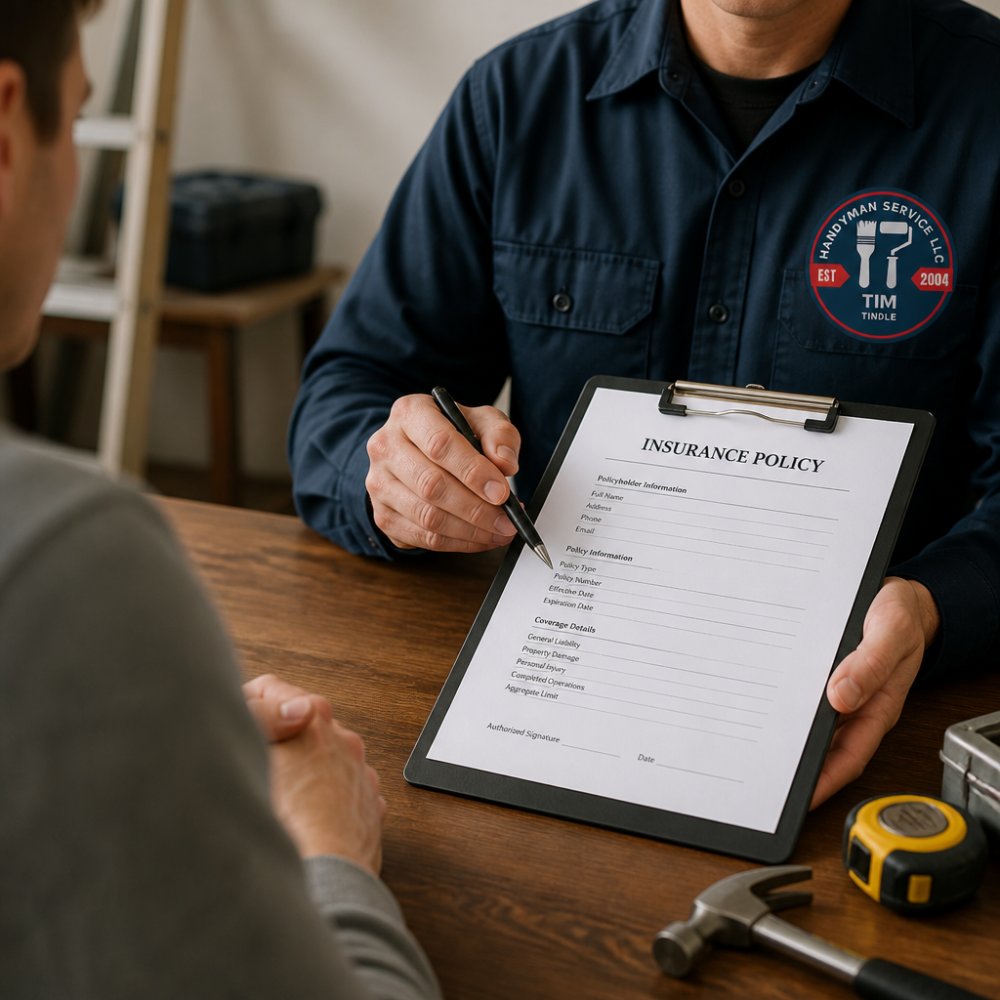
If you want direct protection under the handyman's policy, you need to be named as an additional insured. This status extends coverage to you for liability arising from the contractor's work. Simply having a COI doesn't provide this protection, so ask the contractor to have their agent add you as an additional insured and provide an endorsement showing it.
This step is the most commonly skipped verification in the entire process, and it's also the one that provides the strongest protection. An additional insured endorsement means the handyman's insurer will defend you against claims arising from the contractor's work, just as they would defend the contractor.
To complete this step, ask the handyman to contact their insurance agent and request that you be added as an additional insured for the duration of your project. The agent will issue an endorsement, typically an ACORD 25-S form, that names you specifically. Request a copy of that endorsement before work begins.
Step 5: Check the Contractor License Board
Many states require contractors to hold a license in addition to insurance. Check your state's contractor license board website to confirm the business is registered and in good standing. This also reveals any disciplinary actions or complaints filed against the contractor.
Most state licensing boards maintain online search portals where you can look up a business by name or license number. These portals typically show:
- Whether the license is active, expired, or revoked
- The date the license was issued
- Any disciplinary actions or complaints on file
- The business's registered address
The Colorado Department of Regulatory Agencies contractor resources provides access to license verification for contractors operating in the state, which helps confirm a business is legitimate before you sign anything.
Risks of Hiring Uninsured Handymen
The risks of hiring uninsured handymen extend far beyond shoddy workmanship. If a worker falls from a ladder and injures themselves on your property, their medical expenses could become your financial responsibility without workers compensation coverage in place. Homeowners insurance policies often contain exclusions for injuries to workers performing paid work on the property, leaving you exposed.
Property damage presents a similar problem. If an uninsured handyman cuts through a water line or starts an electrical fire, you may have to cover the repair costs yourself. The contractor's lack of coverage means there's no insurance company to file a claim against, and pursuing legal action against someone without assets rarely recovers the full cost of damages.
Subcontractor insurance risks add another layer of complexity. A handyman might have coverage themselves but bring in uninsured subcontractors for specialized work. Ask whether any subcontractors will be on site and request certificates for each of them individually.
| Verification Step | What to Check | Risk If Skipped |
|---|---|---|
| Current COI | Active policy dates | Working with expired coverage |
| Carrier confirmation | Policy is in force | Fake or altered documents |
| Additional insured status | Your name on endorsement | No direct liability protection |
| License board lookup | Business in good standing | Hiring unlicensed operators |
Questions to Ask a Handyman Before Hiring
Beyond the documentation, asking the right questions helps you gauge whether a contractor is professional and prepared. These questions to ask a handyman before hiring cover the gaps that paperwork alone can't address:
- "Can you name the insurance carrier and policy number so I can verify coverage directly?"
- "Are you willing to add me as an additional insured on your policy for this project?"
- "Will any subcontractors be working on site, and can I see their certificates of insurance?"
- "How long have you been operating under your current business license?"
- "Can you provide references from recent clients who had similar work completed?"
A contractor who answers these questions promptly and without defensiveness is more likely to be legitimate. Evasive answers should prompt you to move on to another provider.
The Federal Trade Commission advice on hiring home contractors emphasizes getting everything in writing, including insurance details, before work begins. Verbal confirmation of coverage carries no weight if a dispute arises later.
Conclusion: Protect Your Home With a 5-Minute Check
Verifying handyman insurance takes five minutes and protects you from financial headaches that can last for years. The process is straightforward: request the certificate, read the policy details, confirm with the carrier, verify additional insured status, and check the license board. Each step builds a complete picture of the contractor's legitimacy and your protection.
At Handyman Service Aurora, we're fully licensed and insured, and we're happy to provide our certificate of insurance and license details before any project begins. We serve Aurora, Foxfield, Parker, Centennial, and the broader Denver Metro area with professional carpentry, painting, remodeling, and general repairs. Call 720-989-4123 for a free estimate and peace of mind that comes from working with a verified, insured local business.
Frequently Asked Questions
How do I check if a handyman's insurance is valid?
Ask for a current certificate of insurance (COI), then call the insurance carrier listed on the document to confirm the policy is active. The carrier will verify the policy number, effective date, and expiration date. Do not rely on the handyman's word alone or a photocopy that may be outdated. A verbal confirmation from the agent takes about five minutes and eliminates most of the risk.
What types of insurance does a professional handyman need?
A professional handyman should carry general liability insurance to cover property damage and bodily injury, plus workers compensation if they have employees. General liability protects you if the handyman accidentally damages your home. Workers comp covers medical bills if someone is injured on your property. Ask to see both coverages listed on the certificate of insurance before any work begins.
What happens if an uninsured handyman gets injured on my property?
Without workers compensation coverage, you could be held financially responsible for the handyman's medical bills. Your homeowners insurance may cover some of it, but you will likely face deductibles and possible premium increases. This is the most serious risk of hiring uninsured handymen. Verifying coverage before work starts protects you from liability you never intended to take on.
Is it enough to just take a handyman's word that they are insured?
No. Verbal claims are not proof of coverage. Many homeowners discover too late that a handyman let a policy lapse or carried coverage that already expired. Always request a physical certificate of insurance and confirm its status with the carrier directly. A legitimate, established business will provide this documentation without hesitation and understand why you are asking.
This article was written using GrandRanker