 blog
Best Handyman for Small Home Repairs: 2026 Guide
Table of Contents
- What Makes the Best Handyman for Small Home Repairs
- Handyman Hourly Rates 2026: What You Should Expect
- Common Small Home Repair Checklist
- Questions to Ask a Handyman Before Hiring
- Handyman vs. Licensed Contractor: Which Do You Need?
- Cost-Saving Tips for Multiple Small Repairs
- Red Flags in Handyman Communication
- Conclusion
- Frequently Asked Questions
Last Updated: September 17, 2026
What Makes the Best Handyman for Small Home Repairs
The best handyman for small home repairs is a licensed, insured professional who specializes in minor fixes rather than large remodels, offers transparent estimates, and communicates clearly. This guide from Handyman Service Aurora covers what to look for, what to ask, and how to budget.
Handyman Hourly Rates 2026: What You Should Expect
Handyman hourly rates in 2026 vary by region, job complexity, and whether the provider is an established business or informal labor. Expect pricing to depend on scope, materials, and travel time rather than a single flat number.
Why Small Jobs Get Priced Differently
Small jobs carry fixed costs that don't shrink with the task: drive time, setup, and the gap between appointments. That's why a 20-minute fix often carries a minimum charge.
Common Small Home Repair Checklist
A practical small home repair checklist covers drywall patching, fixture installation, door and cabinet adjustment, caulking, and minor plumbing or electrical maintenance. Walking your home with a written list before you call saves time and usually money.
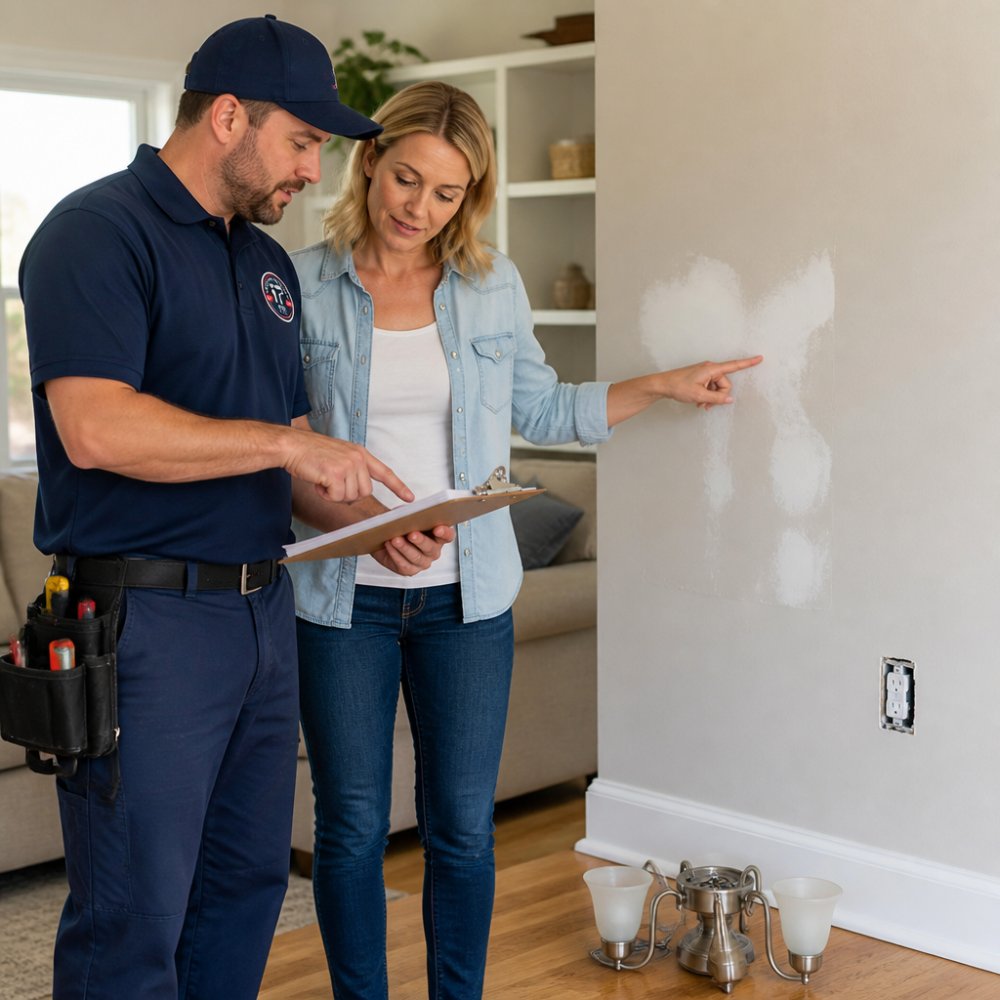
- Drywall patching for nail pops, dents, and doorknob holes
- Fixture installation: light fixtures, faucets, towel bars, shelving
- Door and cabinet adjustment: sticking doors, loose hinges, drawer slides
- Caulking and sealing around tubs, sinks, and windows
- Minor plumbing maintenance: running toilets, dripping faucets
- Touch-up painting and trim repair
- Weatherstripping and exterior sealing before seasonal changes
Interior Repairs Most Homeowners Overlook
The repairs people skip usually cause the most damage later. Slow leaks under a sink, failing caulk lines, and loose toilet bases all start small.
Questions to Ask a Handyman Before Hiring
Most guides hand you a list of questions and stop there. Below is the question set plus the verification step and red-flag response for each, so you can run the whole check in about 15 minutes.
The Vetting Checklist for Small Jobs
1. "Are you licensed and insured? Can you send me the certificate and policy number?"
-
Verify: Ask for the general liability policy number and insurer's name, then call the insurer's claims line to confirm the policy is active and covers the work. For licensing, check your state or county licensing board's online lookup, many trades without a state license are still registered at the municipal level.
-
Red flag: "I'm insured, don't worry about it." A legitimate provider sends the certificate without hesitation.
-
Verify: Ask whether it's hourly, flat-rate, or per-task, and whether there's a minimum service call fee. Request the written estimate by email so you have a record.
-
Red flag: Verbal-only quoting, the most common setup for a surprise bill.
-
Verify: The answer should be a call or text before any additional work, with a revised price you approve. Get this in the written agreement.
-
Red flag: "I'll just handle it and we'll settle up after." That removes your ability to decline.
-
Verify: Ask for the warranty length in writing and what it excludes. A common pattern is 30 to 90 days on labor, with materials covered by the manufacturer instead.
-
Red flag: No warranty at all, or one that only applies if you bought the materials from them.
-
Verify: Call the references and ask three things: did the provider show up on time, did the final price match the estimate, and would you hire them again. Recent matters more than prestigious, a job from three years ago tells you little about current reliability.
-
Red flag: References that are all commercial, all out of area, or unreachable.
-
Verify: Ask directly whether the individual technician, not just the company, has been screened. For any provider entering your home, this is a reasonable question and a professional operation answers it plainly.
-
Red flag: Evasiveness, or a claim that screening happens "for employees" when the person coming is a subcontractor.
-
Verify: Get a specific window, not "sometime Tuesday." Ask what happens if they're running late.
-
Red flag: No committed window, or a pattern of rescheduling before the first visit.
How to Check Licensing and Insurance
For licensing, start with your state's contractor licensing board and your city or county building department. Many jurisdictions require registration even for trades without a state license, and the lookup is usually free and online. For insurance, the certificate of insurance (COI) lists the policy number, effective dates, and coverage limits. Call the insurer directly, a COI can be forged, but the insurer's confirmation cannot.
Red Flags in Communication
Watch for these signals during the vetting conversation:
- Evasiveness about insurance. A legitimate provider explains coverage without hesitation.
- Pressure to start same-day. Urgency is a sales tactic, not a service.
- Cash-only demands with no receipt. You lose your paper trail and your warranty claim.
- Unclear scope. If they can't describe what they'll do, they can't price it honestly.
- No written estimate. Verbal agreements leave you no recourse when the final bill differs.
What to Put in the Written Agreement
Before work begins, confirm the agreement includes the itemized task list, price and pricing model, start date and arrival window, who supplies materials, the change-order process, and the labor warranty. A one-page email confirmation covering these points is enough for small jobs and protects both sides.
Handyman vs. Licensed Contractor: Which Do You Need?
A handyman handles minor repairs and general maintenance; a licensed contractor is required for work that changes a home's structure, systems, or permitted scope. The dividing line is the type of work, not the size of the job.
| Job Type | Handyman | Licensed Contractor |
|---|---|---|
| Drywall patching | Yes | Not needed |
| Fixture installation | Yes | Not needed |
| Interior painting | Yes | Not needed |
| Minor plumbing maintenance | Yes | Not needed |
| Electrical panel work | No | Required |
| Structural changes | No | Required |
| Permitted remodeling | No | Required |
Cost-Saving Tips for Multiple Small Repairs
The most effective way to cut costs on small home repairs is to understand how a handyman prices a visit, then structure your task list around those mechanics. Most quotes have three components: a minimum service call fee, an hourly rate after the first block of time, and materials. Only the middle component shrinks when you consolidate work, so spread the fixed parts across as many tasks as possible.
How the Trip Charge and Minimum Fee Work
A handyman who charges a one-hour minimum still bills that hour whether the job takes 15 minutes or 55. That minimum covers drive time, fuel, tool loading, and the gap between appointments. Book a single sticking door and you pay for the whole hour; book that door plus a faucet swap plus two towel bars and the same hour absorbs four tasks.
Group Tasks by Trade and Location
Efficiency comes from reducing setup changes, not just visits. Group jobs that use the same tools and room:
- Plumbing cluster: running toilet, dripping faucet, loose toilet base, under-sink leak check, one trip to the truck for wrenches and sealant.
- Drywall and paint cluster: nail pops, doorknob holes, trim dings, patch, sand, and prime in one pass so the mud cures while other work happens.
- Hanging and mounting cluster: shelving, towel bars, TV bracket, curtain rods, one stud finder, one level, one drill setup.
Decide Who Buys the Materials
Materials are the second lever. If the handyman supplies the parts, expect a markup on retail, commonly 15% to 30% to cover sourcing time and inventory risk. If you supply them, you keep that margin but own the consequences of buying the wrong size, finish, or voltage.
Time Your Booking Around Demand
Providers are busiest in spring, after storms, and around the winter holidays. Non-urgent work scheduled in a slower window, late fall, mid-winter, mid-week mornings, is easier to book and sometimes negotiable on rate. Emergency and weekend calls carry premium pricing at most shops.
Ask for an Itemized Estimate
Request a written estimate that separates labor from materials and lists each task. An itemized quote lets you drop low-value line items if the total runs high, and it makes two bids genuinely comparable. A lump sum hides whether you're paying for time, parts, or travel.
Keep a Running Repair List
Savings compound when you stop treating each repair as a separate event. Keep a running list on the refrigerator or in a notes app. Add items as you notice them, and book a single maintenance visit when the list reaches five or six tasks. That rhythm converts a series of minimum-fee calls into one productive appointment.
Red Flags in Handyman Communication
Red flags in handyman communication show up early: vague answers about licensing, reluctance to put estimates in writing, pressure to start immediately, and no verifiable references. Trust the pattern, not the pitch.
Watch for these signals:
- Evasiveness about insurance. A legitimate provider will explain coverage without hesitation.
- No written estimate. Verbal-only quoting is the most common setup for a surprise bill.
- Pressure to start same-day. Urgency is a sales tactic, not a service.
- No references or reviews you can check. Ask for recent local customers.
- Cash-only demands with no receipt. You lose your paper trail and your warranty claim.
- Unclear scope. If they can't describe what they'll do, they can't price it honestly.
Conclusion
Managing small home repairs comes down to planning: build a task list, understand how pricing works, and vet your provider before the first visit. Homeowners who get burned usually skipped the verification step.
Frequently Asked Questions
What does a handyman usually charge per hour?
Handyman hourly rates in 2026 vary by market and job complexity, with most providers charging a minimum service call fee plus an hourly rate for labor. Some quote flat rates for defined tasks like drywall patching or fixture installation. Always ask whether the quote includes materials or if a material markup applies. For a free estimate on your specific repair list, call Handyman Service Aurora at 720-989-4123.
How do I verify if a handyman is insured and licensed?
Ask for a certificate of insurance showing general liability coverage and, where required, workers' compensation. Request the license or registration number and confirm it through your state or local licensing board. A legitimate insured contractor will provide these documents without hesitation. Handyman Service Aurora is fully licensed and insured, and can share verification details before any work begins.
What are some red flags when hiring a handyman?
Watch for vague answers about licensing and insurance, requests for full payment upfront, no written service estimate, and pressure to skip a contract. Poor communication, like slow replies or unwillingness to put the project scope in writing, often signals reliability problems later. A trustworthy handyman provides a clear task list, a written estimate, and references from past customers.
Should I hire a handyman or a licensed contractor for small repairs?
For minor repairs like drywall patching, fixture installation, or touch-up painting, a handyman is usually the right choice. Licensed contractors are required for work involving structural changes, major electrical panels, gas lines, or permitted remodeling. If your task list mixes small repairs with something that needs a permit, ask the provider to clarify what they can legally handle and what needs a specialist.