 blog
Cost of Professional Interior Painting in 2026
Table of Contents
- How Much Does Professional Interior Painting Cost in 2026?
- Interior Painting Labor Rates Per Square Foot
- Factors Affecting Interior Painting Quotes
- How Long Does Interior Painting Take?
- Best Practices for Hiring a Professional Painter
- How to Save Money on Interior Painting Without Cutting Corners
- Frequently Asked Questions
Last Updated: September 15, 2026
How Much Does Professional Interior Painting Cost in 2026?
The cost of professional interior painting in 2026 depends on square footage, prep work, paint grade, and local labor rates, and most homeowners should budget for a full written quote rather than a flat per-room guess. This guide breaks down how labor, materials, and surface prep drive your final number.
A common mistake is treating a phone quote as a final price. Painters quote low before they see cracked drywall or peeling trim, then the number climbs once work starts. The national average matters far less than your home's specific conditions.
National Averages and Price Ranges
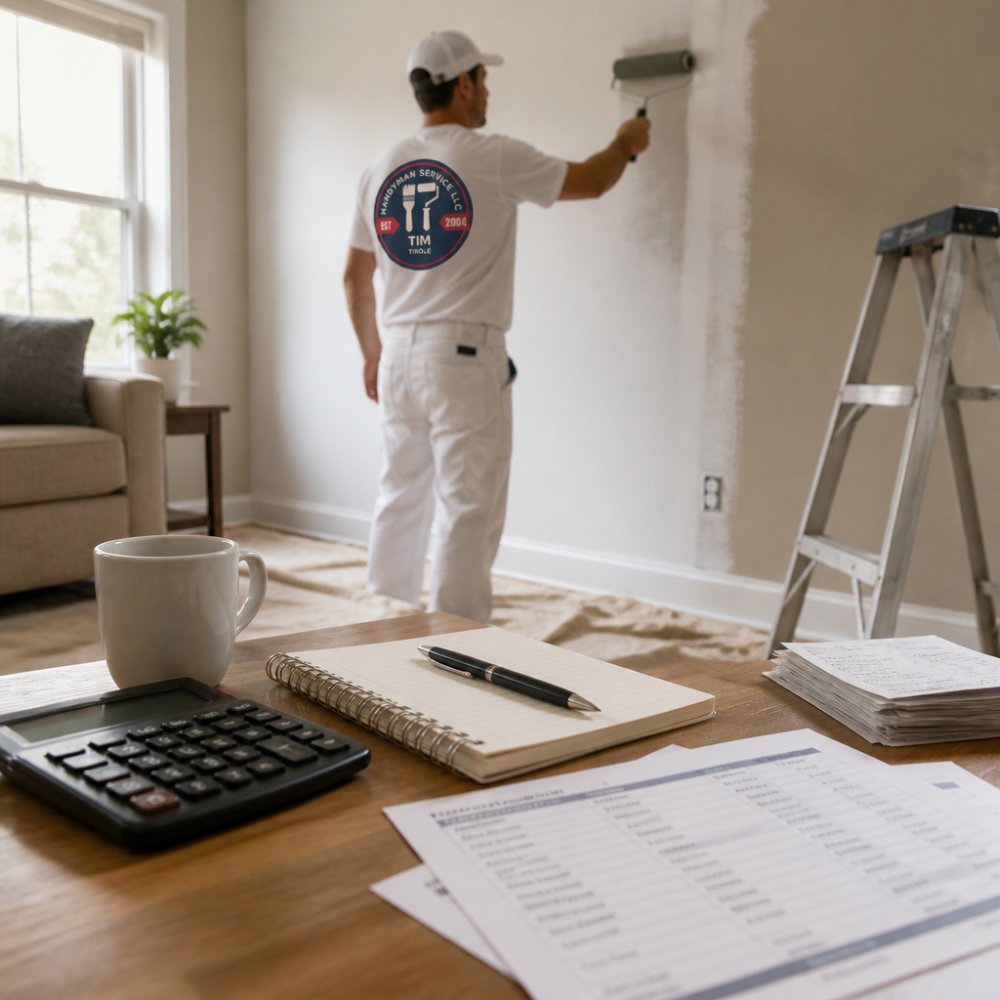
Pricing for interior painting is usually expressed as a range per square foot of wall or floor area, and the spread between the low and high end is wide. A basic repaint of already-smooth walls sits at the bottom. A full color change with patching, priming, and trim work sits at the top.
Most contractors price by the room, by the wall area, or by the hour, and each method produces a different number for the same job. Ask which method your painter uses before comparing quotes.
Interior Painting Labor Rates Per Square Foot
Labor is the largest line item in almost every interior painting quote, and it is usually billed either per square foot or per hour. Per-square-foot pricing is common for large, open rooms with standard ceiling heights. Hourly pricing shows up more often on small or heavily detailed jobs.
As a working rule, most contractors in the current market price interior labor somewhere in the range of $1.50 to $4.00 per square foot of wall area, with the low end reserved for simple repaints of already-smooth walls and the high end reflecting heavy cutting-in, tall ceilings, or extensive masking (homeadvisor.com). Hourly rates for a professional crew commonly fall between $50 and $90 per painter per hour, and a two-person crew on a detail-heavy job can burn through that rate quickly (angi.com). These are ranges, not quotes, your painter's number will reflect your walls, not a national average.
A useful way to sanity-check a quote is to split it into labor and materials. On a typical interior repaint, labor usually accounts for roughly 70% to 80% of the total, and paint, primer, and sundries make up the remaining 20% to 30% (Painter Cost Per Hour vs Painter's Project Quote). If a quote inverts that ratio, materials dominating the total, ask why, because it often signals a padded paint allowance or a scope that includes more prep than the job needs.
You can expect the rate to reflect how much cutting-in, masking, and furniture moving the job requires, not just the wall area. Two rooms of identical size can carry very different labor charges if one has crown molding, tall ceilings, or a lot of trim.
| Pricing Method | Best For | What Drives the Number |
|---|---|---|
| Per square foot | Open rooms, standard ceilings | Wall area and number of coats |
| Per room | Simple, similar-sized bedrooms | Room count and prep level |
| Hourly | Small or detail-heavy jobs | Time on site and crew size |
What Labor Rates Look Like by Room and Home Size
Per-room pricing is easier to compare than per-square-foot pricing because it bundles prep, paint, and cleanup into one number. As a rough guide, a standard bedroom with smooth walls and a single color typically lands in the low hundreds of dollars in labor, a living room or dining room runs somewhat higher because of wall area and trim, and kitchens and bathrooms sit at the top of the per-room range because of cabinets, backsplashes, and moisture-resistant finishes.
Whole-home pricing scales with square footage but not linearly. A smaller home may carry a higher per-square-foot labor rate than a larger one because setup, travel, and cleanup are spread across fewer rooms. A larger home usually earns a lower per-square-foot rate because the crew can work continuously without resetting between small jobs. Ask your painter whether the quote assumes a minimum crew day, because that assumption is often what makes a small job look expensive per square foot.
Why Labor Rates Move
Three things move a labor rate more than anything else: ceiling height, trim density, and access. Standard eight-foot ceilings are priced into almost every quote. Ten-foot ceilings, vaulted spaces, and stairwells require ladders, scaffolding, or extension poles, and that time is billed. Trim density matters because cutting in around crown molding, chair rails, and window casings is slow, careful work. Access matters because a room packed with furniture takes longer to protect and navigate than an empty one.
Factors Affecting Interior Painting Quotes
Several variables move an interior painting quote up or down, and surface condition is the one homeowners most often underestimate. The condition of your walls, the paint you choose, and the ceiling height all change the labor and material totals. The sections below cover the two variables that separate a low quote from a high one: prep and paint grade.
Surface Preparation and Drywall Repair Costs
Surface preparation is where interior painting quotes diverge most, because prep is labor-intensive and invisible once the job is done. Patching nail holes, filling cracks, sanding, and priming take time, and that time is billed. Most contractors treat basic prep, light sanding, spot priming, and filling small nail holes, as included in the per-room or per-square-foot price. Everything beyond that is an add-on.
The add-ons that show up most often are:
- Nail holes and hairline cracks: usually bundled into the base price if there are only a few, but priced per patch once the count climbs.
- Drywall patching: larger holes, popped screws, and old anchor damage are typically quoted per patch or per hour, and the patch has to be mudded, sanded, and primed before paint.
- Water damage and stain blocking: stained ceilings and walls need a stain-blocking primer before paint, or the stain bleeds through within weeks. This is a separate material and labor line.
- Wallpaper removal: stripping wallpaper, scraping adhesive, and repairing the drywall underneath is one of the most labor-intensive prep jobs in residential painting, and many painters subcontract it or decline it outright.
- Caulking and recaulking: gaps at trim, baseboards, and window casings need fresh caulk before paint, and a home with a lot of trim can turn this into a meaningful line item.
- Skim coating: walls with heavy texture, previous poor patches, or significant unevenness may need a skim coat to look smooth under a sheen finish.
A common pattern is for prep to add anywhere from a modest surcharge on a well-maintained home to a substantial share of the total on an older home with damaged walls.
Paint Quality and Finish Tiers
How Long Does Interior Painting Take?
Best Practices for Hiring a Professional Painter
How to Save Money on Interior Painting Without Cutting Corners
Frequently Asked Questions
How much should it cost to paint the interior of a 2000 sq ft house?
The interior painting cost for a 2,000 sq ft home depends on ceiling height, number of rooms, and surface condition. Most quotes factor in square footage of paintable wall area, not just floor space. A home with minimal prep and standard finishes will cost less than one needing drywall repair and primer. Request a free estimate for a number specific to your property.
Why is paint so expensive in 2026?
Paint prices in 2026 reflect ongoing supply chain adjustments, higher raw material costs, and increased labor rates. Post-pandemic demand for home improvement kept pricing elevated. Labor now represents the largest share of any interior painting quote, often 70% or more. Eco-friendly and Low-VOC paint lines also carry a surcharge because their ingredients cost more to source and manufacture.
What factors influence the cost of professional interior painting?
The biggest factors affecting interior painting quotes are wall square footage, ceiling height, surface preparation needs, paint quality tier, and number of coats. Trim, baseboards, and ceiling painting add labor hours. Drywall repair, primer application, and color consultation also increase cost. Labor rates vary by region and season. Always get a written, itemized estimate before work begins.
Is it cheaper to provide your own paint for professional projects?
Providing your own paint rarely saves money and can complicate the job. Professional painters buy paint at trade discounts and know which products perform best for each surface. If you supply paint, the contractor cannot warranty the finish. Most established painting companies include material expenses in their quote to keep quality control and liability clear. Ask for a breakdown if you want to compare.
The hardest part of interior painting isn't picking a color, it's getting a quote you can trust and a crew that shows up. Handyman Service Aurora provides licensed and insured painting, drywall repair, and carpentry for homeowners across Aurora, Foxfield, Parker, Centennial, and the Denver Metro area, with free estimates and transparent scope. Get started with Handyman Service Aurora and turn your painting project into one reliable visit instead of three. Call 720-989-4123 for a free estimate.