 how-to
How Long Does Custom Carpentry Take to Complete?
Table of Contents
- The Full Custom Carpentry Timeline: From First Call to Final Walkthrough
- Custom Cabinet Installation Timeline: What to Expect Week by Week
- Factors Affecting Carpentry Project Duration
- How to Prepare for a Home Carpentry Project
- What Slows Projects Down: Hidden Delays and How to Avoid Them
- Why Post-Installation Curing Time Matters
- Conclusion: Planning Your Custom Carpentry Project with Confidence
- Frequently Asked Questions
Last Updated: September 24, 2026
The Full Custom Carpentry Timeline: From First Call to Final Walkthrough
Most homeowners want a straight answer: how long does custom carpentry take to complete? The honest reply is that a simple built-in shelf might wrap up in a week or two, while a full kitchen of custom cabinetry can run two to four months from the first phone call. This guide from Handyman Service Aurora breaks down each stage so you can plan with real numbers instead of guesswork.
Custom carpentry is the design and building of woodwork made to fit your exact space, rather than buying standard pieces off a shelf. That distinction matters, because every custom job runs through the same core stages: consultation, design approval, material procurement, fabrication, finishing, and installation. Each stage takes time, and each one can stretch if something changes.
Below, we'll show you exactly how to map your own timeline and spot the delays before they cost you weeks.
Typical Timeframes by Project Type
Project scope drives the schedule more than anything else. A small repair and a full room build are not the same animal.
| Project Type | Typical Timeline | Main Time Driver |
|---|---|---|
| Single shelf or trim repair | 1-3 days | On-site labor |
| Built-in bookcase | 1-2 weeks | Design and finish |
| Custom cabinet set (single room) | 4-8 weeks | Fabrication and install |
| Full kitchen or multi-room millwork | 8-16 weeks | Materials and scope |
Small jobs often skip the formal design phase. Bigger projects cannot.
Custom Cabinet Installation Timeline: What to Expect Week by Week
A custom cabinet installation timeline usually runs four to eight weeks for a single room, but that range hides a lot. The work splits into two phases: shop fabrication and on-site installation. Knowing which phase you're in, and which milestone you should be checking against, tells you whether the project is actually on track or quietly slipping.
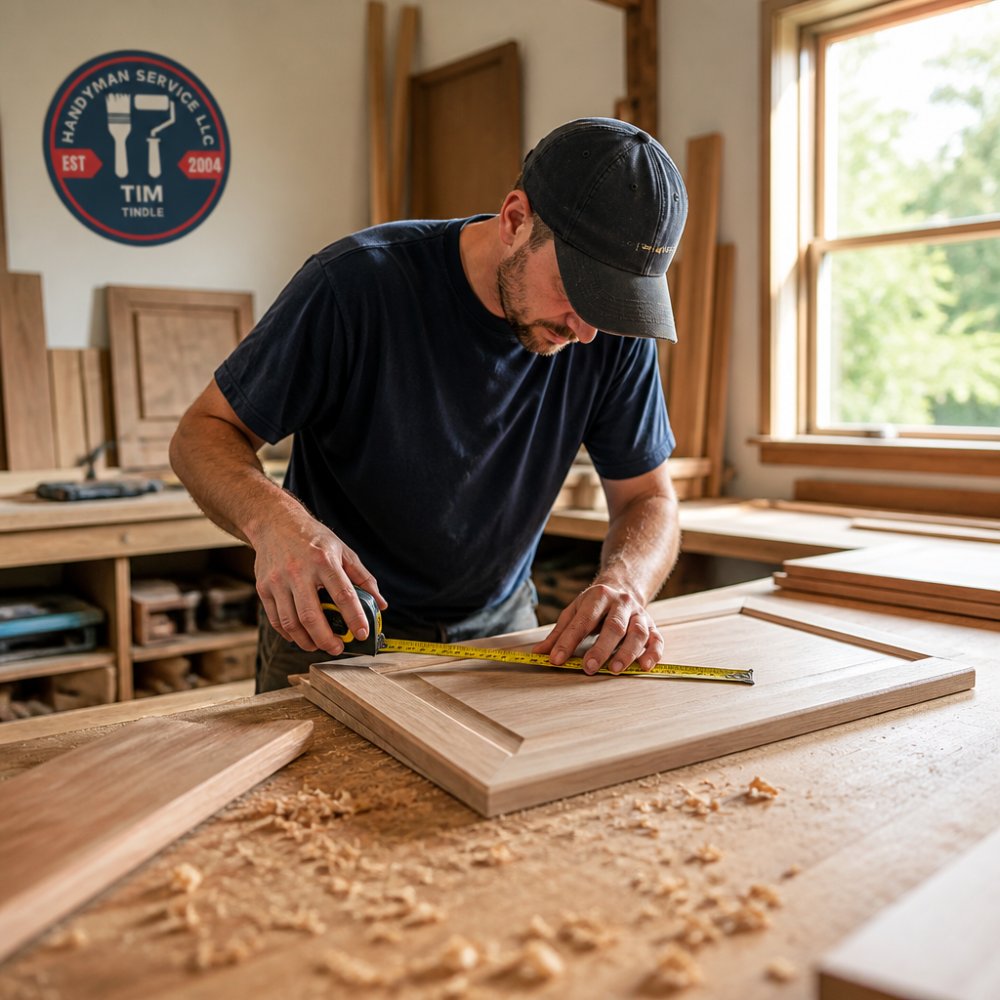
Here's the week-by-week flow for a typical single-room cabinet set:
- Weeks 1-2: Consultation, field measurements, and design approval. You should leave this phase with signed drawings, a confirmed wood species, and a finish sample in hand.
- Weeks 2-4: Material procurement and cabinet assembly in the shop. Boxes, face frames, and doors get cut and joined here.
- Weeks 4-6: Sanding, staining, and finish application. This is the slowest phase to rush and the easiest to spot a shortcut in.
- Weeks 6-8: On-site installation, hardware installation, and punch-list walkthrough.
Every project moves at its own pace. A simple set of cabinets can finish in four weeks. A complex layout with custom millwork can take eight or more.
A Complexity-Based Estimator You Can Actually Use
Most timelines online give you a single number and no way to adjust it. Use this structured estimator instead. Start with the base range for your project type, then add the modifiers that apply.
| Project Type | Base Range | Typical Crew Size |
|---|---|---|
| Single vanity or small built-in | 3-5 weeks | 1-2 |
| Single-room cabinet set (kitchen or bath) | 4-8 weeks | 2-3 |
| Full kitchen with island and pantry | 8-14 weeks | 3-4 |
| Multi-room millwork (kitchen + built-ins + trim) | 12-20 weeks | 4+ |
Then layer on these modifiers, which are the same ones shops use when they quote:
- +1 to 2 weeks for a specialty or imported wood species that isn't stocked locally
- +1 week for a sprayed conversion varnish or lacquer finish versus a brushed stain
- +1 to 3 weeks for inset doors and drawers versus overlay, because every gap is hand-fit
- +2 weeks or more for any layout change after drawings are signed
- +1 week if walls, floors, or plumbing need correction before install
Add the base range and the modifiers that apply, and you have a defensible estimate you can hold your contractor to.
Milestones to Ask For
A week-by-week schedule is only useful if you have checkpoints. Ask your cabinet maker to commit to four milestones in writing:
- Signed drawings and finish sample, end of week 2
- Cut list and material order confirmation, end of week 2 or early week 3
- Shop-ready photos before finishing, end of week 4
- Installation start date, confirmed at least one week ahead
If a milestone slips, ask why before the next one does. Two slipped milestones in a row almost always means the finish date is moving.
Shop Fabrication vs. On-Site Installation
Off-site construction happens in a controlled shop, where dust, temperature, and tools are all managed. That's where most of the cabinet assembly, sanding, and staining occur.
On-site installation is the final push. It covers fitting, leveling, and hardware installation. This phase is usually the shortest, often just a few days for a standard room.
The split matters because shop work and site work have different risks. Shop delays come from material shortages and finish curing. Site delays come from uneven walls, out-of-square corners, or missing parts.
Call 720-989-4123 for a free estimate →
Factors Affecting Carpentry Project Duration
Several factors affecting carpentry project duration have nothing to do with how fast anyone swings a hammer. Material lead times, design changes, and site conditions all play a role. So does the size of the crew and how busy the shop is.
The biggest wildcard is change orders.
Here's what to watch:
- Project scope: More rooms and more detail mean more time
- Wood species and hardware: Specialty items take longer to source
- Site readiness: Uneven walls or old plumbing slow installation
- Communication: Slow approvals push every later stage back
Supply Chain and Material Lead Times
Material lead times are the hidden delay most homeowners never see coming. A standard plywood or paint-grade wood might arrive in days. A rare wood species or imported hardware can take weeks.
How to Prepare for a Home Carpentry Project
Getting ready before work starts saves days later. To prepare for a home carpentry project, clear the work area, confirm your design choices, and set a realistic budget. Then stay reachable for quick approvals.
A simple prep checklist:
- Clear furniture and personal items from the work zone
- Confirm wood species, finish, and hardware choices in writing
- Set your budget with a buffer for surprises
- Decide who can approve changes while you're at work
- Plan for noise, dust, and limited access to the room
What Slows Projects Down: Hidden Delays and How to Avoid Them
The delays that hurt most are the ones nobody plans for. Hidden delays usually come from four sources: late approvals, backordered materials, site surprises, and scheduling conflicts.
Here's how to avoid each:
- Approve fast. Answer design questions within a day or two.
- Order early. Lock in materials before fabrication starts.
- Inspect first. Check walls, floors, and plumbing before the build.
- Book ahead. Shops fill up, so reserve your slot early.
Why Post-Installation Curing Time Matters
Curing is the period after finishing when stains, paints, and sealers harden fully. Post-installation curing time matters because rushing it can ruin the finish. A cabinet that looks dry may still be soft underneath.
During curing:
- Keep the room ventilated and at a steady temperature
- Avoid heavy use of drawers, doors, and surfaces
- Wait before placing items on new surfaces
Conclusion: Planning Your Custom Carpentry Project with Confidence
The real answer to how long custom carpentry takes comes down to scope, materials, and how fast decisions get made. Plan for the full timeline, not just the build, and you'll avoid most surprises.
Frequently Asked Questions
What factors influence the timeline of a custom carpentry project?
Key factors include project scope, design complexity, material availability, and site conditions. Custom cabinetry with intricate details takes longer than simple shelving. Supply chain issues can add weeks if specialty wood species are backordered. Weather affects exterior work. Permits and inspections add time for structural changes. A clear design approval early on prevents delays. Discussing these factors with your contractor during the consultation helps set realistic expectations.
How long does it typically take to build and install custom cabinets?
Custom cabinets generally take 6 to 12 weeks from design approval to installation. Fabrication in the shop accounts for 4 to 8 weeks, depending on complexity and finish. Installation adds 1 to 2 weeks for a typical kitchen. Curing time for stains and topcoats requires an additional 3 to 7 days before heavy use. Material procurement can extend the timeline if specific wood species or hardware are backordered. Your contractor can provide a detailed schedule after the design phase.
How can I speed up my custom carpentry project?
Finalize your design and material selections early to avoid change orders. Choose readily available wood species and standard hardware. Clear the work area and ensure easy access for the crew. Respond promptly to questions and approvals. Schedule other trades around the carpentry work to prevent conflicts. While rushing can compromise quality, good preparation and communication keep the project moving efficiently. Ask your contractor for a pre-project checklist.
Should I expect delays during the custom woodworking process?
Some delays are common, especially with custom work. Material shortages, design changes, or unexpected site issues can add days or weeks. Weather affects exterior projects. However, a professional contractor builds buffer time into the schedule and communicates proactively. To minimize surprises, confirm lead times for materials before fabrication begins and avoid changes after work starts. A detailed contract with milestones helps keep everyone accountable.