 how-to
How to Calculate How Much Paint Is Needed for a Room
Table of Contents
- How to Measure a Room for Painting
- How Many Square Feet Does a Gallon of Paint Cover?
- Using a Paint Calculator for a Room
- Paint Needed for a 12x12 Room
- How to Calculate How Much Paint Is Needed for a Room Step by Step
- Common Mistakes That Throw Off Your Paint Estimate
- Frequently Asked Questions
Last Updated: October 12, 2026
How to Measure a Room for Painting
Getting the paint quantity right starts with honest measurements. Most homeowners guess, buy too little, and make a second trip to the store mid-project. Knowing how to calculate how much paint is needed for a room starts with a tape measure, not a calculator.
Here is the simple process we use.
Tools You Will Need
- Tape measure (25 feet or longer)
- Notepad and pencil
- Step ladder for high walls
- Calculator or phone
Measuring Walls, Ceilings, and Trim
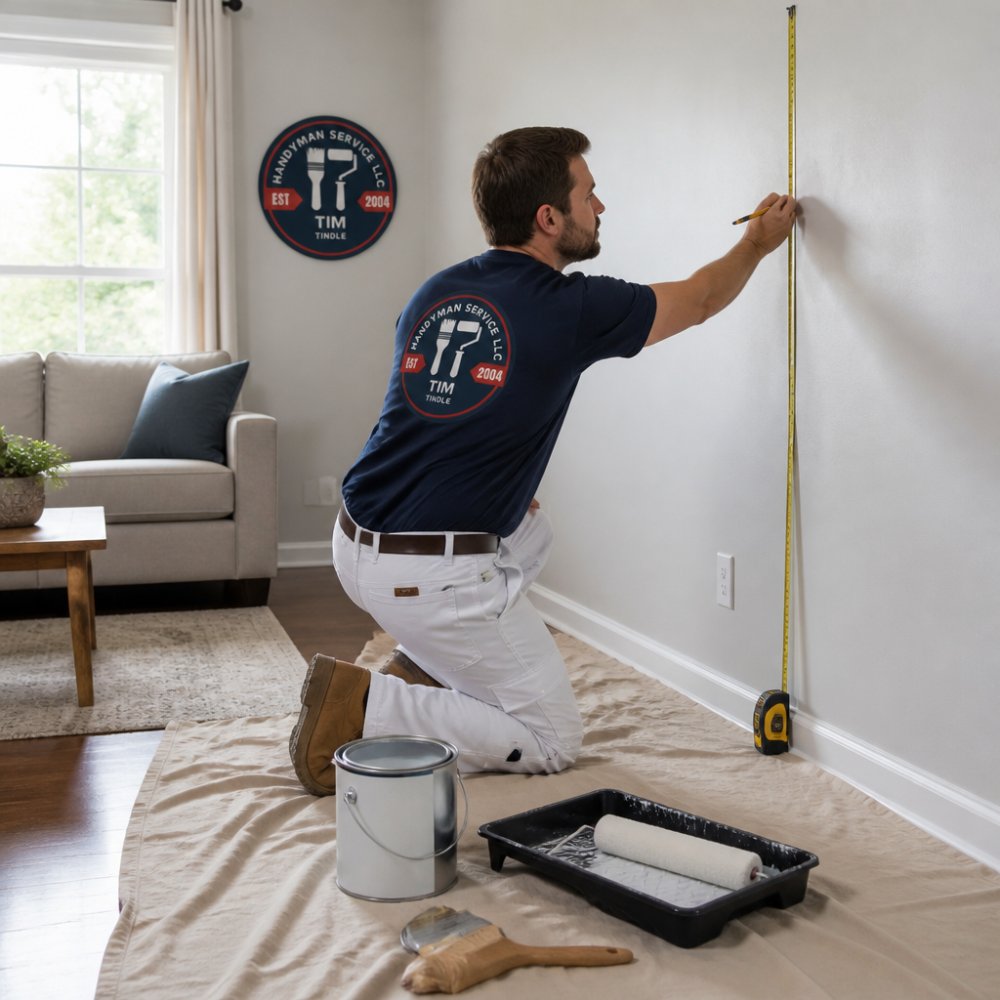
Measure the length and height of each wall. Multiply those two numbers to get square footage. Add every wall together for the total wall area.
For ceilings, multiply length by width. Trim is different: measure the linear feet of baseboards, door frames, and window casings, then allow roughly half a pint per 100 linear feet for a single coat.
Write everything down room by room. You will thank yourself later.
How Many Square Feet Does a Gallon of Paint Cover?
A gallon of paint covers about 350 to 400 square feet on a smooth, previously painted wall. Rough or porous surfaces soak up more, so plan on 300 to 350 square feet per gallon there.
Coverage by Paint Type and Surface
| Surface Type | Coverage per Gallon | Notes |
|---|---|---|
| Smooth, sealed drywall | 350-400 sq ft | Best case |
| New or porous drywall | 300-350 sq ft | Primer helps |
| Textured walls | 250-300 sq ft | More surface area |
| Exterior wood siding | 250-350 sq ft | Soaks in fast |
| Previously painted walls | 350-400 sq ft | Ideal for repaint |
The numbers above are general industry ranges. Always check the label on your specific can, since coverage varies by brand and finish.
Using a Paint Calculator for a Room
A paint calculator for a room does the arithmetic, but it only returns a useful number if you feed it the right inputs. Most calculators ask for four things: wall height, total wall length (or room length and width), number of coats, and whether you are painting the ceiling or trim. Some add a door and window count so they can subtract openings for you.
What to Enter, and What to Ignore
- Wall height: Use floor-to-ceiling height, not the height of the painted area above baseboard. The small difference rarely changes the gallon count, but it keeps the math consistent.
- Total wall length: Add all four walls. For an L-shaped or open-plan room, measure each wall segment separately and sum them.
- Coats: Enter 2 for a standard repaint. Enter 3 if you are going from a dark color to a light one, or covering a bold red, orange, or deep blue.
- Openings: Subtract roughly 15-20 sq ft per standard door and 10-15 sq ft per window. Only do this if the calculator does not ask for openings directly.
Where Calculators Get It Wrong
A calculator assumes smooth, sealed drywall at the manufacturer's rated coverage. That is the best case, not the typical case. Three situations routinely throw the number off:
- Textured walls. Knockdown, orange-peel, and popcorn finishes increase surface area. Most practitioners add 20-30 percent to the calculator's result for these surfaces.
- New or porous drywall. Bare drywall and fresh joint compound absorb paint on the first coat. Expect 300-350 sq ft per gallon instead of 350-400.
- Major color changes. Going light-over-dark often needs a third coat, which the default two-coat setting will not capture.
The Manual Formula as a Cross-Check
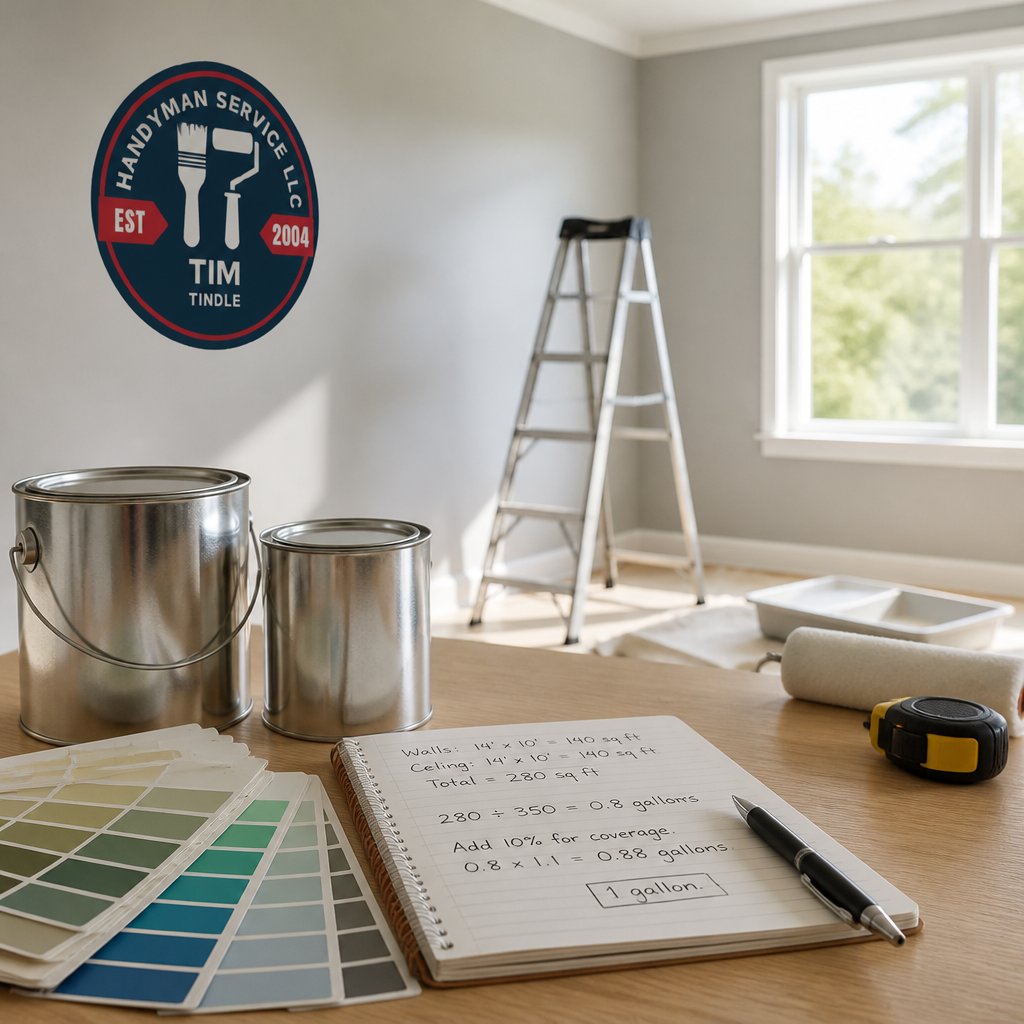
Run the math yourself once and compare it to the calculator:
Total paintable square feet ÷ coverage per gallon = gallons per coat
Gallons per coat × number of coats = total gallons
If the calculator and your hand math disagree by more than half a gallon, recheck your wall length total and your opening subtractions. The discrepancy is almost always a measurement error, not a coverage difference.
Paint coverage and calculator guidance from a major coating manufacturer
Paint Needed for a 12x12 Room
A 12x12 room with 8-foot ceilings needs about 2 gallons for two coats on the walls. That assumes smooth drywall and no major color change.
Here is the math:
Call 720-989-4123 for a free estimate →
- Each wall: 12 ft x 8 ft = 96 sq ft
- Four walls: 384 sq ft
- Two coats: 768 sq ft
- Divide by 350: about 2.2 gallons
Buy 3 gallons to be safe. Leftover paint stores well for touch-ups.
Ceilings add roughly 1 gallon for two coats. Trim adds about a quart.
How to Calculate How Much Paint Is Needed for a Room Step by Step
Follow these steps every time, and you will rarely overbuy or run short. The order matters, because each step feeds the next.
- Measure each wall's length and height. Multiply for square footage. For an irregular room, break it into rectangles and add them.
- Add all wall areas together. This is your gross wall area.
- Subtract doors and windows. About 15-20 sq ft per standard door and 10-15 sq ft per window.
- Add ceiling area if you are painting it. Length times width.
- Adjust for surface condition. Smooth, sealed drywall: use 350-400 sq ft per gallon. New or porous drywall: 300-350. Textured walls: 250-300.
- Divide total square feet by your coverage number. This gives gallons per coat.
- Multiply by the number of coats. Two is standard; three for dark-to-light changes.
- Round up to the nearest gallon.
A Decision Framework for Coat Count
The single biggest source of error is guessing the coat count. Use this logic:
- Same color, similar sheen: 1-2 coats. One coat often suffices if the existing paint is in good condition and the color matches.
- Light over light, or dark over dark: 2 coats.
- Light over dark, or a saturated color over anything: 3 coats. Reds, oranges, and deep blues are the usual culprits.
- Bare drywall or fresh patch: 1 primer coat plus 2 finish coats. The primer seals the surface so the finish coat does not soak in unevenly.
Worked Example: 12x12 Room, 8-Foot Ceilings
- Each wall: 12 ft × 8 ft = 96 sq ft
- Four walls: 384 sq ft
- Subtract one door (20 sq ft) and two windows (25 sq ft): 384 − 45 = 339 sq ft
- Two coats: 678 sq ft
- Divide by 350: about 1.9 gallons
- Round up: buy 2 gallons
If the walls are textured, add 25 percent: about 2.4 gallons, so buy 3. If you are also painting the ceiling, add roughly 1 gallon for two coats. Trim adds about a quart.
When the Paint Is Wet, Dry, or Fully Cured
This is the part most guides skip, and it changes how you plan a repair or touch-up mid-project. If you discover a drip, run, or brush mark while the paint is still wet, you can often brush it out and re-roll that section without adding paint to your total. Once the paint is dry to the touch but not fully cured, you can shave or sand the raised area flat and touch it up, a small amount of extra paint, usually well under a pint. Fully cured paint (typically after several weeks) is harder to blend, so plan on repainting the entire wall for a seamless result, which means recalculating that wall's square footage into your total.
Common Mistakes That Throw Off Your Paint Estimate
The biggest mistake is forgetting the second coat. A single-coat estimate almost always runs short.
Other common errors:
- Measuring only the visible wall and ignoring the alcove
- Forgetting the ceiling
- Assuming all paint covers 400 square feet
- Not accounting for texture
Textured walls are the sneaky one. Knockdown and orange-peel finishes eat 20 to 30 percent more paint than smooth drywall. If your walls have texture, add a gallon.
Dark colors over light walls often need three coats. Budget for it.
Frequently Asked Questions
How do you calculate how much paint is needed for a room?
Measure the length and height of each wall, multiply to get square footage, and add them together. Subtract 15 to 20 square feet for each door and 10 to 15 square feet for each window. Divide the total by the coverage listed on the paint can, usually 350 to 400 square feet per gallon. That gives you the number of gallons for one coat. Double it if you plan two coats.
Should you subtract doors and windows when calculating paint?
Yes. Standard doors take up about 20 square feet and windows about 15 square feet. Subtracting them gives a more accurate estimate, especially in rooms with several openings. For a typical bedroom, that can save you from buying an extra gallon. If you are painting the trim or window casings, measure those separately and add them back in.
How much paint do I need for two coats?
Multiply your one-coat estimate by two. For example, a 12x12 room with 8-foot ceilings needs about 1.5 gallons for one coat, so buy 3 gallons for two coats. If you are changing colors dramatically or painting over a dark surface, you may need a third coat or a primer, which adds to the total. Always round up to the nearest gallon.
How much extra paint should you buy for touch-ups?
Buy at least one extra quart beyond what your calculation calls for. This covers minor touch-ups after furniture is moved in and gives you matching paint for future repairs. Store it in a sealed container in a cool, dry place. Label the can with the room name and the date you painted so you can find it later.
Paint math is simple, but the prep, cutting in, and clean lines are where most DIY jobs go sideways. If you would rather skip the ladder and the second coat, Handyman Service Aurora handles interior and exterior painting across the Denver Metro area.
We are licensed and insured, we provide free estimates, and we serve Aurora, Foxfield, Parker, Centennial, and nearby communities. Call 720-989-4123 for a free estimate and get a finish that looks professional from the first coat.