 how-to
How to Choose the Right Paint Finish for Kitchen Walls
Table of Contents
- Understanding Paint Finish Types for Kitchen Walls
- Eggshell vs. Satin Paint for Kitchen Walls
- Washable Paint for Kitchen Walls: Durability and Cleanability
- Kitchen Wall Paint Sheen Guide: Matching Finish to Your Space
- How to Choose Kitchen Paint Colors and Test Before Committing
- Surface Preparation and Application for Best Results
- Frequently Asked Questions
Last Updated: October 8, 2026
Understanding Paint Finish Types for Kitchen Walls
Understanding how to choose the right paint finish for kitchen walls is one of the most overlooked decisions homeowners make. The finish affects cleanability, moisture and grease resistance, and how color reads in different light, yet most people focus only on color.
Finishes range from flat to gloss, each with trade-offs: flatter finishes hide imperfections but show dirt; glossier ones clean well but highlight every bump.
Kitchens are high-moisture, high-traffic environments, splashes, grease, and steam. Your finish must handle all of it without peeling, staining, or dulling.
Flat and Matte Finishes
Flat paint absorbs light for a smooth, velvety look; matte finishes are nearly identical with slightly more sheen. Both hide imperfections because they don't reflect light.
The downside is significant: these finishes aren't washable. Wiping with a damp cloth damages the paint, and they stain easily and absorb grease, becoming a maintenance nightmare within months.
Best for: Low-traffic accent walls far from cooking zones. Not recommended for kitchen walls near appliances or the stove.
Eggshell Finish
Eggshell paint has a subtle sheen resembling an egg's surface, a middle ground between flat and satin, enough shine to reflect light without looking glossy.
Eggshell is more durable than flat and handles light cleaning, splatters wipe away with a soft cloth and mild soap, and resists moisture better.
The trade-off: eggshell shows imperfections more than flat, so dents and uneven prep are visible, and it requires careful technique to avoid lap marks.
Best for: Kitchen walls in moderate-traffic areas where you want some sheen without high gloss.
Satin Finish
Satin paint has a noticeable, silky sheen, reflecting more light than eggshell but less than semi-gloss. It's highly washable and durable, ideal for kitchens.
Satin stands up to moisture, grease, and repeated cleaning, you can scrub it with a brush and hot soapy water without damage, and resists stains better than eggshell.
The downside: satin shows imperfections more clearly than eggshell, so quality wall preparation is essential before painting.
Best for: Most kitchen walls. Satin is the standard choice for kitchens because it balances durability, cleanability, and appearance.
Semi-Gloss and Gloss Finishes
Semi-gloss paint has a pronounced shine; gloss finishes are even shinier, almost mirror-like. Both are extremely durable and washable.
They excel at moisture and grease resistance, commonly used on cabinets and trim because they clean easily and take aggressive scrubbing without harm.
The challenge is appearance: they highlight every imperfection and uneven application and can look plastic-like on walls. Most homeowners find them too reflective for walls, though they work well for trim and cabinets.
Best for: Kitchen cabinets, trim, and doors. Not typically recommended for kitchen walls.
Eggshell vs. Satin Paint for Kitchen Walls
Eggshell and satin are the two finishes most kitchen walls end up with. Eggshell lands around 10-25 percent sheen on a gloss meter; satin measures 25-40 percent. That gap drives every practical difference below.
Here is how they compare on the factors that decide the choice:
| Factor | Eggshell | Satin |
|---|---|---|
| Sheen level | ~10-25% | ~25-40% |
| Cleanability | Light wiping, mild soap | Repeated washing, soft brush, warm soapy water |
| Grease and stain resistance | Moderate, grease can soak in if left | Strong, splatter wipes off before it sets |
| Moisture resistance | Good for occasional steam | Better for humid, poorly ventilated kitchens |
| Imperfection visibility | Moderate, hides minor flaws | Higher, highlights dents, patches, and lap marks |
| Touch-up blending | Easier to blend | Slightly harder; sheen can flash |
| Best wall use | Dining nook, pantry wall, low-splash zones | Walls behind the stove, sink, and prep counters |
Choose eggshell when: your kitchen is used lightly, ventilation is good, walls are near-perfect, and you want color closer to matte. It's friendlier on older plaster or patched drywall, since lower sheen softens irregularities.
Choose satin when: the kitchen sees daily cooking, walls sit near the range or sink, humidity lingers, or you want to scrub without worrying.
The tie-breaker most guides skip: sheen changes how a color reads. The same color in satin looks brighter and more saturated than in eggshell because more light bounces off. If you sampled in one finish and plan to buy the other, re-sample.
One more consideration, touch-ups. Eggshell blends more forgivingly when spot-fixing a scuff, since lower sheen hides the boundary. Satin touch-ups can flash, reading shinier than the surrounding wall; keep original paint and feather the edges.
Washable Paint for Kitchen Walls: Durability and Cleanability
Washability is the defining factor for kitchen paint. You need a finish that tolerates moisture, grease, and cleaning without degrading.
Flat and matte finishes are not washable. They absorb water and stains. Avoid them in kitchens entirely.
Eggshell finishes offer basic washability, light cleaning with a soft cloth and mild soap. Aggressive scrubbing can damage the finish.
Satin finishes are highly washable, tolerating hot soapy water, soft brushes, and repeated moderate scrubbing without damage, maintaining their appearance for years.
Semi-gloss and gloss finishes are the most washable, enduring aggressive cleaning, bleach solutions, and repeated scrubbing.
Durability extends beyond washability: satin and semi-gloss resist staining from splatters, grease, and moisture, and don't absorb odors or discoloration like flatter finishes.
Choose a quality brand formulated for kitchens.
Call 720-989-4123 for a free estimate →
Kitchen Wall Paint Sheen Guide: Matching Finish to Your Space
Most guides treat the kitchen as one room. It isn't. A wall behind the range lives a different life than one beside the dining table, and the finish that wins in one zone can be wrong in the other. Use the conditions below to match finish to the specific wall.
By Kitchen Condition
Busy family kitchen (cooked in daily, kids, high traffic): Go satin on all walls within reach of the cooking and sink zones, and satin or semi-gloss on the splash wall behind the range.
Low-use kitchen (occasional cooking, single occupant, good ventilation): Eggshell is the sweet spot, it wipes clean from light splatter, resists occasional steam, and looks softer than satin.
Splash-heavy kitchen (frequent frying, boiling, high humidity): Satin on the walls, semi-gloss on the backsplash wall behind the range and sink. Semi-gloss sheds grease and moisture fastest and takes the most aggressive cleaning.
Kitchen with poor ventilation: Treat every wall as moisture-prone. Satin throughout, and address the ventilation itself, a range hood or exhaust fan matters more than any sheen choice. Paint resists moisture; it doesn't remove it.
By Kitchen Zone
Behind the range and sink (splash zone): Satin or semi-gloss. This is the highest-exposure wall in the room. Grease and water hit it directly, and it gets wiped most often.
Prep counters and surrounding walls: Satin. Within arm's reach of food prep, it collects spatter and hand marks but cleans without damage.
Dining nook and eating area: Eggshell. Lower exposure, and the softer sheen feels less utilitarian, here you can afford appearance over maximum durability.
Pantry wall, hallway wall, and other low-traffic walls: Eggshell, or flat if the wall is in excellent condition and rarely touched.
Trim, doors, and window casings: Semi-gloss. These surfaces get handled constantly and benefit from the hardest, most washable finish in the room.
Moisture-Prone Zones
Walls near windows, exterior walls in humid climates, and any wall in a kitchen with weak ventilation need extra moisture resistance. Satin is the practical floor, it resists moisture better than eggshell and wipes clean if mildew appears. But paint is not a moisture fix: if condensation forms, the problem is air circulation, not the finish. Run the exhaust fan during cooking and confirm it vents outdoors, not into the attic or crawlspace.
How to Choose Kitchen Paint Colors and Test Before Committing
Choosing a color is separate from choosing a finish, but both decisions matter. The right finish can make a color look better or worse depending on how it reflects light.
Using Paint Swatches and Samples
Paint color looks different in your home than in a store, lighting, surrounding colors, and wall orientation all affect how it appears.
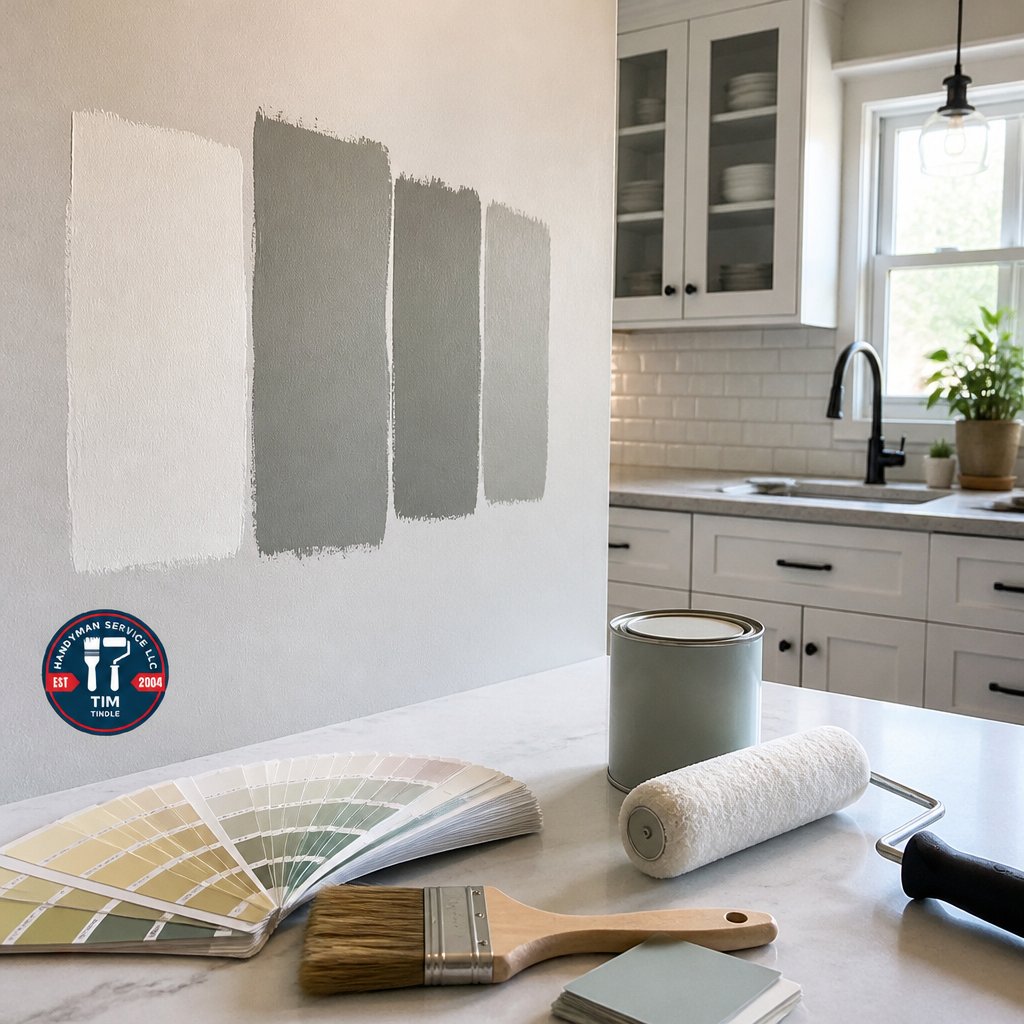
Get physical paint samples. Most paint stores sell small sample containers. Paint large swatches (at least 2 feet by 3 feet) in different locations, one in morning light, one where afternoon light hits, one in shade.
Live with the samples for at least two days, viewing them at different times of day and under your kitchen's artificial lighting at night. Colors shift dramatically with the light source.
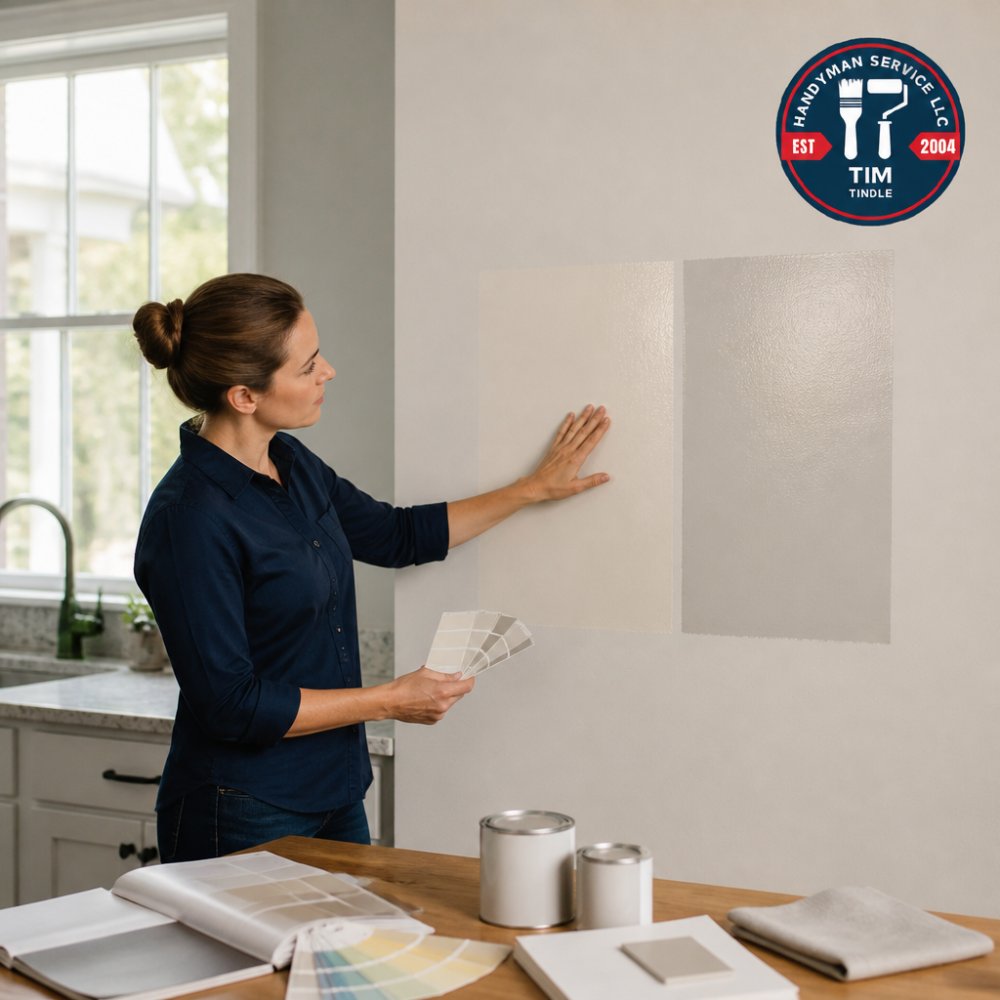
Test samples in your chosen finish. A color that looks good in flat may look different in satin, the reflective quality changes how your eye perceives it.
Evaluating Color Contrast with Cabinets and Trim
Your kitchen walls don't exist in isolation. They interact with your cabinets, trim, countertops, and flooring.
Consider contrast carefully. Light walls with dark cabinets create dramatic contrast, dark walls with light cabinets do the same, and medium wall tones work with both.
Test wall color samples next to your actual cabinet color if possible, paint a swatch adjacent to your cabinets or bring cabinet samples to your wall. The combination matters more than either color alone.
Trim color also affects perception: white or light trim creates clean lines, while matching trim to walls creates a seamless look. Both work, with different visual effects.
Surface Preparation and Application for Best Results
The best paint finish won't perform well on poorly prepared surfaces. Proper preparation is essential for durability and appearance.
Clean the walls thoroughly. Remove dust, grease, and grime, grease buildup is common in kitchens and prevents adhesion, causing peeling.
Repair damage. Fill holes, cracks, and dents with spackling compound and sand smooth after drying. Uneven surfaces show through, especially with satin or semi-gloss.
Prime if necessary. Primer helps when covering dark with light, blocks stains from bleeding through, and improves adhesion and finish quality.
Apply paint correctly. Eggshell and satin require careful technique to avoid lap marks.
If you're planning a kitchen update, our team can help you select the right finish and ensure professional application.
Learning how to choose the right paint finish for kitchen walls requires balancing appearance, durability, and maintenance.
Frequently Asked Questions
What type of paint finish is best for kitchen walls?
Satin and eggshell finishes are best for kitchen walls. Satin offers superior washability and stain resistance, making it ideal for high-traffic kitchens and areas near cooking surfaces. Eggshell provides a softer appearance with good cleanability, working well for kitchens with moderate moisture and activity. Both resist moisture and grease better than flat or matte finishes, which are too difficult to clean in kitchen environments.
Should kitchen walls be eggshell or satin paint?
Choose satin if your kitchen sees heavy use, has a cooktop or sink on the walls, or experiences humidity and splashing. Satin's higher sheen level provides better stain resistance and easier cleanup. Select eggshell if you prefer a more subtle, less reflective appearance and have a kitchen with lower moisture exposure. Both work well; satin wins for durability and washability, while eggshell offers aesthetic versatility.
Which paint finish is easiest to clean in a kitchen?
Semi-gloss and gloss finishes are easiest to clean, but they're too reflective for most kitchen walls. Satin finish strikes the best balance: it's highly scrubbable, resists stains and grease splatter, and wipes clean with a damp cloth without leaving streaks. Eggshell is also cleanable but requires gentler care. Avoid flat or matte finishes in kitchens, they absorb stains and cannot be scrubbed without damaging the surface.
How do you test paint finishes before painting a kitchen?
Purchase paint samples and apply them to large poster board or directly on inconspicuous wall sections. View samples at different times of day to see how natural and artificial light affects the color and sheen. Test the finish's cleanability by gently wiping with a damp cloth. Compare how each finish looks next to your cabinets, trim, and backsplash. Allow samples to dry fully, wet paint looks different than dried paint, and sheen appearance changes as it cures.