 how-to
How to Verify Handyman Credentials and Experience
Last Updated: October 23, 2026
Quick Summary
To verify handyman credentials, check your state licensing board's database to confirm the contractor holds an active license matching your project type, request a Certificate of Insurance to verify general liability and workers' compensation coverage, and contact at least two recent references to confirm quality and reliability.
- Confirm the contractor's license is active, current, and matches the specific work you need, such as plumbing or electrical.
- Request a Certificate of Insurance and call the insurance company to verify general liability and workers' compensation coverage are real and active.
- Contact at least two to three recent references and ask about timeliness, quality, communication, and whether they would hire again.
- Review the contractor's portfolio of past work or visit completed projects in person to assess quality and attention to detail.
- Watch for red flags including no license, no insurance, cash-only payments, demands for full upfront payment, or refusal to provide references.
Table of Contents
- Why Verifying Handyman Credentials Matters
- How to Check a Contractor's License
- Verify Insurance and Workers' Compensation Coverage
- Questions to Ask Before Hiring a Handyman
- Conduct a Handyman Reference Check
- Identify Handyman Red Flags
- Create Your Verification Checklist
- What to Do If Credentials Cannot Be Verified
- Frequently Asked Questions
Why Verifying Handyman Credentials Matters
Hiring the wrong handyman can turn a simple repair into a costly nightmare.
Verify handyman credentials before you sign anything. This protects your home, your wallet, and your legal standing.
We know background checks feel tedious, but the time you invest upfront saves you thousands in potential repairs, disputes, and liability claims.
This guide shows how to verify handyman credentials and experience in under an hour, so you can hire with complete confidence.
How to Check a Contractor's License
A valid license is your first line of defense. It proves the contractor met state or local requirements, passed exams, and maintains active standing with regulators.
Find Your State Licensing Board
Start by identifying which agency regulates contractors in your state. Most states have a licensing board or department of labor that maintains searchable databases.
Find your state licensing board using this approach:
- Search "[Your State] contractor licensing board" or "[Your State] department of labor"
- Look for an official .gov site with a "verify license" or "license lookup" tool
- Bookmark the page and note the board's contact number
Common boards include the Department of Consumer Affairs, the Construction Industries Commission, or the State Licensing Board.
Once you locate the board, confirm whether your state requires a license for your specific work. Some exempt minor repairs under a dollar amount; others require licensing for almost everything.
Understand License Types and Classifications
Contractors hold different license types by trade: a general contractor license covers broad construction work, while a specialty license covers plumbing, electrical, HVAC, or carpentry.
The type of license matters for your project.
Classifications vary by experience: some states issue journeyman and master licenses, others use apprentice, journeyman, and master tiers.
When you search the database, note:
- The license type (general, plumbing, electrical, carpentry, etc.)
- The classification level (apprentice, journeyman, master, or equivalent)
- Whether it matches the work you're hiring for
If the license type doesn't match your project, that's a red flag. Don't assume a general contractor license covers specialty work.
Confirm License Status and Expiration
A valid license must be active and current. An expired or suspended license means the contractor is not legally authorized to work.
In the licensing database, look for:
- License status: Active, inactive, suspended, revoked, or expired
- Expiration date: When the license expires and needs renewal
- Issue date: How long the contractor has held the license
- License number: The unique identifier for that contractor's credential
Only hire a contractor with an active license.
If the license expires soon, ask when they plan to renew.
Some databases also show disciplinary history or complaints. If you see violations, ask the contractor about them directly. Minor complaints happen, but a pattern of violations is a warning sign.
Verify Insurance and Workers' Compensation Coverage
A licensed contractor without insurance is a disaster waiting to happen. Insurance protects both you and the contractor if something goes wrong.
Two types of coverage matter: general liability insurance and workers' compensation.
Workers' compensation insurance covers the contractor and their employees if they get injured on your property. Without it, you could be held liable for medical bills and lost wages.
Request Proof of General Liability Insurance
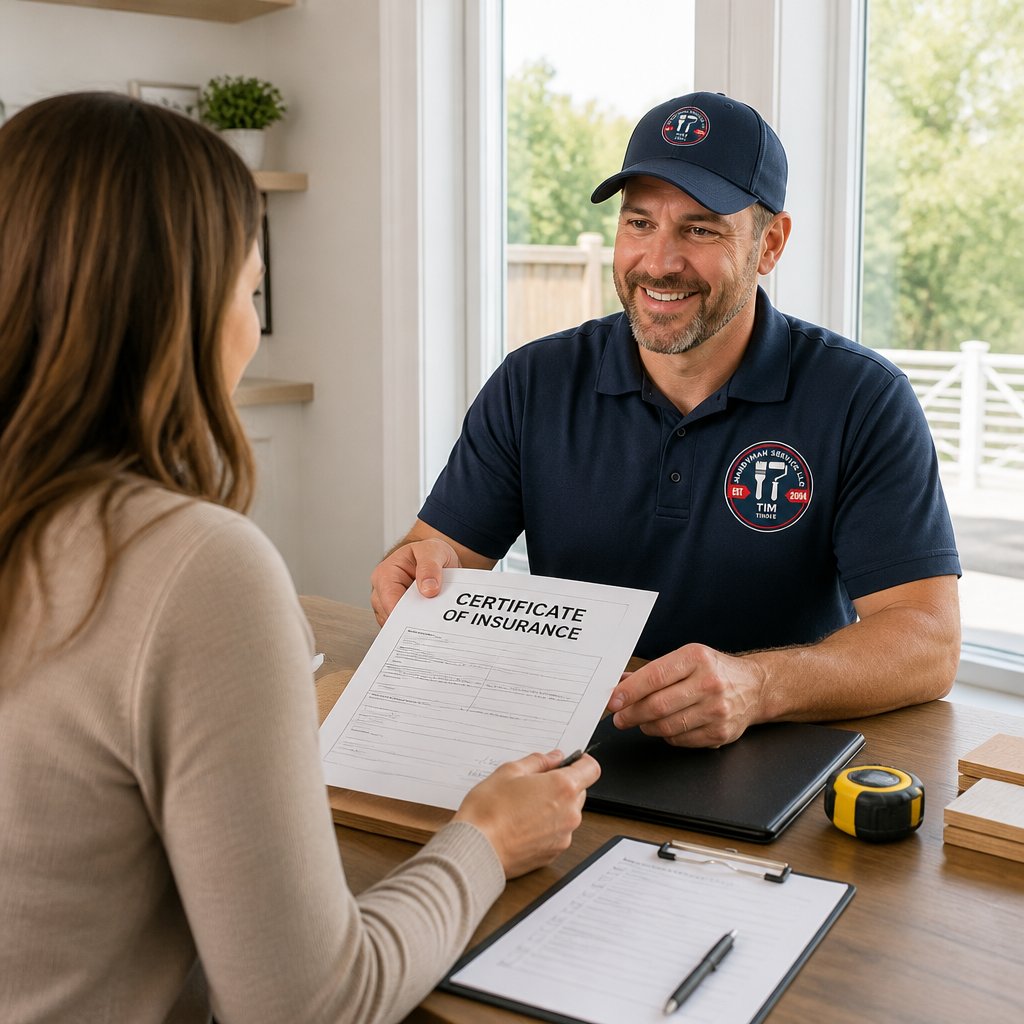
Ask the contractor to provide a Certificate of Insurance before work begins. This document proves they carry active coverage.
The certificate should show:
- The contractor's name and business address
- The insurance company name
- The policy number and coverage limits
- The policy start and expiration dates
- Your property listed as an "additional insured" (if applicable)
Call the insurance company to verify the policy is real and active. Don't rely on a photocopy alone.
Most general liability policies range from $300,000 to $2 million. For small handyman jobs, $300,000 is usually sufficient; for larger remodels, ask for higher limits.
Make sure your property is listed as an additional insured if possible.
How to Verify Handyman Insurance in 5 Steps provides a detailed process for confirming coverage details.
Confirm Workers' Compensation Coverage
Workers' compensation is mandatory in most states if the contractor has employees; for solo operators, requirements vary.
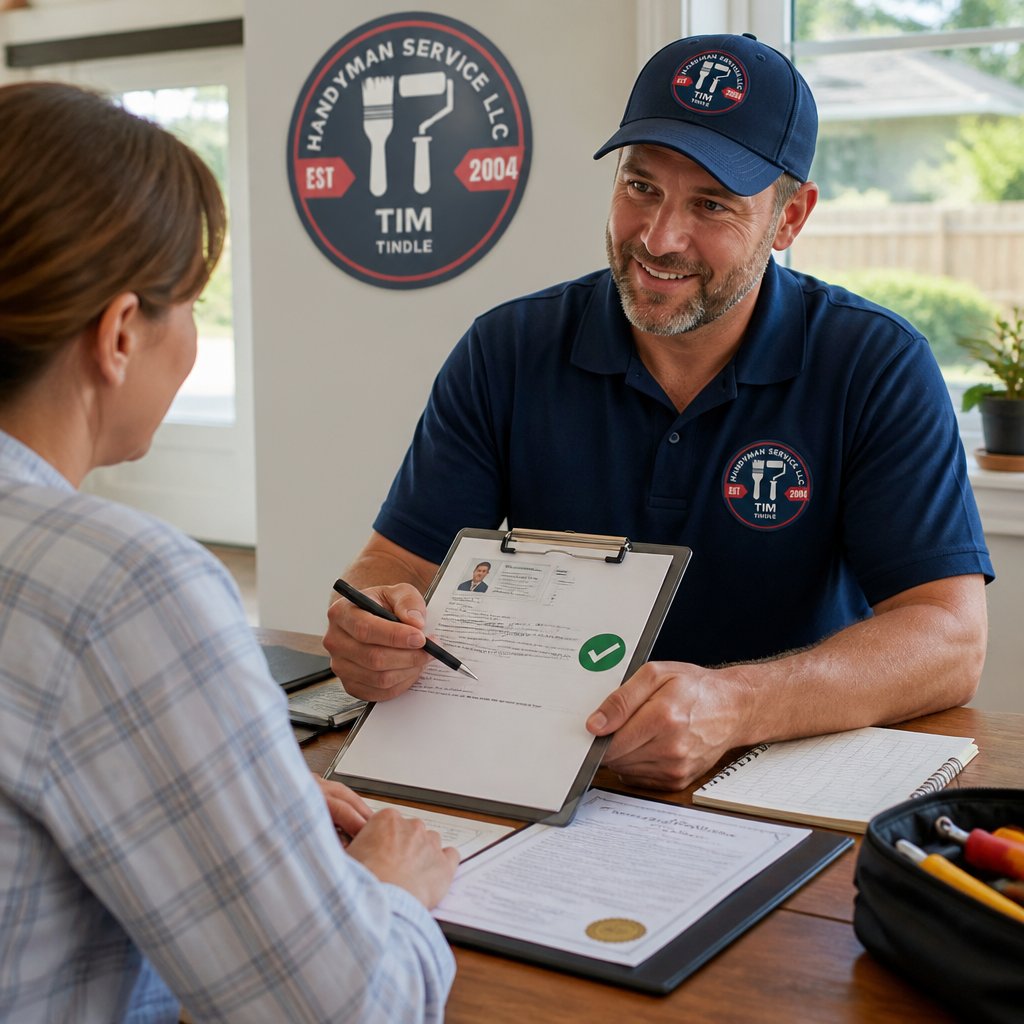
Ask the contractor for proof of workers' compensation coverage. This usually comes as a certificate or a state board verification.
Call your state's workers' compensation board to verify the contractor's coverage is active. The board can confirm:
Call 720-989-4123 for a free estimate →
- Whether the contractor is registered
- Whether coverage is current
- Whether there are any outstanding claims or disputes
If a contractor claims they don't need workers' compensation because they work alone, verify this with your state's labor department, some states require it regardless, others exempt solo operators.
If an uninsured contractor gets injured on your property, their injury bills could become your liability. It's not worth the risk.
Questions to Ask Before Hiring a Handyman
Beyond verifying credentials on paper, ask direct questions that reveal how they work and whether they're reliable.
Smart questions to ask:
- How long have you been in business? (Established contractors have track records.)
- Can you provide references from recent projects? (Real references prove past performance.)
- What's your process for handling unexpected issues? (How they respond to problems matters.)
- Do you provide a written estimate before starting work? (Professional contractors put estimates in writing.)
- What's your timeline for this project? (Vague timelines are a red flag.)
- How do you handle changes to the scope of work? (Do they adjust pricing fairly?)
- What's your warranty or guarantee on completed work? (Stands behind their work or doesn't.)
Pay attention to how they answer: professionals respond clearly and confidently, while evasive or defensive reactions suggest problems.
Checklist for Hiring a Local Handyman: 7 Steps walks through a comprehensive hiring process that incorporates credential verification into your full evaluation.
Conduct a Handyman Reference Check
References are proof. A contractor who won't provide them or whose references don't check out is hiding something.
Request and Contact References
Ask the contractor for at least three references from work completed in the past year. Recent references are more relevant than old ones.
When you call, ask specific questions:
- Did the contractor show up on time and complete the work on schedule?
- Was the work quality high? Any issues or rework needed?
- Did they communicate clearly throughout the project?
- Would you hire them again?
- Any problems after the work was done?
Trust your gut: hesitation or vague answers are telling, while raves are a good sign.
Contact at least two references. One reference could be a friend doing a favor. Two or three independent references paint a clearer picture.
Review Past Work and Portfolio
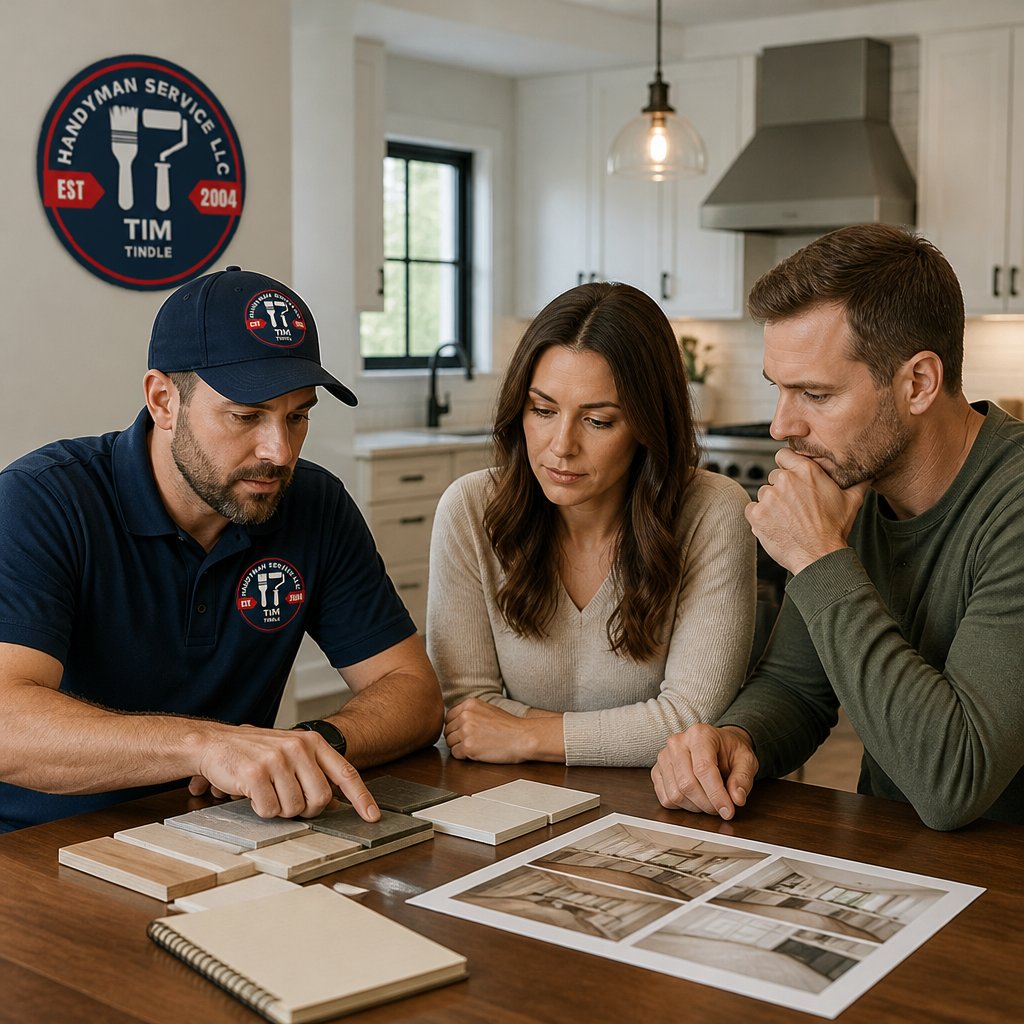
Ask to see photos of completed projects similar to yours, a strong portfolio means nothing to hide.
Pay attention to:
- Neatness and attention to detail in finished work
- Variety of projects (shows range of skills)
- Before-and-after photos (shows the actual transformation)
- Consistency across projects (quality doesn't vary wildly)
If they can't or won't show past work, that's a red flag, established contractors are proud to show it.
If possible, visit a completed project in person, real work up close is more convincing than photos.
Identify Handyman Red Flags
Some warning signs should stop you from hiring immediately. How to Vet a Home Improvement Contractor covers red flags in detail and helps you spot unreliable professionals.
Red flags include:
- No license or refuses to provide license number: If they can't or won't share it, they're likely unlicensed.
- No insurance or can't prove it: You're taking on massive liability.
- Won't provide references: Nothing to hide means something to hide.
- Demands cash payment only: Legitimate contractors accept checks or cards for a paper trail.
- Wants payment upfront for the full job: Professional contractors ask for a deposit, not the entire fee before work starts.
- No written estimate: Everything should be in writing.
- Pressure to decide quickly: "I can only do this job if you decide today" is a sales tactic, not a sign of professionalism.
- Vague about scope or timeline: If they can't explain what they'll do or how long it takes, they don't know.
How to Vet a Home Improvement Contractor covers red flags in detail and helps you spot unreliable professionals.
One red flag is enough to disqualify a contractor. There are always other options.
Create Your Verification Checklist
Use this checklist to organize your verification process. Check off each item as you complete it.
| Verification Step | What to Check | Status |
|---|---|---|
| License lookup | Verify license is active and matches the work needed | ☐ |
| License expiration | Confirm license doesn't expire soon | ☐ |
| License history | Check for disciplinary violations or complaints | ☐ |
| General liability insurance | Request and verify Certificate of Insurance | ☐ |
| Workers' compensation | Confirm coverage with state board | ☐ |
| References | Contact at least 2-3 recent references | ☐ |
| Portfolio | Review photos or visit completed projects | ☐ |
| Written estimate | Obtain detailed estimate in writing | ☐ |
| Questions answered | Ask about timeline, warranty, and process | ☐ |
| Background check | Search online for reviews or complaints | ☐ |
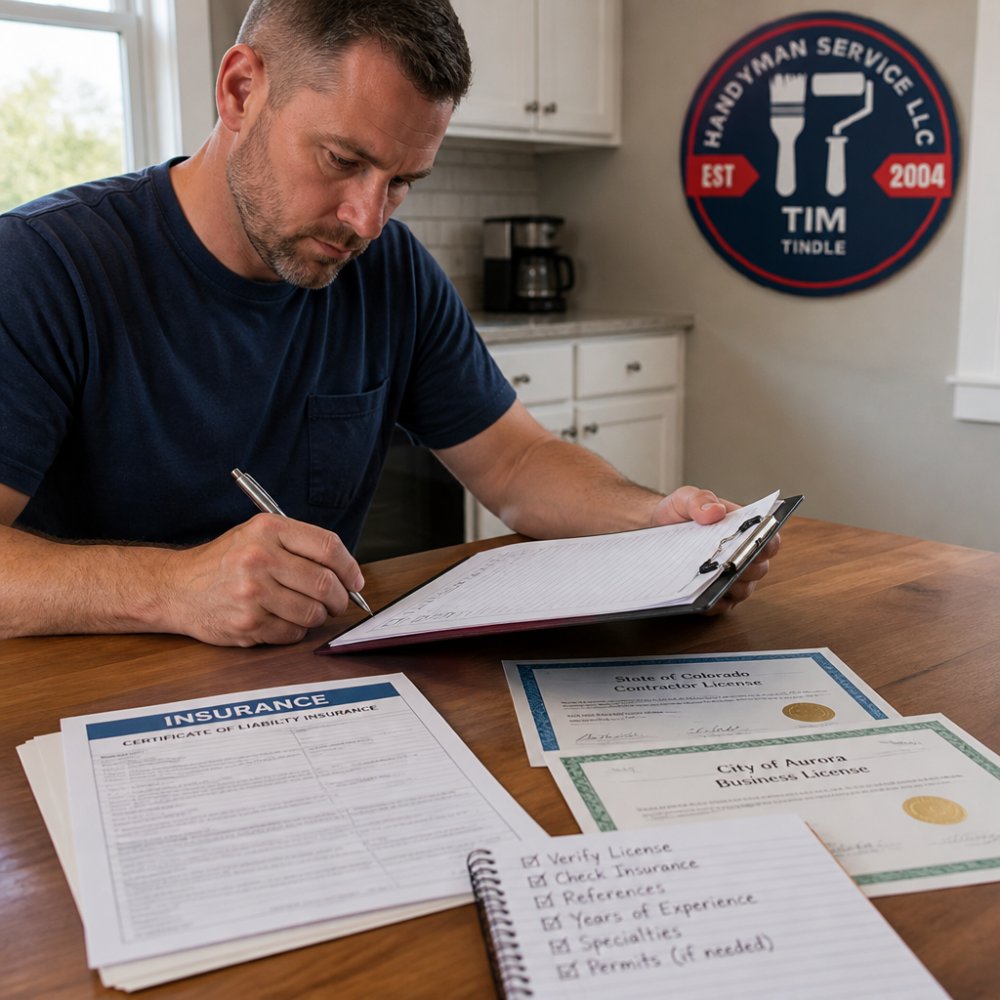
Print this checklist and fill it out for each contractor you consider. It keeps you organized and ensures you don't skip important steps.
What to Do If Credentials Cannot Be Verified
Sometimes a contractor can't or won't provide verification. That's your answer: don't hire them.
But if you're stuck or unsure, here are your options:
Ask for alternative proof. If they can't produce a license, ask for a business registration, tax ID, or bonding certificate. These don't replace a license, but they show the contractor is operating legitimately.
Check online reviews. Search the contractor's name on Google, Yelp, and the Better Business Bureau.
Hire a licensed contractor instead. If verification is impossible, move on.
Ask for bonding. A bond is insurance that protects you if the contractor doesn't complete the work or causes damage.
Hiring a handyman is a big decision. We're licensed and insured, provide free estimates, and stand behind our work. Contact us to discuss your repair or remodeling needs and get started with a contractor you can trust.
Frequently Asked Questions
What credentials should I check before hiring a handyman?
Start by verifying the handyman's license status through your state licensing board, confirm they carry general liability insurance and workers' compensation coverage, check disciplinary history and complaint records, request references from recent projects, and review their work experience and trade classifications. A licensed handyman should provide proof of all credentials without hesitation and have a clear explanation of their qualifications.
How can I verify a handyman's license and registration?
Contact your state licensing board directly or use their online license lookup tool. Search by the handyman's name or license number. Verify the license is in good standing, check the expiration date, confirm the trade classifications and specialty licenses, and review any disciplinary history. Most states maintain searchable databases on their Department of Labor or licensing board website.
What are the main red flags when hiring a handyman?
Watch for handymen who avoid providing license numbers, cannot produce proof of insurance, refuse to provide references or past client contact information, quote prices significantly lower than competitors without explanation, demand full payment upfront, lack a physical business address or phone number, or have an extensive disciplinary history. Unlicensed work, uninsured operations, and pressure to start immediately are serious warning signs.
How do I confirm that a handyman has insurance?
Ask for a Certificate of Insurance that lists general liability coverage and workers' compensation. Request the insurance company name, policy number, and coverage limits. Contact the insurance company directly to verify the policy is active and current. Never accept verbal assurance alone. Ensure the coverage includes the specific type of work you need performed and that the policy limits are adequate for potential damage or injury.