 how-to
When to Hire a Professional Handyman: A Homeowner's Guide
Table of Contents
- Signs You Need to Hire a Professional Handyman
- Handyman vs. Licensed Contractor: Know the Difference
- Projects a Handyman Can Handle
- When to Call a Licensed Contractor Instead
- Questions to Ask a Handyman Before Hiring
- Understanding Handyman Hourly Rates and Pricing
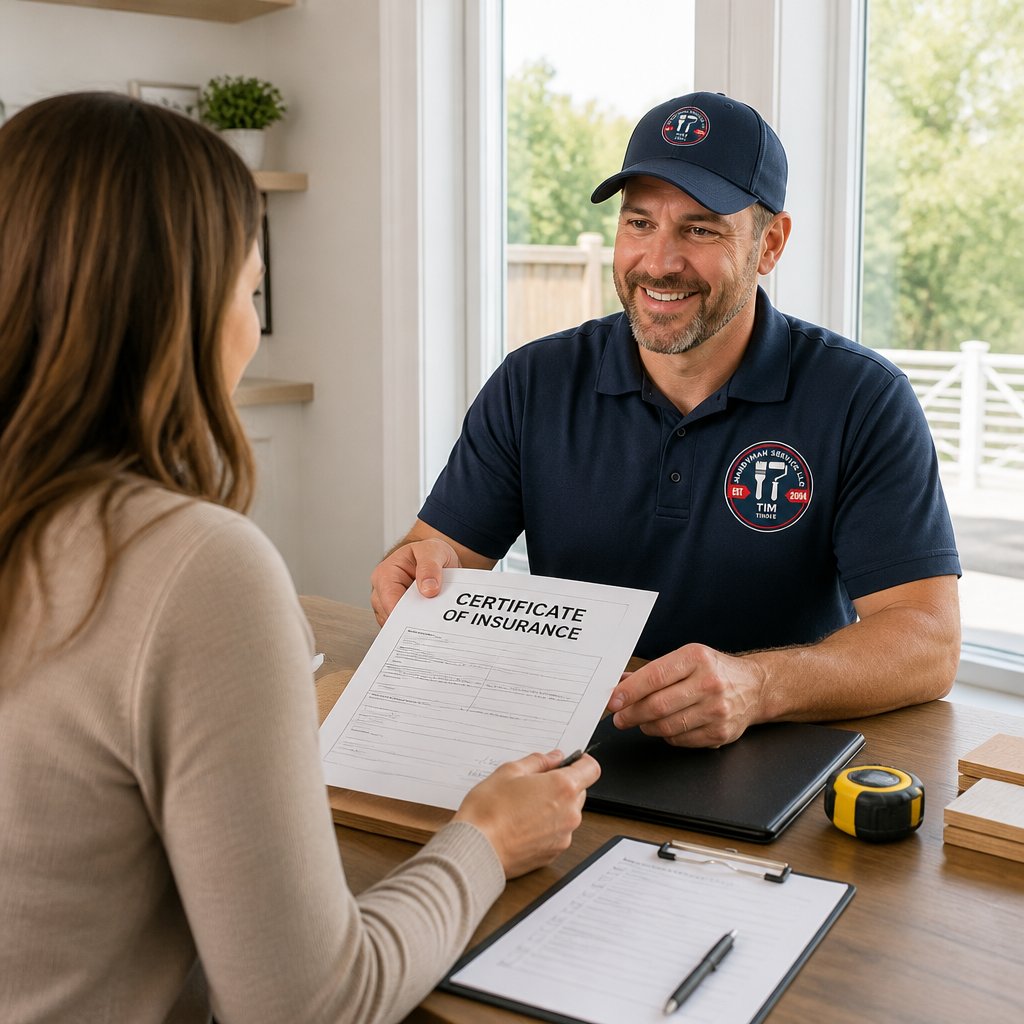
- How to Verify Credentials, Insurance, and Reliability
- The Written Estimate: Your Protection and Peace of Mind
- Frequently Asked Questions
Last Updated: September 26, 2026
Signs You Need to Hire a Professional Handyman
This guide from Handyman Service Aurora covers the key signs that tell you when to hire professional handyman services rather than risk making things worse.
A professional handyman becomes necessary when a project exceeds your skill level, requires specialized tools, involves safety risks, or when you've already tried fixing something and made it worse. Work involving electrical, plumbing, or structural elements demands licensed expertise.
Here's what to watch for:
- The project requires permits. Building codes exist for safety. Unpermitted work can affect your home's resale value and create liability issues.
- You lack the right tools. Buying specialized equipment for a one-time job rarely makes financial sense.
- The work involves heights. Working at heights without proper equipment and training is genuinely dangerous.
- Multiple trades are needed. If painting, carpentry, and plumbing all factor in, coordinating separate specialists becomes complicated. A general handyman handles mixed projects efficiently.
- You're uncertain about the scope. Hidden problems often emerge mid-project. Professionals know what to expect and how to handle surprises.
- Time pressure exists. Your schedule matters. A professional completes work faster and on schedule.
The real cost of DIY isn't just materials, it's your time, frustration, and the risk of expensive mistakes. When doubt creeps in, that's your signal to reach out.
Handyman vs. Licensed Contractor: Know the Difference
Understanding the distinction between a handyman and a licensed contractor is crucial for matching the right professional to your project, as it affects scope, licensing, insurance, and what work they can legally perform.
A handyman handles general repairs and maintenance: painting, drywall patching, cabinet repairs, fixture installation, and basic carpentry. They work on smaller projects that don't require permits or specialized licensing.
A licensed contractor specializes in specific trades and holds credentials required by law. They carry trade-specific licenses, handle complex work, obtain permits, and manage larger projects while following building codes and inspections.
Here's the practical breakdown:
| Aspect | Handyman | Licensed Contractor |
|---|---|---|
| Scope | General repairs, painting, carpentry, fixtures | Specialized trade work (electrical, plumbing, HVAC) |
| Licensing | May be licensed as handyman; varies by location | Required trade-specific license |
| Permits | Handles small jobs that don't require permits | Obtains permits for regulated work |
| Insurance | General liability typical | Liability + trade-specific coverage required |
| Cost | Usually lower hourly rates | Higher rates reflect expertise and licensing |
| Best for | Mixed small projects, maintenance | Complex, regulated, or large projects |
The key question: Does your project require a permit or involve a regulated trade?
Projects a Handyman Can Handle
Understanding what a professional handyman can tackle helps you plan projects and manage costs effectively.
Common handyman projects include:
- Interior painting, walls, trim, ceilings, cabinets
- Drywall repair, patching holes, taping, mudding, finishing
- Carpentry, shelving, trim work, door frame repairs, custom woodwork
- Cabinet work, repair, refinishing, hardware replacement, custom builds
- Fixture installation, light fixtures, towel bars, shelving, mirrors
- Door and lock repairs, hinges, locks, weatherstripping, threshold work
- Caulking and sealant, bathrooms, kitchens, exterior gaps
- Flooring prep, subfloor repair, underlayment, preparation for new flooring
- Deck and fence work, repairs, staining, minor construction
- General maintenance, caulking, weatherproofing, preventative repairs
When to Call a Licensed Contractor Instead
Certain projects demand a licensed contractor, not a handyman.
Call a licensed contractor when:
- Electrical work is involved. Rewiring, new circuits, panel upgrades, and major fixture work require an electrician. Electrical code violations cause fires and electrocution hazards.
- Plumbing requires permits. New water lines, drain work, fixture installation tied to structural changes, and anything affecting your home's main water or sewer line needs a licensed plumber.
- HVAC work is needed. Furnace, air conditioner, and heating system work requires HVAC certification. Improper installation wastes energy and creates safety risks (Optimizing the Installed Performance of Residential HVAC Systems).
- Structural changes occur. Load-bearing wall removal, foundation work, roof structural repairs, and anything affecting your home's integrity demands a structural engineer or licensed contractor.
- Permits are required. Building codes require permits for specific work. Licensed contractors know which projects need permits and handle the inspection process.
- The project is complex or large. Major renovations, whole-room remodels, and projects involving multiple trades benefit from a general contractor's coordination and oversight.
- Your homeowner's insurance requires it. Some policies mandate licensed contractors for specific work. Check your policy before starting.
Licensed contractors charge more because they carry insurance, maintain licenses, follow code, and stand behind their work with warranties, protecting you from liability, code violations, and shoddy work.
Questions to Ask a Handyman Before Hiring
Asking the right questions before hiring reveals whether a handyman is insured, experienced, and trustworthy.
Start with the basics:
- Are you licensed and insured? Request proof of general liability insurance. Ask for their license number if required in your area. Verify both before work begins.
- How long have you been doing this work? Experience matters.
- Can you provide references? Ask for 3-5 recent clients you can contact. Call them. Ask about reliability, quality, and whether work stayed on schedule and budget.
- Do you carry workers' compensation insurance? If they have employees, they must carry this. It protects you if someone is injured on your property.
- What's your process for estimates? Do they visit in person? How detailed is the written estimate? Do they explain what's included?
- How do you handle unexpected issues? Projects often reveal hidden problems. Do they stop and ask before proceeding? Do they communicate changes clearly?
- What's your payment schedule? Do they want full payment upfront, deposits, or payment on completion? Avoid anyone demanding full payment before starting.
- Do you guarantee your work? What warranty do they offer? How long does it last? What's covered?
- How do you handle scheduling and timeline? When can they start? How long will the project take? Will they stick to the schedule?
Understanding Handyman Hourly Rates and Pricing
Handyman pricing varies based on location, experience, complexity, and whether work is hourly or flat-fee.
Factors affecting pricing:
- Experience level, Seasoned professionals charge more than newer handymen. The difference reflects skill, reliability, and quality.
- Project complexity, Simple painting costs less than custom carpentry or structural repairs.
- Materials, Some estimates include materials; others don't. Clarify this upfront.
- Location, Urban areas and metro regions typically cost more than rural areas. Travel time also factors in.
- Scope clarity, Well-defined projects are easier to price. Vague scopes lead to surprises and cost overruns.
- Timeline, Rush jobs may cost more. Flexible scheduling might offer savings.
Ask these pricing questions:
- What's included in the estimate?
- Are materials included or separate?
- What's your hourly rate, and how do you track time?
- Will you contact me if costs exceed the estimate?
- Is there a deposit required?
How to Verify Credentials, Insurance, and Reliability
Verifying a handyman's credentials and insurance protects your home, liability, and money.

The Written Estimate: Your Protection and Peace of Mind
A written estimate prevents misunderstandings, budget overruns, and disputes. Never start work without one.
A quality estimate includes:
- Detailed scope of work, Specific tasks, not vague descriptions. "Paint living room" should specify walls, trim, ceiling, number of coats, prep work, and finish type.
- Materials listed, What's included? Paint type, hardware, supplies? Are they providing materials or are you?
- Labor costs, Hourly rate or flat fee? How many hours is the estimate based on?
- Timeline, Start date, expected completion date, any scheduling assumptions.
- Payment terms, Deposit required? Payment schedule? Final payment terms?
- Warranty or guarantee, What's covered? For how long? What happens if issues arise?
- Exclusions, What's NOT included? Are there additional costs if hidden problems emerge?
Frequently Asked Questions
What are the red flags when hiring a handyman?
Watch for handymen who refuse to provide written estimates, can't verify licensing or insurance, won't give references, or pressure you to pay upfront in full. Other warnings include vague scope of work descriptions, reluctance to discuss project timelines, and lack of a physical business address. A professional handyman will be transparent about credentials, provide clear communication, and explain exactly what work they'll perform before starting.
How do I verify if a handyman is licensed and insured?
Ask for proof of general liability insurance and workers' compensation coverage before hiring. Request their license number and verify it through your state's licensing board or contractor database. Check references from recent clients and confirm their business registration. A legitimate professional will provide documentation without hesitation and maintain current insurance throughout the project. Don't hire anyone who can't produce these credentials, your property and liability depend on it.
What types of jobs should you never hire a handyman for?
Never hire a handyman for major electrical work, gas line installation, structural repairs, roof work, or foundation issues. These require licensed contractors and building permits. Complex plumbing beyond fixture replacement, HVAC system work, and anything requiring permits also falls outside handyman scope. If a project involves safety hazards, structural integrity concerns, or code compliance, a licensed contractor is necessary. When in doubt, ask your handyman, a professional will tell you honestly if a job exceeds their qualifications.
Should I pay a handyman before or after the work is completed?
Most professionals request a deposit upfront with the balance due upon completion. Never pay the full amount before work begins. The written estimate should specify the payment schedule clearly. This protects both you and the handyman, deposits secure materials and scheduling while final payment ensures work meets agreed standards. Always inspect the completed work before paying the balance and confirm all project requirements are met.
Hiring a professional handyman for home maintenance and repairs saves time, prevents costly mistakes, and protects your property. When you need reliable, insured service in the Aurora and Denver Metro area, Handyman Service Aurora delivers experienced professionals who handle carpentry, painting, remodeling, and general repairs with quality craftsmanship. Call 720-989-4123 for a free estimate and experience the peace of mind that comes with professional, licensed service.