 how-to
Why Interior Doors Stick in Summer: Diagnosis and Fixes
Table of Contents
- Why Interior Doors Stick During Summer
- How to Tell Where a Door Is Sticking
- Separating Humidity Swelling from Hardware and Frame Problems
- How to Fix a Door That Sticks
- How to Adjust Door Hinges
- Do Swollen Doors Go Back to Normal?
- Prevention and Off-Season Maintenance
- Frequently Asked Questions
Last Updated: October 5, 2026
Why Interior Doors Stick During Summer
Wood absorbs moisture from humid air. When humidity rises in summer, wood swells, which can cause interior doors stick summer, a common seasonal problem that often reversible. The problem is seasonal and often reversible.
The good news: most sticky doors can be repaired without replacing the door.
The challenge is figuring out whether humidity is the culprit. Hardware problems, frame misalignment, and foundation movement all cause sticking too, and knowing which problem you have determines which fix will work.
How Wood Absorbs Moisture and Expands
Wood is porous and absorbs water vapor from the air. When humidity increases, wood fibers swell, most noticeably at the edges where the door meets the frame.
A solid wood interior door can expand up to 1/8 inch across its width during humid months, enough to bind against the frame. Hollow-core doors expand less but still move, and composite doors expand even less but aren't immune to seasonal sticking.
The expansion isn't uniform. The top and sides of the door swell more noticeably than the bottom. This is why many sticky doors rub at the top first.
The Role of Humidity and Indoor Air Conditioning
Summer humidity pushes moisture into your home through walls, windows, and door frames.
Most homes stay comfortable between 30% and 50% relative humidity. Above 50%, wood begins to swell noticeably. In summer, many homes creep toward 60% or higher, especially in basements and kitchens.
Cooling air reduces its ability to hold moisture, but if your AC isn't sized properly or your home isn't sealed well, humidity can still climb. A dehumidifier in problem areas can prevent seasonal door sticking before it starts.
How to Tell Where a Door Is Sticking
The first step is identifying exactly where the door rubs. This tells you whether humidity swelling, hardware problems, or frame issues are responsible.
Visual Inspection and the Feel Test
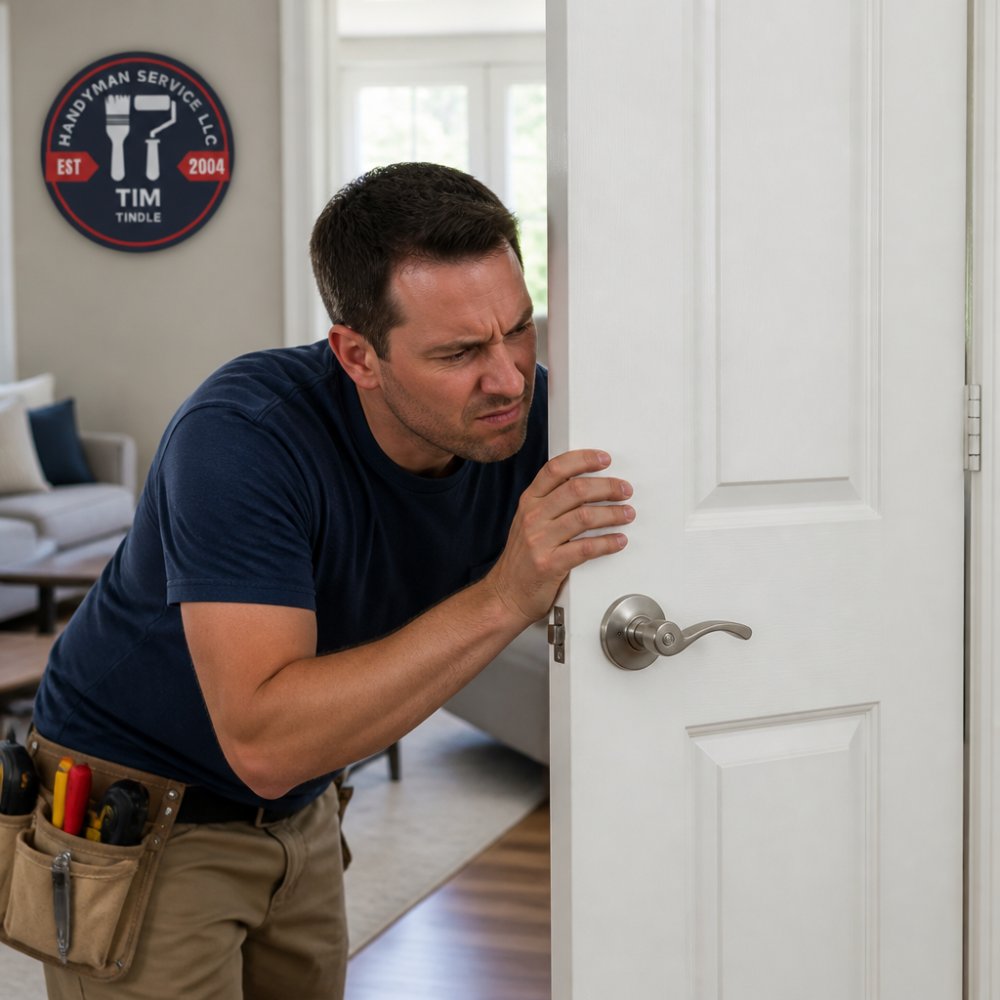
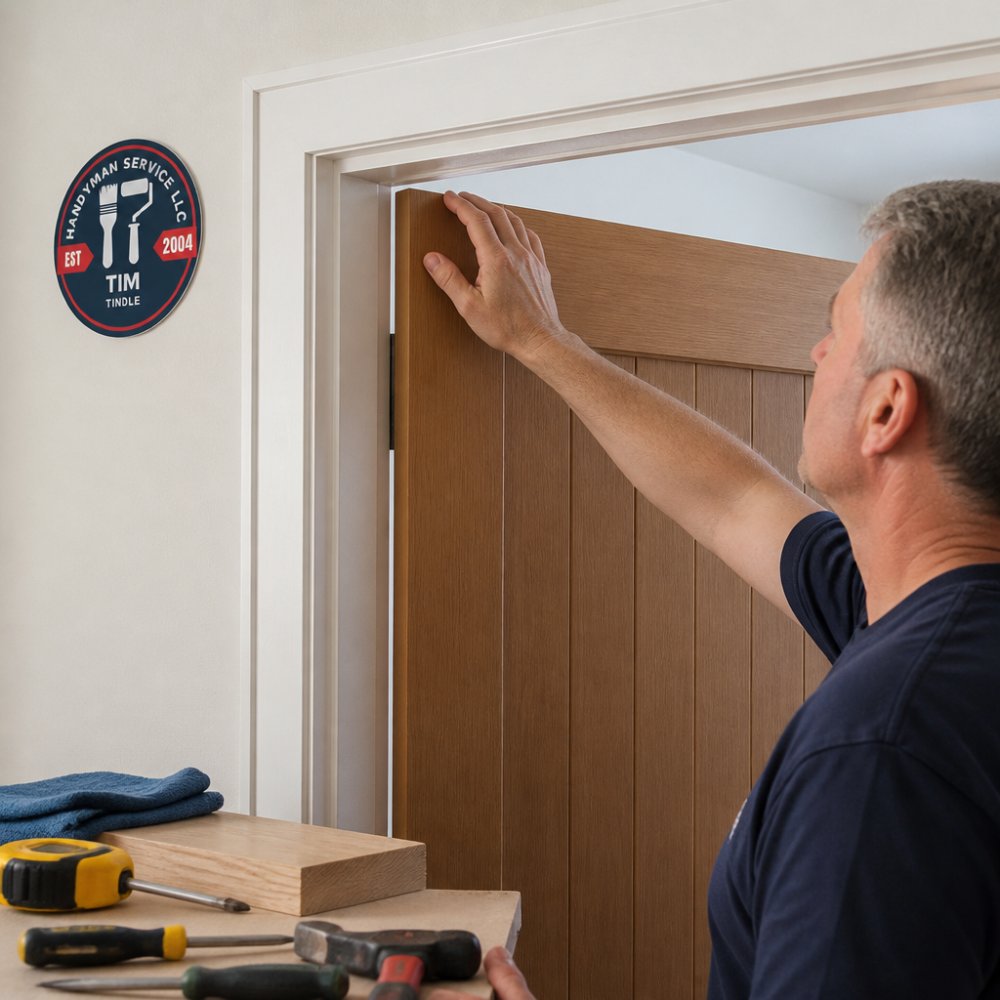
Close the door slowly and listen for where it catches. Run your hand along the top, sides, and bottom edges to feel for tight spots.
Look at the door edge: shiny wood or visible wear marks show where it's rubbing, and fresh shavings or dust around the frame indicate the contact point.
Try the credit card test. Slide a thin card between the door and frame at different points. Where the card won't fit, the door is sticking.
Identifying Rubbing at the Top, Bottom, or Sides
Rubbing at the top edge usually means humidity swelling: wood expands, and the top pushes against the frame first because hinges hold the bottom in place.
Rubbing at the bottom suggests humidity swelling (less common there) or a sagging door, which happens when hinges wear out or the frame settles unevenly.
Rubbing on one side means the frame might be twisted, the hinges loose, or the house has shifted slightly, pulling the frame out of square.
Separating Humidity Swelling from Hardware and Frame Problems
Not every sticky door is caused by humidity. Before you sand the door, rule out simpler fixes.
Loose Hinges and Seized Hardware
Loose hinge screws are the easiest fix and the most commonly overlooked. Over time, vibration from opening and closing doors loosens them, letting the door sag slightly and bind.
Inspect all three hinges for gaps between the hinge and the frame, then tighten the screws with moderate pressure, don't strip the holes.
Seized hinges are rare but possible.
Check the latch and strike plate too. If the strike plate is misaligned, the door will bind as it closes. The latch should slide smoothly into the strike plate opening.
Door Frame Misalignment and Sagging Doors
A door sags when the top hinge pulls away from the frame or the bottom hinge settles, usually as hinges wear or the frame shifts.
Check if the door is level by placing a level against its top. If it tilts, the door is sagging, which causes rubbing at the top and sometimes along the latch side.
Frame misalignment occurs when the frame twists out of square, from uneven settling or incorrect installation, causing rubbing on one side of the door.
To check frame alignment, measure the diagonal distances from corner to corner. If the measurements differ by more than 1/4 inch, the frame is twisted.
Foundation Movement Versus Seasonal Expansion
Seasonal humidity swelling is temporary and reversible: the door swells in summer and shrinks in winter, every year, with no structural problem.
Foundation movement is permanent and progressive. If your house is settling, doors stick worse each year, and you may notice cracks in walls, sloping floors, or doors that don't close properly even in winter.
If a door sticks only during humid months and closes fine in winter, humidity is almost certainly the cause. If it sticks year-round and worsens, suspect foundation movement or frame damage, which requires professional evaluation beyond typical handyman repairs.
How to Fix a Door That Sticks
Start with the least invasive fixes. Most sticky doors don't need sanding or planing.
Least-Invasive Repairs First: Humidity and Air Conditioning
The simplest fix is controlling humidity. Use a dehumidifier in rooms where doors stick most. Aim for indoor humidity between 35% and 45%.
Improve air circulation: open windows on cool mornings and evenings and run ceiling fans so moisture can escape from the wood.
Check your air conditioning. An undersized, poorly maintained, or old system won't remove enough moisture; a clean filter helps, and professional HVAC service can improve performance.
Seal air leaks around windows and exterior doors. Moisture enters through gaps and cracks. Weatherstripping and caulk reduce humidity infiltration.
These steps cost nothing or very little.
Tightening Hinges and Adjusting Hardware
If humidity control doesn't work, tighten all hinge screws. Use a screwdriver that fits the screw head properly. Strip screws won't hold.
If a screw spins without gripping, the hole may be stripped.
Call 720-989-4123 for a free estimate →
For sagging doors, shim the hinges: unscrew the bottom hinge, slide a thin shim (wood or cardboard) behind the top or middle hinge, and the tilt can eliminate rubbing at the top.
If the latch doesn't align, loosen the strike plate screws and slide it up, down, or sideways until the latch enters smoothly, then tighten.
Sanding and Planing the Door Edge
Sanding is a last resort after humidity control and hardware fixes fail. Sand only the rubbing edge with 80-grit paper, by hand or with an orbital sander.
Sand lightly, removing just enough material for clearance, and test the door frequently, you can always sand more, but you can't add wood back.
For larger removals, use a sharp hand plane with the grain to avoid tearout, it takes practice but beats sanding for thick material.
After planing, sand the edge smooth with 150-grit paper and refinish the sanded edge to match if the door is stained or painted.
How to Adjust Door Hinges
Hinge adjustment can solve many sticking problems without sanding.
Tightening Loose Hinge Screws
Locate all three hinges, top, middle, and bottom. Each has screws attaching it to the door and to the frame.
Start with the easier-to-access frame screws. Use a screwdriver that fits the head perfectly, turn clockwise slowly, and stop at resistance, over-tightening strips the hole.
Then tighten the door edge screws, which hold the hinge to the door, the same way.
After tightening all screws, test the door. It should close more smoothly. If it still sticks, move to shimming.
Shimming and Realigning Hinges
Shimming changes the door's angle slightly to eliminate rubbing. Thin wood, cardboard, or plastic shims all work.
Unscrew the bottom hinge first, supporting the door as you work.
If needed, shim the middle hinge the same way, usually one hinge is enough.
For doors rubbing on one side, shim the hinge on that side to push the door away from the rubbing point.
Shimming takes trial and error, adding or removing shims until the door closes smoothly, but it avoids sanding.
Do Swollen Doors Go Back to Normal?
Yes, most swollen doors return to normal size when humidity drops, one of the best things about humidity-caused sticking.
Seasonal Reversibility and Solid Wood Versus Hollow-Core Doors
Solid wood doors swell in summer and shrink back in winter as indoor humidity drops. The cycle repeats yearly, and the door doesn't get permanently larger.
Hollow-core doors behave similarly but expand less. The outer veneer swells, but the hollow interior doesn't, so the overall change is smaller.
Composite and engineered wood doors expand least, since they're designed to resist moisture movement. If a composite door still sticks, humidity probably isn't the cause.
That reversibility means you don't need to permanently alter the door, once fall arrives and humidity drops, the sticking often stops on its own.
When Permanent Damage Occurs
Permanent damage happens when wood swells so much it cracks or the finish fails; severe, sustained swelling can damage wood fibers permanently.
Repeated swelling and shrinking cycles can also weaken wood fibers over years, so the door may not fully return to its original size.
If you notice cracks, peeling finish, or a door that won't close properly even in winter, permanent damage has likely occurred, sanding and refinishing may not solve it, and the door might need replacement.
Most seasonal sticking, however, causes no permanent damage: the door swells, shrinks, and the cycle continues without harm.
Prevention and Off-Season Maintenance
Preventing seasonal sticking is easier than fixing it.
Maintain your AC: clean filters monthly in summer and service the system annually, since a well-maintained system removes moisture more effectively.
Seal air leaks by caulking gaps around windows and doors and weatherstripping exterior doors, less infiltration means lower indoor humidity.
Paint or seal interior doors with a quality finish to slow moisture absorption, it won't prevent swelling entirely, but it reduces it.
In fall and winter, when humidity is low, tighten loose hinge screws and check strike plate alignment before next summer's humidity arrives.
| Prevention Method | Effort | Cost | Effectiveness |
|---|---|---|---|
| Control humidity | Low | Low | High |
| Maintain air conditioning | Low | Low | High |
| Seal air leaks | Low-Medium | Low-Medium | Medium |
| Paint or seal door | Medium | Medium | Medium |
| Tighten hinges seasonally | Low | None | Medium |
| Shim hinges | Medium | Low | High |
Interior doors stick in summer because wood swells when humidity rises.
If you've tried humidity control and hardware adjustments without success, or if you're not comfortable working on hinges yourself, Handyman Service Aurora can diagnose the problem and make the repair.
Frequently Asked Questions
Why do interior doors stick more during summer?
Wood absorbs moisture from humid air and expands, reducing the clearance between the door and its frame. Summer humidity levels and the contrast created by air conditioning can intensify this seasonal expansion. Solid wood doors are especially prone to swelling, while hollow-core and composite doors are less affected.
How can I tell if a sticking door is caused by humidity or a structural problem?
Humidity-related sticking typically affects multiple doors and improves when humidity drops or air conditioning runs. If only one door sticks, or if the problem persists year-round, check for loose hinges, frame misalignment, or sagging. Foundation movement causes gradual, permanent changes; seasonal sticking reverses when conditions change.
Do swollen doors go back to normal when humidity drops?
Yes, most doors swell and shrink seasonally with humidity changes. Solid wood doors typically return to normal size when indoor moisture levels drop in fall and winter. Hollow-core and composite doors are more stable. However, repeated seasonal swelling can cause permanent warping or damage to the door edge, especially if it was sanded or planed during expansion.
Can I fix a sticking door myself, or do I need a professional?
Simple fixes like tightening hinge screws or running a dehumidifier are DIY-friendly. Sanding or planing requires care to avoid removing too much material. If the frame is damaged, hinges are severely misaligned, or you suspect structural issues, a professional assessment prevents costly mistakes. Contact us for a free estimate to determine the best approach for your door.