 how-to
Does High Gloss Paint Show Wall Imperfections?
Table of Contents
- Why High Gloss Paint Reveals Wall Imperfections
- The Paint Finish to Hide Drywall Imperfections
- High Gloss vs. Semi-Gloss: What's the Real Difference?
- High-Gloss Paint on Uneven Walls: What to Expect
- How to Prepare Walls for High-Gloss Paint
- Flat vs. High-Gloss Paint for Walls: Which Should You Choose?
- Testing a Finish Before You Commit
- Frequently Asked Questions
Last Updated: October 13, 2026
Why High Gloss Paint Reveals Wall Imperfections
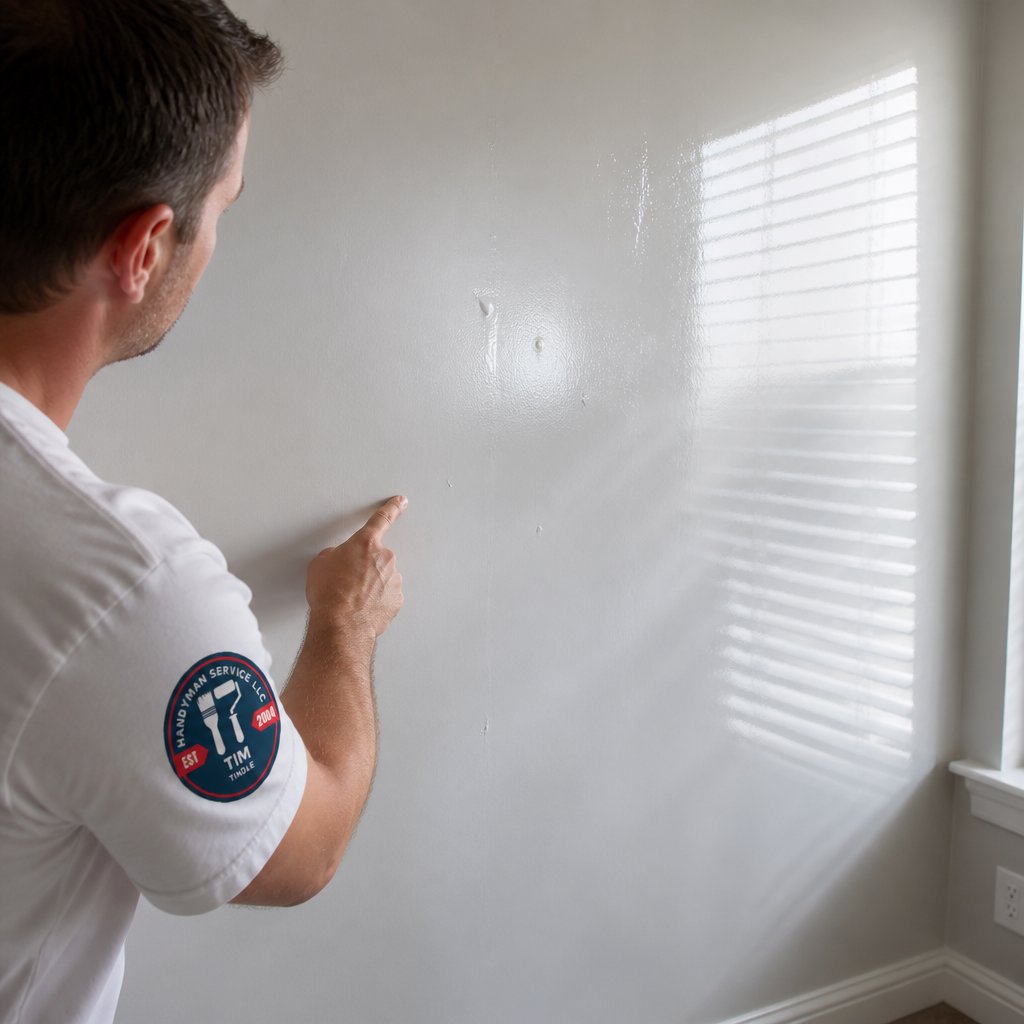
Yes, high gloss paint shows wall imperfections more than any other finish.
The reason comes down to how light behaves. A flat finish has a rough, chalky surface that scatters light in all directions, softening shadows and blurring small defects.
So the honest answer to "does high gloss paint show wall imperfections" is: it does not create them, but it exposes them.
How Light and Viewing Angle Expose Flaws
Lighting and viewing angle decide how badly a flaw shows. Stand directly in front of a glossy wall with the light behind you, and small dents may disappear. Move to the side, and every ridge and dip lights up.
Here is what changes the picture:
- Direct light (a window, a lamp, a ceiling can) reflects straight back and reveals texture.
- Angled viewing stretches the reflection across the surface, magnifying small defects.
- Low-angle light rakes across the wall and casts tiny shadows in every dip.
- Diffuse light from a soft source hides more than a hard, focused beam.
That is why a glossy accent wall can look flawless in the morning and terrible at night: the light changed, not the finish.
The Paint Finish to Hide Drywall Imperfections
The best paint finish to hide drywall imperfections is flat or matte. Those finishes have the lowest gloss level, so they diffuse light and soften the shadows that make dents and patches visible.
If you rank common interior finishes from best to worst at hiding flaws, it looks like this:
| Finish | Gloss Level | Hides Imperfections | Best For |
|---|---|---|---|
| Flat / Matte | Lowest | Best | Ceilings, low-traffic walls |
| Eggshell | Low | Good | Living rooms, bedrooms |
| Satin | Medium | Fair | Kitchens, hallways |
| Semi-Gloss | High | Poor | Trim, doors, bathrooms |
| High-Gloss | Highest | Worst | Trim, cabinets, accent walls |
The trade-off is real. Flat paint hides the most but cleans up the worst. Glossy paint wipes clean easily but shows everything. That tension drives most finish decisions, and it is why the answer depends on the room, not just the wall.
High Gloss vs. Semi-Gloss: What's the Real Difference?
The difference between high gloss and semi-gloss comes down to reflectivity, measured on a gloss unit scale. Most manufacturers rate semi-gloss in the 35-to-70 range and high gloss at 70 and above, with some high-gloss enamels reading in the 80s or 90s.
Semi-gloss has a noticeable shine, but its surface still scatters a meaningful share of the light that hits it. High gloss is close to a mirror and reflects almost everything back at a single angle.
Where the Two Finishes Diverge in Practice
Flaw visibility. High gloss magnifies surface defects far more than semi-gloss.
Application forgiveness. Semi-gloss levels out reasonably well with a quality roller cover.
Recoat and cure behavior. Oil-based high-gloss enamels commonly need 8 to 24 hours before recoating and can take several days to reach full hardness, depending on temperature and humidity.
Cleanability. Both wipe clean well.
Repairability. A scuff on flat paint can often be touched up invisibly.
Which One to Pick
If you want durability with a little forgiveness, semi-gloss is usually the safer pick for walls in kitchens, bathrooms, hallways, and kids' rooms. If you want that wet, enamel-like look, high gloss delivers it, but only on a genuinely smooth surface, and usually on trim, doors, and cabinets rather than a full wall.
A quick rule of thumb: if you would not run your bare hand across the wall in the dark, do not put high gloss on it. Semi-gloss forgives more of what you cannot feel.
Call 720-989-4123 for a free estimate →
High-Gloss Paint on Uneven Walls: What to Expect
Expect the flaws to show, and expect them to show clearly. High-gloss paint on uneven walls turns small defects into obvious ones: a dip you can barely feel becomes a dark spot in the reflection, and a raised drywall seam becomes a visible line. Knowing which flaws gloss punishes hardest helps you decide what to fix and what to leave alone.
How Each Common Flaw Reads Under Gloss
- Nail pops and screw dimples. These read as small craters because the depression catches light on one side and shadows on the other; a screw dimple only 1/16 inch deep can look like a thumbprint in the shine. They are also the easiest flaws to fix: scrape, refill with setting-type compound, sand flush, prime.
- Drywall seams and tape edges. Highly visible. The ridge catches light and casts a shadow line running the length of the seam. This is the flaw most likely to ruin a glossy wall, because it is long, straight, and impossible to ignore once you see it.
- Patched holes. Often visible, because patches rarely match the surrounding texture. The patch may be flat while the surrounding wall has roller stipple, and gloss reflects that difference as a dull spot in an otherwise glossy field.
- Sanding scratches. Visible as swirl marks in the reflection. They are caused by sanding across the grain or using too coarse a grit. The fix is to sand progressively finer and to sand in one direction on the final pass.
- Roller texture and orange peel. Every bump is amplified. A wall that looks fine under flat paint can look like a golf ball under high gloss, because the stipple casts hundreds of tiny shadows.
- Paint drips and sags. These read as raised lines or teardrops. They are an application defect, not a wall defect, and they are the most common reason a high-gloss wall looks worse than the prep deserved.
A Simple Decision Path
When you are staring at an imperfect wall and trying to decide what to do, work through these questions in order:
- Can you feel the flaw with your fingertips? If yes, gloss will show it. Fix it or change finishes.
- Is the flaw long and straight (a seam, a crack, a joint)? These are the most visible under gloss and the hardest to hide. Skim and re-sand, or drop to a lower sheen.
- Is the flaw a small isolated dent or hole? These are the easiest to fix. Patch, sand, prime, and proceed.
- Is the whole wall textured or uneven? If so, high gloss is the wrong finish for that wall. Reserve it for trim, doors, and cabinets, or skim the entire wall smooth first.
- Is the room lit by direct or raking light? If yes, gloss will look worse than it does in diffuse light. Consider a lower sheen even on a well-prepped wall.
The good news: none of this is permanent. The flaws are in the wall, not the paint, so the fix is preparation. The bad news: preparation is the part most homeowners underestimate, and high gloss punishes that underestimate hardest.
How to Prepare Walls for High-Gloss Paint
Preparing walls for a glossy finish means making the surface as smooth as possible before any paint goes on.
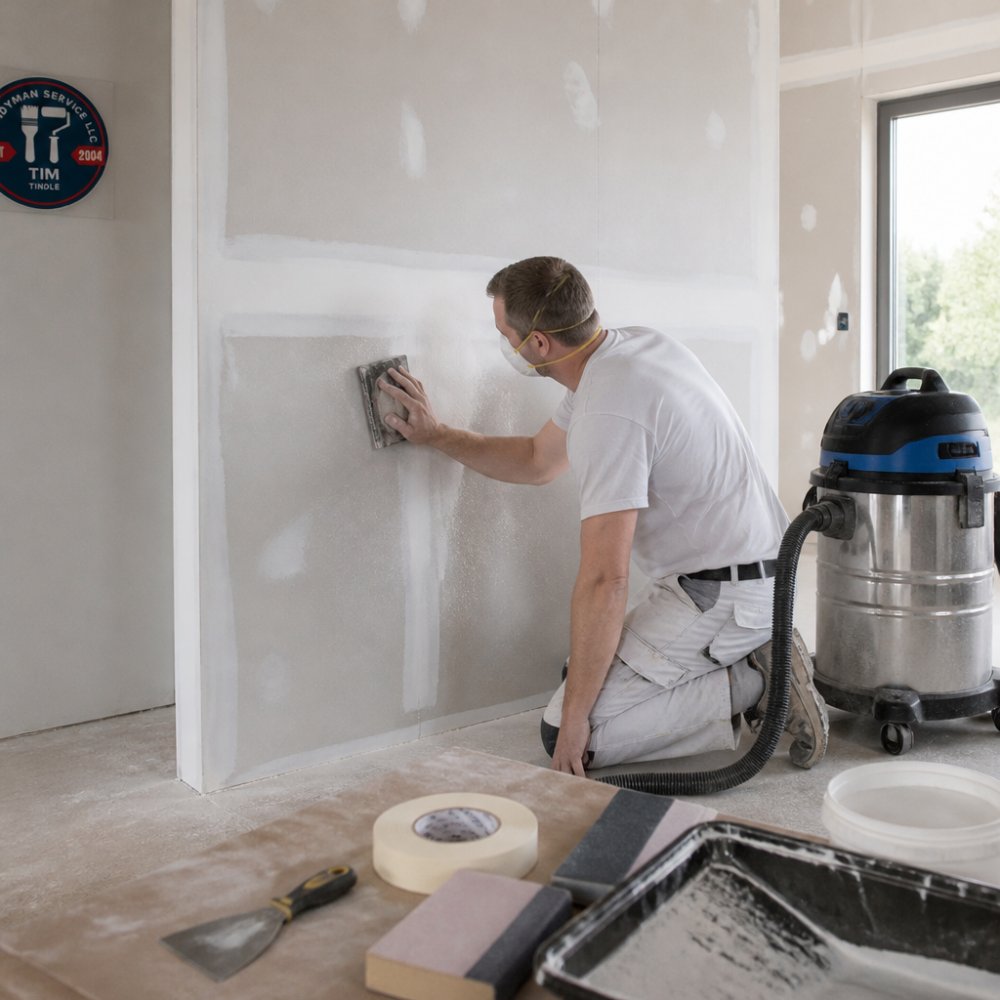
Start by inspecting the whole wall under a bright light held at a low angle, the same trick painters use to find flaws before they become permanent.
Step-by-Step Preparation Workflow
Work through these steps in order, and do not rush the sanding:
- Clean the wall. Remove dust, grease, and any loose paint so new material bonds well.
- Fill dents and holes. Use lightweight spackle or joint compound, and let it dry fully.
- Re-fill if needed. Most patches shrink as they dry, so a second thin coat is normal.
- Sand the patches flush. Feather the edges so the repair blends into the wall.
- Sand the whole wall lightly. This knocks down texture and old roller marks.
- Check with raking light. Hold a lamp at a low angle and mark any spots you missed.
- Prime the surface. A good primer seals patches and gives the gloss an even base.
- Sand the primer lightly. This is the step most people skip, and it makes the biggest difference.
A common mistake is painting over a patch that still feels slightly raised. Under flat paint, nobody notices. Under gloss, it looks like a speed bump.
Flat vs. High-Gloss Paint for Walls: Which Should You Choose?
Choosing between flat vs. high-gloss paint for walls comes down to one question: should the finish hide the wall or show it off?
Pick flat or matte when:
- The wall has any texture or past repairs.
- The room gets harsh, direct light.
- You want a soft, low-sheen look.
Pick high gloss when:
- The surface is genuinely smooth and well prepped.
- You want a durable, easy-to-clean finish.
- You are using it on trim, doors, or cabinets rather than full walls.
For most interior walls, a lower sheen wins. Save the high gloss for trim, where it looks sharp and takes a beating. If you are not sure, our team can walk your walls and tell you honestly which finish will hold up.
Testing a Finish Before You Commit
Test the finish on a small area before you buy paint for the whole room. This one step prevents the most common regret with glossy paint.
Here is how to test:
- Paint a 2-by-2-foot patch on the actual wall.
- Let it dry fully, usually overnight.
- Check it in daylight, at night, and from an angle.
- Look at it from across the room, not just up close.
If the test patch looks good under all those conditions, the finish will work. If flaws jump out, you have two choices: prep more, or drop to a lower sheen.
A glossy finish rewards good prep and punishes shortcuts, and most homeowners would rather not spend a weekend sanding and priming to get it right. Call 720-989-4123 for a free estimate and let us handle the prep, the patchwork, and the paint.
Frequently Asked Questions
Which paint finish shows fewer wall imperfections?
Flat and matte finishes show the fewest wall imperfections because their low sheen diffuses light instead of reflecting it. This softens shadows that would otherwise highlight dents, bumps, and drywall seams. Eggshell is a middle ground, offering some washability while still hiding minor flaws. High gloss paint reflects light directly, making every surface irregularity stand out. If your walls are not perfectly smooth, a flat finish is the safest choice for hiding imperfections.
Can you use high-gloss paint on uneven walls?
You can, but the result will highlight every bump, dip, and seam. High-gloss paint on uneven walls creates a mirror-like surface that reflects light and draws attention to flaws. If you want a glossy look, invest time in thorough surface preparation: fill cracks, sand smooth, and apply a skim coat where needed. Alternatively, choose a lower sheen like satin or eggshell to reduce the visibility of imperfections without a full resurfacing project.
How do you prepare a wall for high-gloss paint?
Start by cleaning the wall to remove dust and grease. Fill any holes or cracks with spackle, then sand the patched areas until flush. Sand the entire wall lightly to dull the existing finish, and wipe away dust. Apply a primer designed for glossy surfaces, then sand again lightly. For the best results, use a high-quality paint and a foam roller or sprayer to minimize brush marks. Proper preparation is critical because high gloss paint magnifies every flaw.
Is satin paint easier to clean than flat paint?
Yes, satin paint is much easier to clean than flat paint because its higher sheen forms a harder, less porous surface. Flat paint tends to absorb stains and marks, making them difficult to wipe away without damaging the finish. Satin resists moisture and can be gently scrubbed with a damp cloth and mild soap. However, satin still shows some imperfections, so it works best on walls in good condition. For high-traffic areas, satin offers a practical balance of cleanability and appearance.