 how-to
Handyman to Fix Sticking Doors in Aurora
Last Updated: November 6, 2026
Quick Summary
A handyman fixes sticking doors in Aurora by first diagnosing the cause, then tightening loose hinge screws, adjusting the strike plate, or sanding and sealing swollen wood. Safe DIY checks include tightening hinges and lubricating latches, while planing a door or repairing a shifted frame should go to a licensed, insured professional. Handyman Service Aurora offers free estimates for sticking doors across Aurora and the Denver Metro area.
- Diagnosis takes about ten minutes and costs nothing before any repair.
- More than about 1/8 inch of vertical play at the knob edge means loose or stripped top hinge screws.
- A door that sticks only in summer points to moisture swelling, fixed by light sanding and sealing.
- Call a professional for planing a door edge, rehanging a heavy exterior door, or repairing a split jamb.
- Before payment, open and close the door at least five times to confirm it latches without a push.
Table of Contents
- Why Your Door Sticks: Diagnosing the Cause First
- Safe DIY Checks Versus When to Hire a Handyman
- Residential Door Repair: Hinges, Frames, and Hardware
- Front Door Repair Near Me: Exterior and Entry Doors
- Interior, Screen, and Door Replacement Options
- Handyman to Fix Sticking Doors in Aurora Reviews: What to Look For
- Book a Free Estimate for Your Sticking Door
- Frequently Asked Questions
Why Your Door Sticks: Diagnosing the Cause First
A sticking door is rarely a mystery once you know where to look. Most sticking doors trace back to one of four causes: seasonal humidity swelling the wood, loose or stripped hinge screws, a frame that has shifted, or a latch that no longer lines up with its strike plate.
Diagnosis takes about ten minutes and costs nothing. Skip it and you risk turning a small repair into a door replacement.
A Step-by-Step Diagnostic Sequence
Work through these checks in order. Stop as soon as you find the cause, because the first match is usually the real one.
- Close the door slowly and listen. A hollow thud at the top means the door is rubbing the head jamb. A scrape at the bottom means it is dragging the floor or threshold. A click near the knob means the latch is hitting the strike plate.
- Look for wear marks. Shiny spots in the paint or finish show exactly where the door binds. Mark them with painter's tape so you can compare before and after a repair.
- Check the gap at the top and sides with a coin. A dime should slide along the top gap and both side gaps with light drag. If the gap is tight at the top hinge side and wide at the latch side, the door has dropped out of square. If the gap is tight along the entire latch side, the frame or door has swollen.
- Test the hinges by hand. Open the door halfway and lift the knob edge gently. More than about 1/8 inch of vertical play means the top hinge screws are loose or stripped.
- Watch the latch meet the strike plate. Close the door until the latch touches the plate, then look at the alignment. If the latch hits the plate above or below the opening, the door is misaligned. If it slides in but the door still needs a push, the strike plate or weatherstripping is the issue.
- Note the season and the room. A door that sticks only in summer and frees up in winter points to moisture swelling. A door that sticks year-round points to hinge, frame, or latch problems.
Watch out: if the door rubs at the top and the bottom at the same time, the frame has likely settled or twisted, and no amount of hinge tightening will fix it.
Seasonal Humidity and Swollen Wood Doors
Wood doors absorb moisture from the air and expand across their width, which is why so many doors stick in summer and free up in winter. Summer humidity and indoor moisture swings do exactly this to older solid-wood interior doors.
A simple check: if the door sticks only during humid months and the wear marks are along the latch side rather than the top or bottom, swelling is the likely culprit. For a deeper look at why this happens and how to handle it, see our guide on why interior doors stick in summer.
The Three-Point Check: Top, Bottom, and Latch
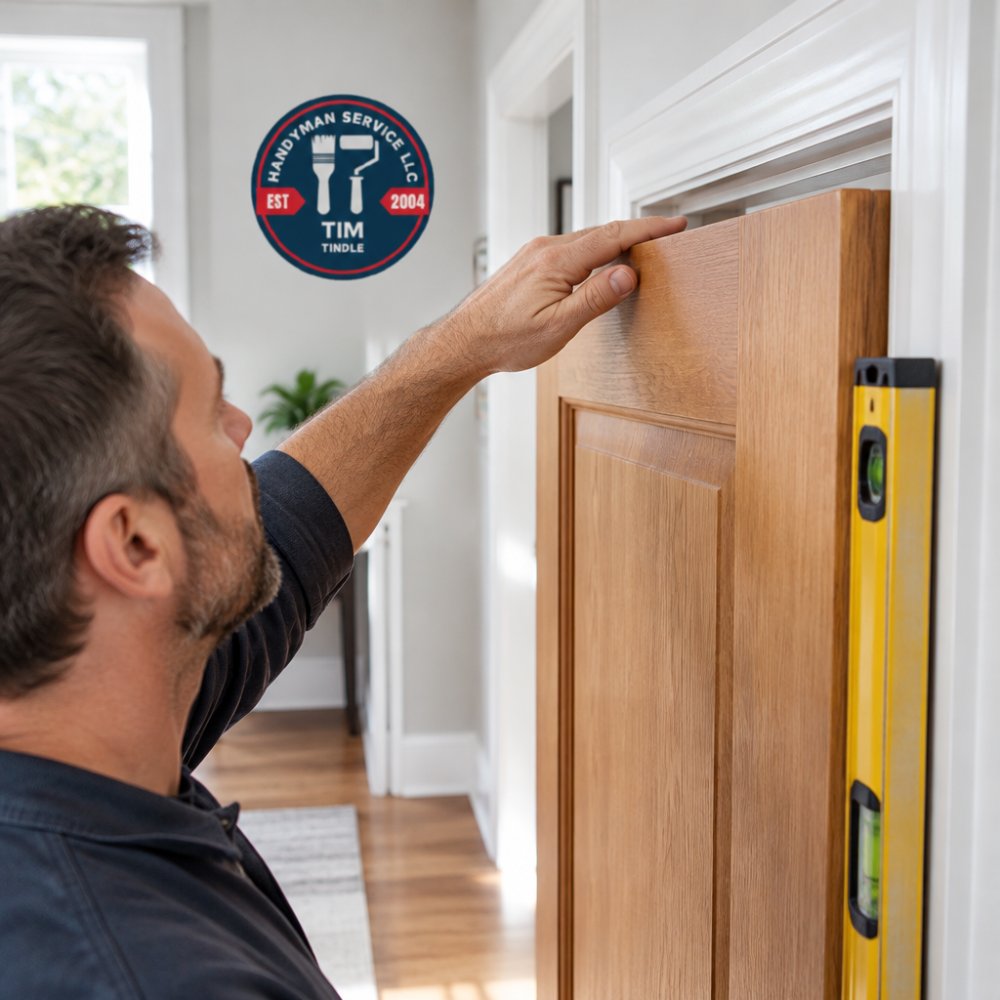
Start by closing the door slowly and watching three zones. Run a hand along the top edge: if the door rubs there, the top hinge is likely pulling loose or the frame has dropped. Check the bottom edge for scuff marks on the floor or a door that drags across carpet. Then watch the latch as it meets the strike plate.
Note where the paint or finish has worn through. Those shiny wear marks are your best evidence, because they show exactly where the door is binding.
Safe DIY Checks Versus When to Hire a Handyman
Some sticking-door fixes are safe for any homeowner with a screwdriver. Others need a professional, and knowing the difference saves you money and prevents damage.
Here is how we sort the two:
- Safe to try yourself: tightening hinge screws, lubricating hinges and latches, cleaning debris from a sliding track, replacing a worn strike plate
- Call a professional: planing or trimming a door edge, rehanging a heavy or exterior door, repairing a split jamb, adjusting a frame that has shifted, any door that will not latch securely
A common mistake is forcing a swollen door shut. That bends hinges and cracks jambs, turning a simple adjustment into a bigger repair.
When a repair is beyond a quick tightening job, it helps to know when to hire a professional handyman rather than guess. Our team handles handyman services across Aurora and the metro area.
Residential Door Repair: Hinges, Frames, and Hardware
Most residential door repair comes down to three components: hinges, the frame and jamb, and the hardware that lets the door latch. Fix the right component and the door swings clean again. The trick is identifying which one has failed, because a sagging door and a misaligned latch often share the same root cause.
Loose Hinge Screws and Sagging Doors
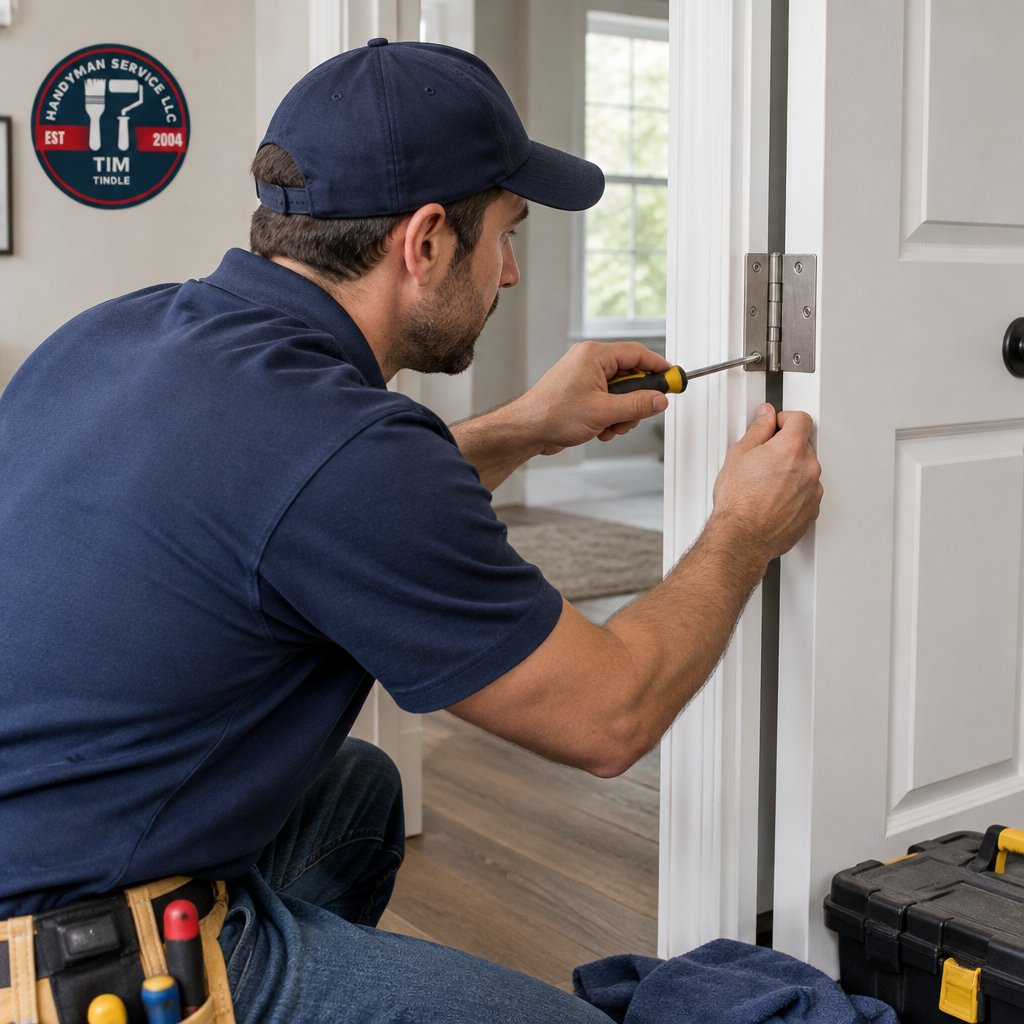
A door that sags and drags at the bottom usually has loose hinge screws. The top hinge carries the most weight, so its screws strip or pull free first, letting the door drop out of square. Tighten every hinge screw with a screwdriver before anything else. If a screw spins freely, the hole is stripped. A longer screw or a glued wooden plug in the hole restores the grip, and the sag often disappears.
Door Frame and Jamb Issues
A sticky jamb means the frame has shifted, swollen, or was never square. Check the gap between the door and the frame at the top and sides. An uneven gap points to a frame that has moved. Minor jamb swelling responds to sanding and sealing, but a frame that has settled needs realignment, which is a job for a professional with the right tools.
Front Door Repair Near Me: Exterior and Entry Doors
Exterior and entry doors stick for different reasons than interior doors, and they matter more for home security. Weatherstripping, exposure to rain and sun, and the sheer weight of a solid exterior door all cause binding. A front door that will not latch properly is a security problem, not just an annoyance.
Call 720-989-4123 for a free estimate →
If you are searching for front door repair near me, the priority is a door that closes, latches, and locks without force.
Interior, Screen, and Door Replacement Options
Not every sticking door is worth repairing. An old door with a cracked panel, a hollow-core door that has swollen beyond sanding, or a screen door with a bent frame may cost less to replace than to fix.
Replacement makes sense when the door itself is failing, not the hardware. If tightening hinges and adjusting the strike plate does not solve the problem, and the door is visibly warped or damaged, a new door is the practical choice.
| Problem | Likely Cause | DIY or Pro |
|---|---|---|
| Door rubs at top | Loose top hinge | DIY: tighten screws |
| Door drags at bottom | Sagging hinges | DIY: longer screws |
| Sticks only in summer | Swollen wood | DIY: sand and seal |
| Will not latch | Misaligned strike plate | DIY or pro |
| Frame out of square | Settled jamb | Professional |
| Warped or cracked door | Structural damage | Replacement |
Handyman to Fix Sticking Doors in Aurora Reviews: What to Look For
When you read reviews for a handyman to fix sticking doors in Aurora, look for specifics, not star counts. A five-star rating tells you little on its own. What matters is whether reviewers describe the same problem you have and whether the handyman showed up on time, quoted honestly, and fixed it right the first time.
Consider checking three things before you book anyone:
- Licensing and insurance: ask for proof, and confirm the business is established rather than a side hustle
- Specific reviews: look for mentions of door repair, punctuality, and clear pricing
- A real local business: a company with a stated service area and a verifiable track record
Verifying credentials takes a few minutes and protects you if something goes wrong. Our guide on how to verify handyman credentials and experience walks through exactly what to ask for.
What a Sticking-Door Repair Visit Usually Costs and How Long It Takes
Most sticking-door repairs are small jobs, and pricing usually reflects that. Pricing depends on the scope of the work.
Job length varies with the repair. Simple tasks such as tightening hinges are usually quick, while planing a door or repairing a split jamb takes longer and may require a return visit.
Ask for the quote to be broken out in writing so there are no surprises if a second issue turns up.
How to Verify the Repair Worked
Before the handyman leaves, close and open the door at least five times and check three things: the door latches without a push, the gap at the top and sides is even, and the door does not rub anywhere along its swing. Run a hand along the edges to feel for binding you cannot see. If the door still sticks, ask for the cause to be identified before payment.
Prevention matters too. Ask whether the hinges were lubricated and the weatherstripping checked, since dry hinges and compressed seals are common reasons a door starts sticking again. Keeping indoor humidity steady and tightening hinge screws once a year will head off most recurrences.
Book a Free Estimate for Your Sticking Door
A sticking door is a small problem with an easy fix, once you know the cause. Tighten the hinges, check the strike plate, and watch for seasonal swelling, and most doors swing free again.
Handyman Service Aurora is licensed and insured, serves Aurora, Foxfield, Parker, Centennial, and the Denver Metro area, and provides free estimates. Call 720-989-4123 for a free estimate, or read our guide on how to schedule handyman service quickly if you want to book fast.
Frequently Asked Questions
Can a sticking door be fixed without replacing it?
Most sticking doors can be repaired without replacement. The usual culprits are loose hinge screws, a sagging door that needs hinge adjustment, or a swollen wood door caused by seasonal humidity. Tightening or replacing hinge screws, adjusting the strike plate, or trimming a small amount from the door edge often solves the problem. Replacement only makes sense when the door is cracked, warped beyond adjustment, or too damaged to secure properly.
Why does my door stick when the weather changes?
Wood doors absorb moisture from the air and swell in humid months, which closes up the clearance between the door and the frame. When the air dries out, the door shrinks back. That is why a door that sticks in summer often frees up in winter. Sealing the door's edges and controlling indoor humidity help reduce the swing, and a handyman can plane or adjust the door so it clears the jamb year-round.
When should I call a handyman for a sticking door?
Call a handyman when the door rubs along the frame, the latch no longer catches, hinge screws will not hold, or the door has sagged enough to leave a visible gap. These point to alignment or frame issues that get worse with time. A professional can diagnose the cause, adjust hinges, repair the jamb, or replace hardware. Handyman Service Aurora offers free estimates across Aurora and the Denver Metro area at 720-989-4123.
How much does it usually cost to repair a door?
Door repair pricing depends on the cause, the door type, and the parts needed, so a firm number requires an on-site look. Handyman Service Aurora provides free estimates before any work begins, so you know the scope and cost upfront. Call 720-989-4123 to schedule an estimate for residential door repair or front door repair in Aurora and nearby areas like Foxfield, Parker, and Centennial.
Stop forcing a door that should glide shut. Get started with Handyman Service Aurora and book a free estimate today. We bring licensed, insured craftsmanship, transparent pricing, and local service to every sticking door, loose hinge, and misaligned frame, so your home closes up secure and comfortable.